Rhetorical HUTs
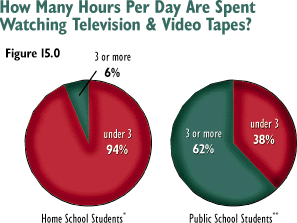
Professor Kathleen Welch, of the University of Oklahoma, states in her book Electric Rhetoric that we all live in Rhetorical HUTs, Households Using Televisions, with profound effects on our perceptions, especially our oral/aural perceptions. Ninety-eight percent of United States homes contain at least one television monitor, with the capability of accessing free programming from at least one station. These programs may be described by nothing other than fragmented and temporary. Consisting primarily of 30-minute programs, these short episodes are broken further. The shows consist of roughly 21 minutes of program, interrupted an average 3 times for 3 minute breaks of 30 second commercials. This means that, through one 30-minute episode, of which Americans watch an average 40 hours per week, we view 3 broken segments of one storyboard, and 18 separate storyboards of commercial. These all vie for our attention.
Professor Welch also states that, while the visual aspects of television are ignorable, the oral/aural aspect is not, and this affects our oral/aural perception of the world. Since our oral/aural perception is so important to the personal development of language, we have developed language skills characteristic of HUTs – very temporary and fragmented.
