Module 4 Cognitive/Collaborative Strategies for DL
Section 1: Review of Learning Module 3

The objectives of this module's lesson are to:
- Explain the key concepts of cognitive strategies for DL.
- Discuss cognitive strategies for a DL program.
- Explain guidelines for cooperative/collaborative learning for DL.
- Select a cooperative/collaborative learning technique for a DL program.
Expected time for learning activity: 120 minutes
Review of Learning Design PrinciplesSeven Learning Principles for Distance Learning
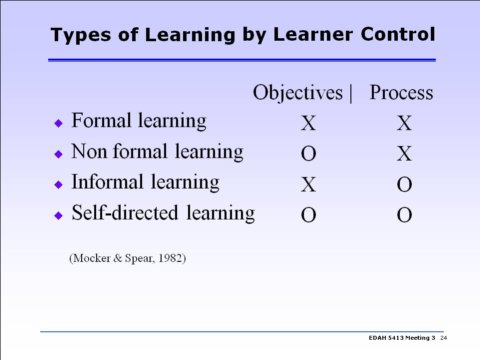
1. Types of Learning
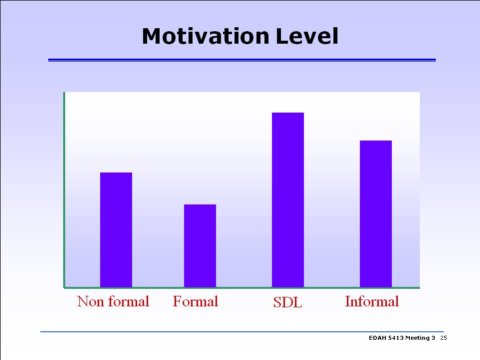
The more we apply self-directed and informal learning, the better chances the learners are motivated to learn.
2. Setting the Tone
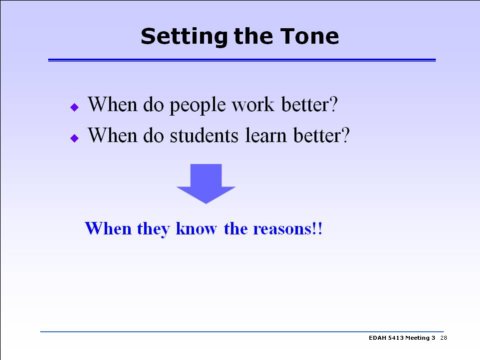
People learn better when they know the reasons for learning. Clarifying and emphasizing the objectives or goals of learning are a good start for this purpose.
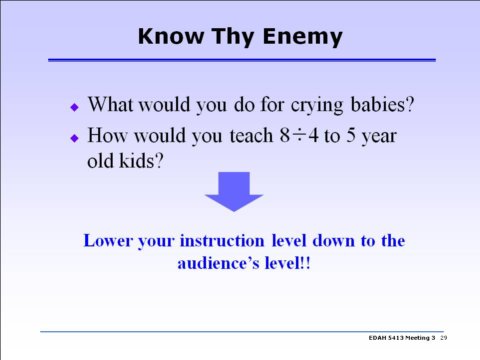
3. Know Thy Enemy
One critical failure of today's instructors is not matching the level of instruction to the level of learners. Let's lower our instructional level to learners' cognitive level.
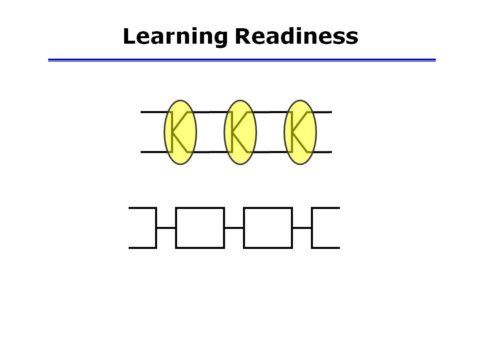
4. Learner Readiness
It may take time to prepare learners for a learning event. Once the learners are ready and prepared, the learning will take place very quickly and efficiently.
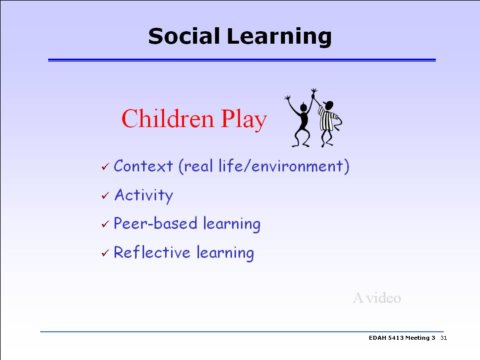
5. Social Learning
Learning must be natural events and activities like children plays in order to make them involved in learning while having funs.
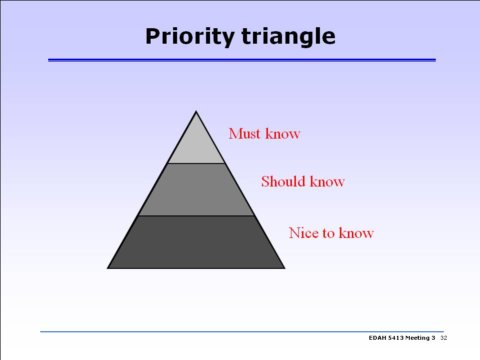
6.Priority Triangle
When we have many content to be covered from a learning, it is wise to organize the learning content in terms of importance so learners will focus on "must-to-know" stuff. "Nice-to-know" stuffs can be organized using hyperlinks or other supplemental links to find them if necessary.
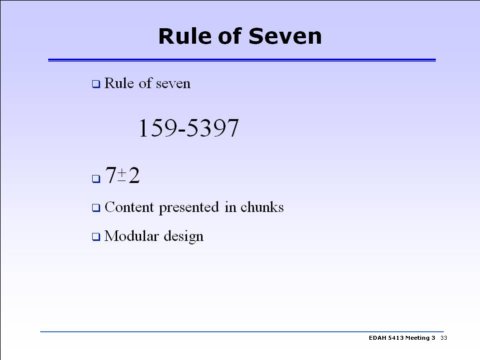
7. Rule of Seven
95% of people remember well when they were instructed a limited number of information (7+2). If there are too many information for learning, chunk them into 7+2 pieces to be easily remembered.
Cognitive Load Theory
Schema
Information processing in long-term memory is made through schema which is a cognitive structure that allows multiple elements of information to be categorized as a single element. Examples of schema structure based on the complexity level of information are:
Alphabet recognition -> Word recognition -> Sentence recognition -> Contextual recognition -> Thematic recognition
Types of Memory
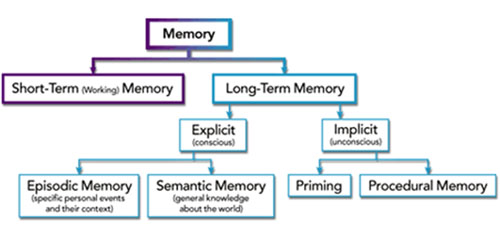
Three major types of memory are illustrated here to understand how learned information and knowledge are accumulated in our brain.
- Working memory can handle only limited number of information (7+2).
- Short-term memory refers to the amount or bits of information we can hold in our head at any given time and lasts between 10 to 15 seconds.
- Intermediate memory occurs once the information has been processed. It can be viewed as the part of memory which holds and mixes information from the different parts of memory.
Long-term memory resides in the deep unconscious and can be viewed as the "repository" of all our knowledge. It is divided into four parts: episodic, semantic, priming, and procedural memory.
- Episodic memory includes memories of events and experiences. It is enhanced by sensory input such as sights, sounds, music, smells and touch.
- Semantic memory would include remembering specific information such as math, names, facts, and figures.
- Priming memory is a nonconscious form of human memory which is concerned with perceptual identification of words and objects.
- Procedural memory is stored by hands on learning. When we learn a skill such as riding a bike or playing a sport, motor memory is necessary.
Figure: Structure and Types of Memory
Working Memory Limitation
Due to limited capabilities of processing working memory, we have to design instruction to reduce extraneous load and redirect learners' attention to cognitive processes that are directly relevant to the schemas construction.
- Intrinsic cognitive load - This is a type of cognitive load occurring due to the natural complexity of the information that is processed. The cognitive load is determined by the levels of element interactivity.
- Extraneous cognitive load - This happens when we ignore working memory limits and fail to focus working memory resources on schema construction and automation.
- Germane cognitive load - This is effective cognitive load caused by effortful learning resulting in schema construction and automation through examples and demonstration.
Functions of Brain
In memory processing, the following diagram illustrates which part of brain processes what kind of information.
- Frontal lobe - helps control skilled muscle movements, mood, planning for the future, setting goals and judging priorities.
- Parietal lobe - receives and processes information about temperature, taste, touch, and movement. Reading and arithmetic are also processed in this region.
- Temporal lobe - processes hearing, memory and language functions.
- Occipital lobe - helps process visual information.
- Medulla oblongata - contains centers for the control of vital processes such as heart rate, respiration, blood pressure, and swallowing.
- Pons - the coordination of eye movements and balance.
Hippocampus
Hippocampus is the central part of human brain functioning the following tasks.
- Stores and processes memories
- Helps find memories
- Affects emotions
Strategies for Improving Cognitive Learning
Improving Cognitive Processes for Learning
Several cognitive strategies can be utilized to improve cognitive processing during learning.
- Worked example effect - This method is to reduce cognitive load by providing worked examples during learning.
- Split-attention effect - For cognitive focusing, attention must be split between multiple sources of information to understand the whole content (understand each segment of swing motion to make a full golf swing).
- Modality effect - This method recommends the use of multiple information sources and perceptual methods to improve memory process (use verbal explanation and visual graphics to teach how to swing).
- The redundancy effect - This method is utilizes reiteration to augment and reinforce learning (repetition through lecture and review sessions).
Cognitive Learning Framework
In planning and developing a distance learning program, establishing a cognitive learning framework is a very useful tool to incorporate the above mentioned principles in designing the instruction. An example cognitive learning framework will look like this: