

What is a pitviper? Venomous snakes of the subfamily Crotalinae, unified by a heat-sensing loreal pit organ, cornified tail tip (rattle in some species) , and maternal attendance of offspring . Oklahoma is home to 7 species.
Why are pitvipers important? They are important components of food webs that control rodent populations and feed larger predators. Some life-saving medicines are derived from pitviper venoms!
Should I fear pitvipers? No - snakes don’t chase people! Snakes bite only as
a last resort. Consider yourself lucky to see a wild pitviper and enjoy it from a safe distance.
How can I tell apart a pitviper from a non-venomous snake? Vertical pupils, loreal pit organs, and rattles (except in the copperhead and cottonmouth) distinguish pitvipers from all other Oklahoma snake species.
What type of venoms do pitvipers have? In Oklahoma, most species have lytic (degradative) venoms that break down tissues and cause bleeding, but some timber rattlesnake populations have a neurotoxic component called canebrake toxin.
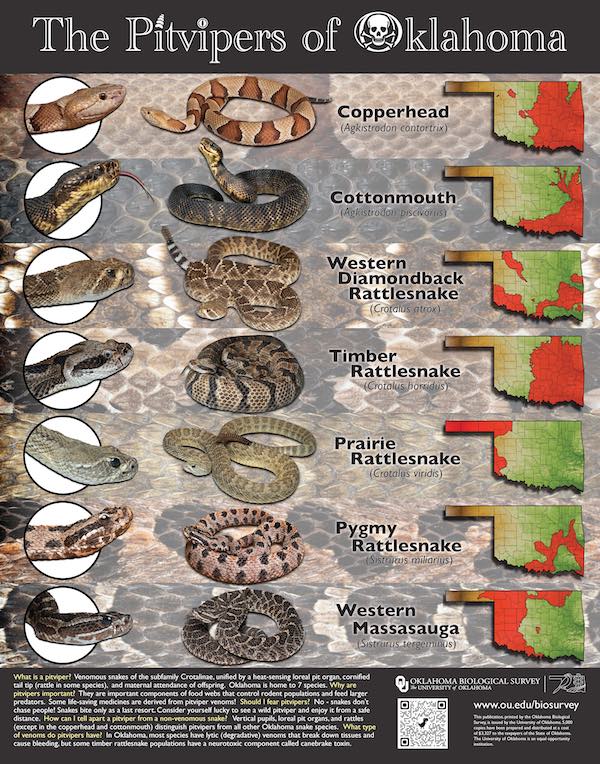

Agkistrodon contortrix

Agkistrodon piscivorus

Crotalus atrox

Crotalus horridus

Crotalus viridis

Sistrurus miliarius

Sistrurus tergeminus
