History of Science Professor Hunter Heyck will co-direct the University of Oklahoma's new Center for the Study of Emerging Technologies. The center will advance interdisciplinary research on the human impact and evolution of emerging technologies, from AI to quantum science.
Cecilia Slane, a Ph.D. student in the history of science, technology, and medicine at the University of Oklahoma, is one of 100 doctoral students in the U. S. and Canada selected to receive a $25,000 Scholar Award from the P.E.O. Sisterhood. She was sponsored by Chapter HB of Norman, OK.
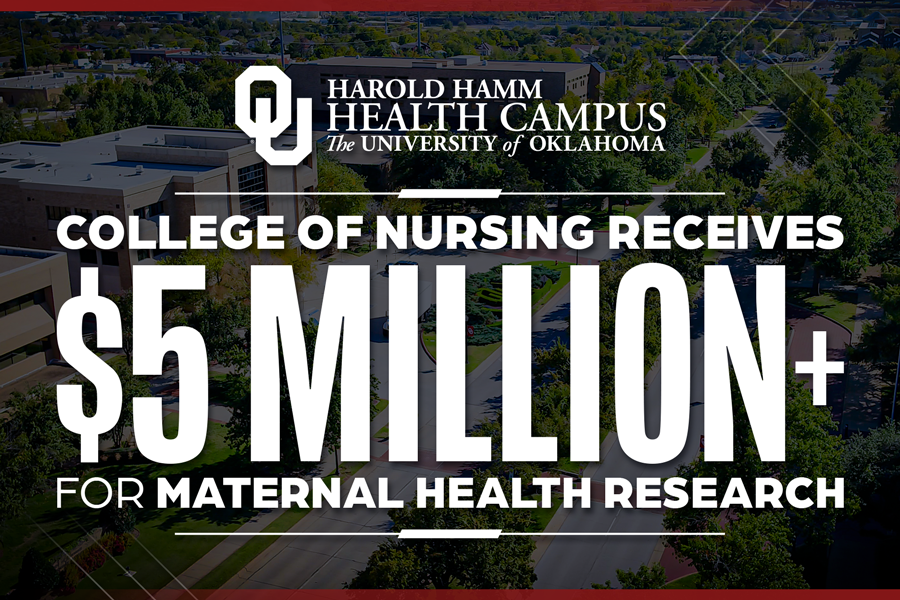
Thanks to more than $5 million in funding through a National Institutes of Health initiative, the University of Oklahoma's College of Nursing will support four maternal health research projects over the next four years.
University of Oklahoma researcher Ashlee Rowe is advancing biotherapeutics by studying how certain species of mice are able to resist pain from venomous scorpions. Her discoveries aim to help provide a highly valuable solution for nonaddictive pain management.
A team of researchers headquartered at the University of Oklahoma is taking an innovative approach toward advancing grassland conservation and management, with grant support from the the U.S. National Science Foundation. The project brings together experts and observatory sites from across the state.
Ahead of the Sooners’ big win over the Texas Longhorns on Saturday, members of the University of Oklahoma Naval Reserve Officers Training Corps (NROTC) took part in the 29th annual Run to Dallas on Wednesday, October 7.
More Oklahoma families than ever will have a clear and affordable path to a University of Oklahoma education with the launch of OU Onward, a new scholarship that will help cover tuition and average fees at OU for qualifying Oklahoma students whose families earn between $60,000 and $75,000 annually.