Skip Navigation

Research

Research

ECE faculty are engaged in research in a number of areas of technology critical to advancement of knowledge and commerce in the U.S. and the State of Oklahoma.

crimson seperator line.

ECE Research Areas

Generative models and optimization frameworks for functional materials discovery; machine learning for photonic system design; physics-informed neural networks; data-driven approaches to materials engineering and characterization.


Integration of advanced AI algorithms with emerging computing substrates; high-performance and low-latency implementations; energy-efficient accelerators for edge inference; cross-layer optimization of learning architectures.


Instrumentation, medical imaging, biomedical optics, digital hearing aids, physiological modeling. bio-computing: interactions of electromagnetic fields and biological tissue.


Adaptive antenna arrays, fixed wireless access, wideband CDMA, wireless telemetry systems, equalization and coding for storage.


Advanced computer systems and architecture, fault tolerant systems, networking, embedded systems, programmable logic, hardware design languages.


Power systems planning and operation; electric power network economics; regulation, privatization and competition in network; power quality and grid resilience; chaotic electromagnetic disturbances, smart grids, condition monitoring and diagnostics.


High efficiency motor control systems, battery systems, ergonomic subsystems, solar power and formula racing vehicles; wireless roadway charging systems.


Computational electromagnetics, phased array antennas, RF medical applications.


Digital image processing, computer vision, robotics vision, pattern recognition, image interpretation.

Soft computing, neural networks, fuzzy logic modeling, solution programming, optimization, artificial intelligence, genetic algorithms.


Multivariable controls design and analysis, robust and fuzzy logic controls, GPS flight control and location systems.


Biologically inspired electronic and photonic hardware architectures; spiking neural networks and event-driven processing; low-power learning and inference systems; memristive and phase-change devices for in-memory computing.


Integration of state-of-the-art optoelectronic components with high performance embedded processors, design and fabrication of analog/digital mixed-signal circuits, and development of chemical and biological sensors based on fluorescence, laser absorption and Raman scattering spectroscopies - all of which are integrated around a common platform for low-cost, low-power consumption deployment.


Speech and image representations for enhancement, compression, synthesis and recognition systems. Adaptive systems for telecommunications, multimedia, and other systems. Digital filter methods and implementations.


Molecular beam epitaxy growth of IV-VI semiconductors and group II-A fluoride insulators, liquid phase epitaxy, tunable diode laser fabrication, interface chemistry and heteroepitaxial growth mechanisms, optical device integration on silicon substrates, UV solar blind detectors, Bragg reflector-based devices for solid state lasers.


Wireless and fiber optic networking technology, systems interoperability, security.


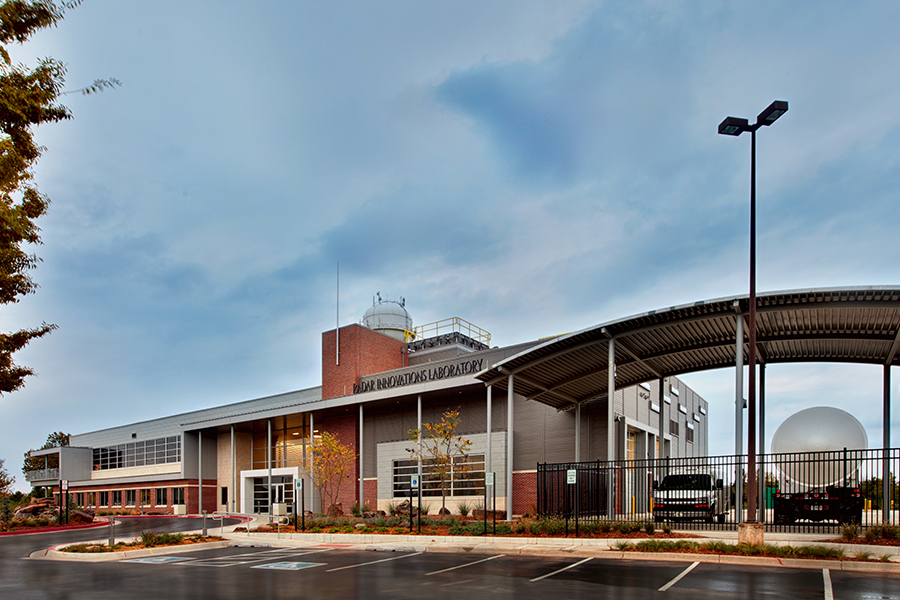
Radar detection and signal processing, adaptive processing, phased arrays, weather detecting waveforms and filtering.

Faculty Focus Areas

Banad, Mike: Associate Professor; Advancing Data-Driven Decision-Making: AI/ML Algorithms and Hardware for Knowledge Discovery in Science and Engineering. E-mail: bana@ou.edu

Barnes, RonaldProfessor; Ph.D., University of Illinois-Urbana/Champaign, 2005. Computer micro-architecture; compilers; computer hardware and software design and co-design. E-mail: ron@ou.edu

Cheng, Samuel: Associate Professor, TCOM, Tulsa; Ph.D., Texas A&M University, 2004. Information theory, image and signal processing for medical application, pattern recognition. E-mail: samuel.cheng@ou.edu

Cruz, J. R.:  Director, Professor and Tilley Chair; Ph.D., Houston-University Park, 1980. Digital communications, signal processing. E-mail: jcruz@ou.edu

Fulton, Caleb:  Associate Professor; Ph.D., Purdue University, 2011. Digital array radar system integration and digital beamforming, Phased array calibration, design, polarization correction, and near/far-field measurements, Novel applications of microwaves for treatment of cancer. E-mail: fulton@ou.edu

Havlicek, Joseph:  Professor; Ph.D., Texas-Austin, 1996. Signal and image processing, multimedia communications, nonlinear and AM-FM signal models, Kalman filtering, intelligent transportation systems. E-mail: joebob@ou.edu

Jiang, John (Ning): Professor, and OG&E Professor; Ph.D., University of Texas, 2005. Estimation, analysis, control of physical and financial risks for deregulated energy industry. E-mail: jnjiang@ou.edu

Jo, Javier: Ted and Cuba Webb Presidential Professor; Director, NIH-Designated COBRE Oklahoma Center of Medical Imaging for Translational Cancer Research; Ph.D., University of Southern California, 2002. Development and clinical translation of novel optical imaging and spectroscopy technologies, medical imaging sciences with emphasis on AI/ML applications for early cancer diagnosis and image-guided surgery. E-mail: javierjo@ou.edu

McCannPatrick J.:  George Lynn Cross Research Professor; Ph.D., MIT, 1990. IV-VI semiconductor lasers, tunable diode laser spectroscopy, optoelectronic integrated circuits. E-mail: pmccann@ou.edu

Saeed Kandezy, Reza: Assistant Professor; Ph.D., OU, 2024. Renewable and inverter-based energy systems, power-electronic-dominated grid dynamics, and multi-dimensional and multi-contingency machine-learning frameworks for transient dynamic modeling. E-mail: reza.kandezy@ou.edu

Kenney, Russell: Assistant Professor; Ph.D., OU, 2024. PNT approaches for mobile radar, RF synchronization for distributed radar systems, synthetic aperture radar, Kalman filtering. E-mail: kenney@ou.edu

Moses, PaulAssociate Professor; Ph.D., Curtin University (Australia), 2012. Transmission and distribution systems, nonlinear electromagnetic phenomena, microgrids, naval power systems and system protection. E-mail: pmoses@ou.edu

Ruyle, JessicaWilliam H. Barkow Presidential Associate Professor; Ph.D., University of Illinois at Urbana-Champaign. The development and characterization of new electromagnetic devices and platforms such as antennas and packaging to improve the performance of radiating systems in challenging environments. E-mail: ruyle@ou.edu

Sharif, Sarah: Assistant Professor; Quantum-Inspired Engineering and AI/ML-Assisted Designs for High-Efficiency Communication, Advanced Computation, and Sensing Innovations. E-mail: s.sh@ou.edu

Sigmarsson, Hjalti: Gerald Tuma Presidential Professor; Ph.D., Purdue University, 2010. Applied electromagnetics, additive manufacturing, RF and microwave components, reconfigurable filters and antennas, and heterogeneous integration and packaging. E-mail: h.sigmarsson@ou.edu  

ShiZhisheng: Professor; Ph.D., Freiburg (Germany), 1995. Semiconductor thin film growth, optoelectronic devices (lasers and detectors), broadband integrated circuits. E-mail: shi@ou.edu

TangChoon Yik: Associate Professor; Ph.D., University of Michigan, 2003. Wireless communications and networking (link adaptation, resource allocation, protocol design, distributed estimation/control/optimization), systems and control theory. E-mail: cytang@ou.edu

Weng, Binbin: Associate Professor; Ph.D., University of Oklahoma, 2012. Mid-wave infrared Nanophotonic Engineering for Gas Sensing, Meta-Surface Engineering for optical computation & telecommunication, Surface-enhanced Raman for chemical analysis; Digital-twin & AI-agent empowered multisensory IOT networks. E-mail: binbinweng@ou.edu

YangRui: Professor; Ph.D., Nanjing University, 1987. Solid state devices; interband cascade structures for lasers and detectors. E-mail: rui.q.yang@ou.edu

YearyMark: George Lynn Cross Research Professor; Ph.D., Texas A & M, 1999. Digital signal processing, as applied to radar signal processing, digital communications, image processing, adaptive filter design, and customized embedded DSP systems.  In addition:  new educational models and effective pedagogy for interdisciplinary learning. E-mail: yeary@ou.edu

YuTian-You: Gerald Tuma Presidential Professor; Ph.D., University of Nebraska-Lincoln, 2000. Remote sensing, radar signal processing. E-mail: tyu@ou.edu

ZhangYan (Rockee): Professor; Ph.D., University of Nebraska-Lincoln, 2004. Intelligent radio and radar sensing, RF-microwave systems and instrumentation, random signal and Low-Probability-of-Intercept (LPI) radar, real-time system implementation on FPGA and DSP. E-mail: rockee@ou.edu

Adjunct Faculty Focus Areas

Ding, Lei: Professor; Ph.D., University of Minnesota, 2007. Biomedical imaging, neural engineering. E-mail: leiding@ou.edu

ChilsonPhillip: Associate Professor, Meteorology; Ph.D., Clemson, 1993. Atmospheric layered phenomena and their interactions with background wind field using profiling atmospheric radars; development of spatial and frequency interferometry. E-mail: chilson@ou.edu

PalmerRobert: Dean of the College of Atmospheric and Geographic Sciences, Professor, Meteorology; Ph.D., Oklahoma, 1989. Array processing techniques for weather radar, meteorological phenomena using Doppler radar, development of innovative radar interferometric techniques, adaptive array applications for wireless communications. E-mail: rpalmer@ou.edu

PeiJinsong: Associate Professor, Civil and Environmental Engineering; Ph.D., Columbia, 2001. System identification, simulation and control of linear and nonlinear systems, neural networks, digital signal processing and numerical analysis. E-mail: jspei@ou.edu

ZhangGuifu: Associate Professor, Meteorology; Ph.D., Washington, 1998. Radar polarimetry and interferometry for weatherquantification and forecasting, wave interactions propagation with geophysical media. E-mail: guzhang1@ou.edu

Cadence Design System

Cadence University Program Member

Cadence is a registered trademark of

Cadence Design Systems, Inc.
2655 Seely Avenue,
San Jose, CA 95134
 

Cadence Design, verification and test tools are used in the following courses:

  • ECE 4833/5833 VLSI Digital System Design
    An introduction to Very-Large-Scale Integrated (VLSI) systems design methods; complementary Metal-Oxide Semiconductor (CMOS) technology emphasized.  VLSI Computer Aided Design (CAD) tools and CMOS layout rules and techniques.  Project oriented.  (Fall)
  • ECE 5843 (formerly 6833) Advanced VLSI Design and Applications  Advanced VLSI examines the design of sophisticated digital integrated circuits. Special-purpose architectures are emphasized where appropriate.  “Silicon compilers” and hardware description languages are used in this advanced VLSI course.

For more information about these courses, contact Professor Jon Bredeson.

This web page is only Cadence software-information related and it does not include information on any other vendor's products on this page.