The Christopher C. Gibbs College of Architecture envisions a future where communities are adaptive and empowered to thrive. Our research supports this vision by addressing real-world challenges, fostering creative solutions, and preparing students to make lasting contributions. Core areas include entrepreneurship, health and wellbeing, placemaking, and sustainability. Through interdisciplinary work in areas such as BIM technology, accessible housing, and human-centered design, our faculty and students help shape a resilient built environment. This work is supported by a network of research centers and institutes that deepen our impact across Oklahoma and around the world.
Research in Entrepreneurship and Applied Practice advances innovation, agency, and implementation in planning, design, and construction through community-embedded and practice-oriented inquiry. Our faculty and students work at the intersection of research, professional practice, and public impact—developing new methods, tools, and delivery models that translate ideas into real-world outcomes while centering community needs and partnerships.
Focus areas include:
Health and Wellbeing research explores how the built environment shapes physical, psychological, and social health across the lifespan. Gibbs faculty and students integrate design research, community engagement, and emerging insights from environmental psychology and neuroscience to create more empathetic, accessible, and human-centered environments—particularly for historically underserved populations.
Focus areas include:
Placemaking and Belonging research addresses how cities, neighborhoods, and landscapes foster identity, access, and social connection. Our faculty and students partner with communities to address pressing social and spatial challenges—ranging from rural and urban contexts to historic preservation and civic revitalization—while advancing participatory approaches to shaping places that matter.
Focus areas include:
Gibbs College also hosts the Gibbs Design Activism Awards, empowering students to propose and lead projects that critically engage with community, social, and economic challenges within the built environment.
Research in Resilience and Sustainability advances forward-looking solutions for buildings, infrastructure, and communities facing environmental, climatic, and material challenges. Faculty and students integrate engineering innovation, design research, and performance-driven experimentation to develop systems that are durable, adaptive, and responsive to changing conditions.
Focus areas include:
View Resilience News and Sustainability News.
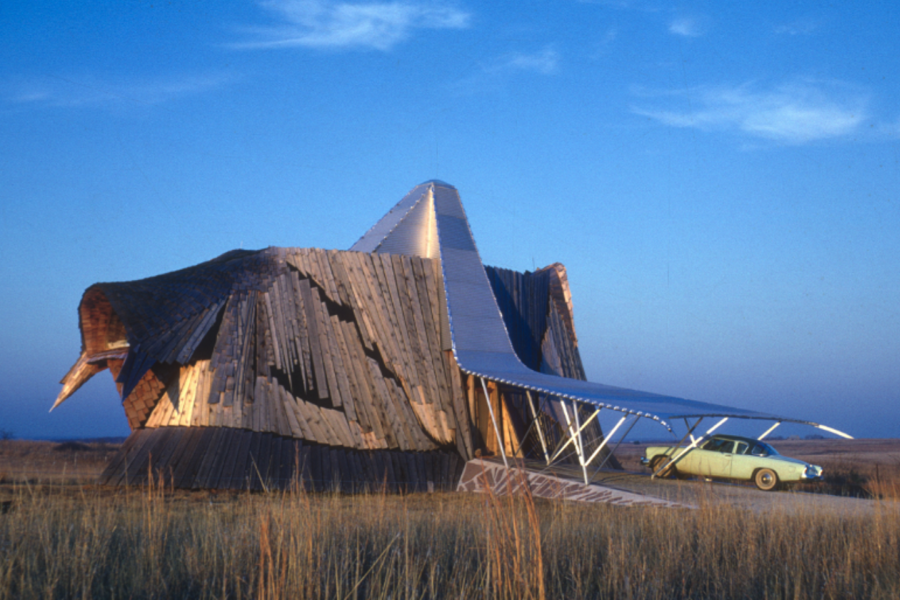
The American School Project strives to document and share the development and impacts of the school of design and practice that developed at the University of Oklahoma in the 1950s and ’60s.

CMEAC seeks to advance knowledge of the Middle Eastern build environment and culture for its intellectual and academic values.
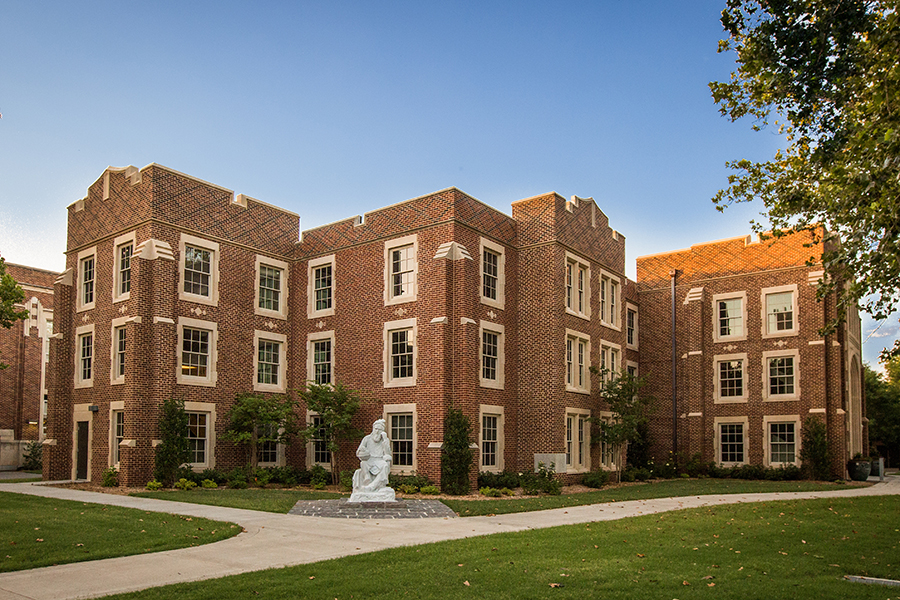
The CPD builds upon a legacy of collaborative partnerships between OU faculty and students and communities affected by conflict in northern Uganda.

The Carceral Studies Consortium brings together faculty, staff and students across colleges at the University of Oklahoma to cultivate rigorous scholarship and community engagement toward social transformation in the broad area of Carceral Studies.
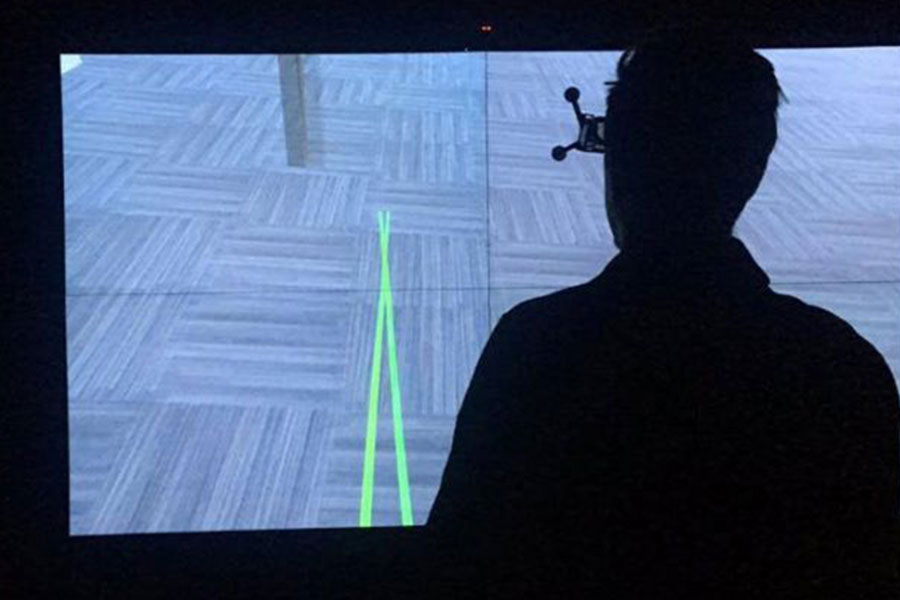
The BIM + VIZ Lab space is designed for teams of researchers and designers to interact in an immersive virtual reality environment to support interdisciplinary teams as they interface with technology in the analysis of spatial, data, and temporal aspects of a facility or infrastructure model.
The Institute for Quality Communities (IQC), based in Gibbs College, partners with communities across Oklahoma to tackle local challenges through design, planning, and policy. By sharing best practices and fostering dialogue, IQC helps strengthen civic spaces and support development. Its biennial Placemaking Conference brings together national experts, local leaders, and students to explore strategies for building vibrant, resilient communities.

Research initiated by Christopher C. Gibbs College of Architecture alumna Naila Hasan during her master’s studies at the University of Oklahoma has continued through faculty collaboration and resulted in a peer-reviewed publication in HERD: Health Environments Research & Design Journal.
Gibbs College of Architecture is pleased to announce that Amber N. Wiley, Ph.D., associate professor in the Division of Planning, Landscape Architecture and Design and director of the Institute for Quality Communities, has been named to the shortlist for the Museum of African American History (MAAH) Stone Book Award for her book, Model Schools in the Model City. The book was one of 14 titles selected from 158 eligible submissions for the 2026 award.
The Gibbs Design in Action Awards (GDAA) program, led by Dr. Wanda Liebermann, has announced its 2026–2027 funded student projects. The initiative supports design and research work that addresses social, cultural, and economic issues in the built environment through collaboration with faculty and community partners.
Gibbs College of Architecture is proud to announce that Dr. Wanda Katja Liebermann, associate professor of Architecture, has been awarded the University of Oklahoma Vice President for Research and Partnerships Award for Excellence in Research, Design, and Creative Expression in the Humanities and Fine Arts for her scholarly monograph, Architecture’s Disability Problem.
Dr. Tammy McCuen, Robert E. Busch Professor of Construction Science in the Christopher C. Gibbs College of Architecture at the University of Oklahoma, is part of a team recognized with the campus-wide Award for Excellence in Transdisciplinary, Convergent Research.