The 2018 AIA Central States’ Student Design Competition recently challenged students to design an urban neighborhood which could reinvent the “art of city life” in downtown Tulsa’s Pearl District. The Christopher C. Gibbs College of Architecture team placed second with their proposal entitled “Collective.” Their project introduces apartments, office spaces, retail shopping and an art gallery to the area. Collective also strongly addresses the existing buildings located on the site and the site’s need for water management. The GCA team included Evan Sack, Kyle Berger, Tanaka Kawondera and Ben DeCuyper with faculty sponsor Francesco Cianfarani. Other participating universities included Oklahoma State University, Washington University, University of Kansas, Kansas State University, University of Nebraska, Drury University and Iowa State.
Featured Image: The GCA team’s rendering of “Collective” for the 2018 AIA Central States Student Design Competition
For more information about the competition, visit the AIA Central States Emerging Professionals website.
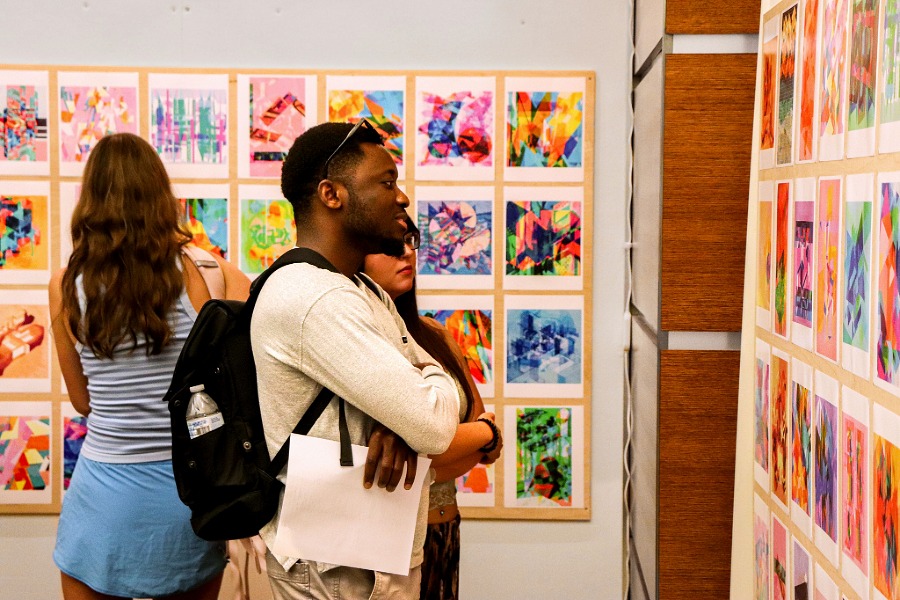
Gibbs College is pleased to present the exhibition 200 Digital Drawings by Professor Tiziana Proietti, currently on display in the Gould Hall Living Room.
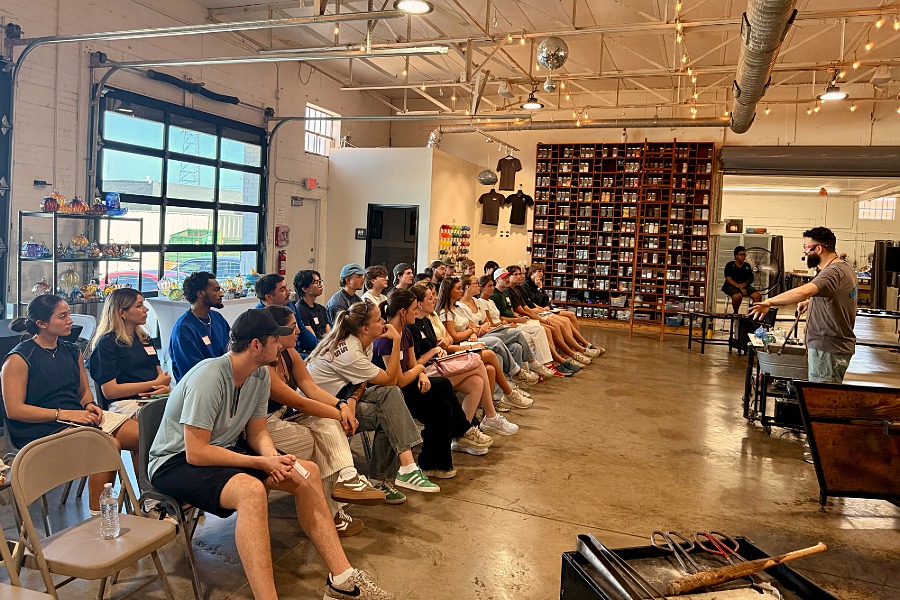
Gibbs College of Architecture Professors Amber Brown and Amy Leveno led 29 students to Dallas, Texas, in September for a learning experience as part of their Design 7 Studio course.
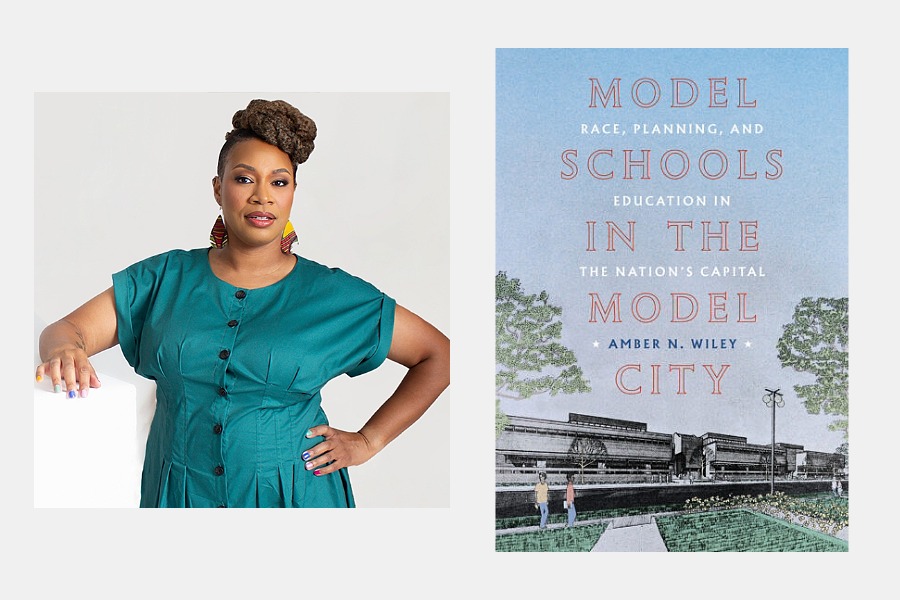
Christopher C. Gibbs College of Architecture professor and Institute for Quality Communities Director Dr. Amber N. Wiley’s book, Model Schools in the Model City: Race, Planning, and Education in the Nation’s Capital, has received two major honors from the Urban History Association.