Congratulations to Dr. Sarah Little, assistant professor of landscape architecture, for her recent publication of “Engaging Youth in Placemaking: Modified Behavior Mapping,” in the International Journal of Environmental Research and Public Health. This research was supported by a Gibbs College “Program for Research Enhancement” grant. The article was published in an open access format due to the generosity of the OU Library Open Access Fund and the Landscape Architecture Division.
Typically excluded from conversations about place, youth are becoming recognized as agents of change in placemaking. This article explores adapting a quantitative research method, behavior mapping, into a more youth-friendly qualitative participatory action research (PAR) method for placemaking projects, namely modified behavior mapping (MBM). The goal of MBM is to instigate placemaking conversations with youth with an understanding of an aspect of the lived experience of place and existing behavior. Sites are divided into observation zones, and youth are led through the zones by a trained facilitator. Like the quantitative method, MBM requires a list of behaviors of interest and a basemap. Behaviors are organized into groups on an observation sheet in a youth-friendly checklist format. A new checklist is printed for each observation zone. Basemaps can be an aerial photo or a downloaded map; however, creating a basemap by taking measurements will create science, technology, engineering, and math (STEM) learning opportunities. While in the observation zone, youth check the behaviors observed. Unlike the quantitative method, MBM does not require strict data collection protocols or a statistical analysis which makes the method more youth-friendly. Instead, MBM affords an opportunity for youth to reflect on their use of space and on others’ use of space. Results are disseminated through focus group discussions in order to create design programs or designs of place.
Gibbs College is pleased to present the exhibition 200 Digital Drawings by Professor Tiziana Proietti, currently on display in the Gould Hall Living Room.
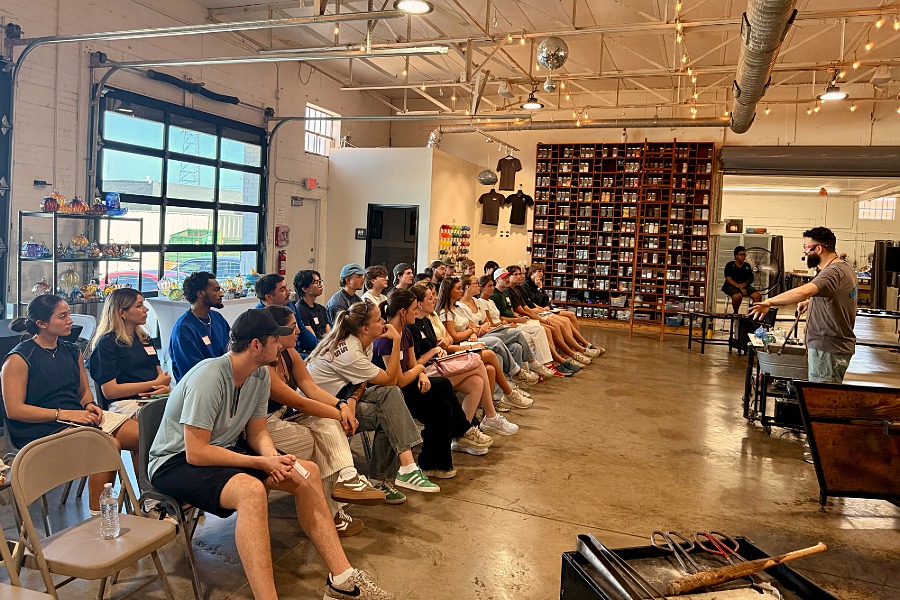
Gibbs College of Architecture Professors Amber Brown and Amy Leveno led 29 students to Dallas, Texas, in September for a learning experience as part of their Design 7 Studio course.
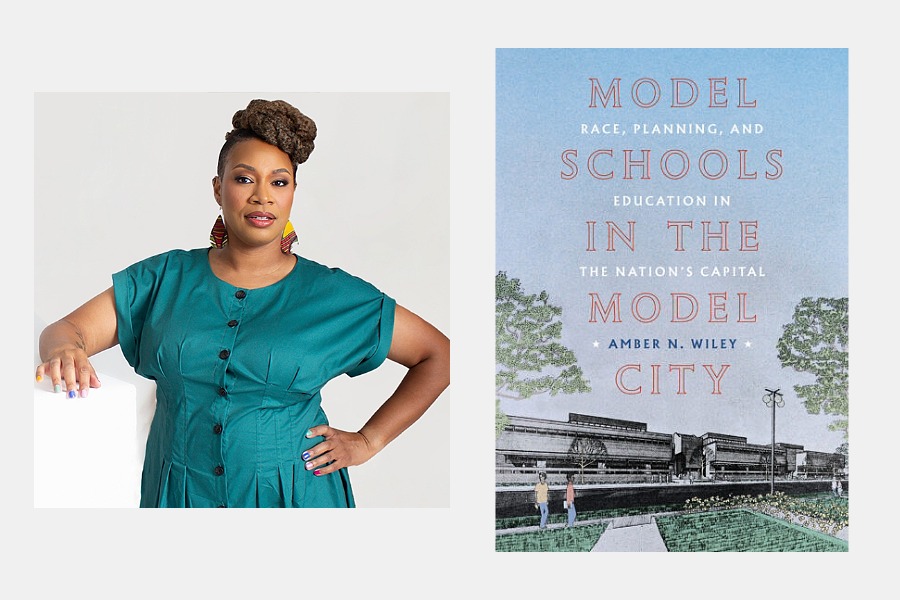
Christopher C. Gibbs College of Architecture professor and Institute for Quality Communities Director Dr. Amber N. Wiley’s book, Model Schools in the Model City: Race, Planning, and Education in the Nation’s Capital, has received two major honors from the Urban History Association.