Regional + City Planning assistant professor C. Aujean Lee co-authored an article in Sustainable Cities and Society titled “Exploring the nexus between social vulnerability, built environment, and the prevalence of COVID-19: A case study of Chicago.” Lee studied COVID-19 prevalence, built environment factors, and social vulnerability, using Chicago, Illinois as a case study. She and her coauthors found that areas with low educational attainment reported higher case rates while population density was not a significant factor. The study identifies the importance of understanding socioeconomic barriers that impact pandemic recovery.
For more information and to visit the article, click the link below.
Abstract
COVID-19 has significantly and unevenly impacted the United States, disproportionately affecting socially vulnerable communities. While epidemiologists and public health officials have suggested social distancing and shelter-in-place orders to halt the spread of this virus, the ability to comply with these guidelines is dependent on neighborhood, household, and individual characteristics related to social vulnerability. We use structural equation modeling and multiple data sources, including anonymized mobile phone location data from SafeGraph, to examine the effects of different social vulnerability and built environment factors on COVID-19 prevalence over two overlapping time periods (March to May and March to November of 2020). We use Chicago, Illinois as a case study and find that zip codes with low educational attainment consistently experienced higher case rates over both periods. Though population density was not significantly related to the prevalence in any period, movement of people made a significant contribution only during the longer time period. This finding highlights the significance of analyzing different timeframes for understanding social vulnerability. Our results suggest social vulnerability played an influential role in COVID-19 prevalence, highlighting the needs to address socioeconomic barriers to pandemic recovery and future pandemic response.
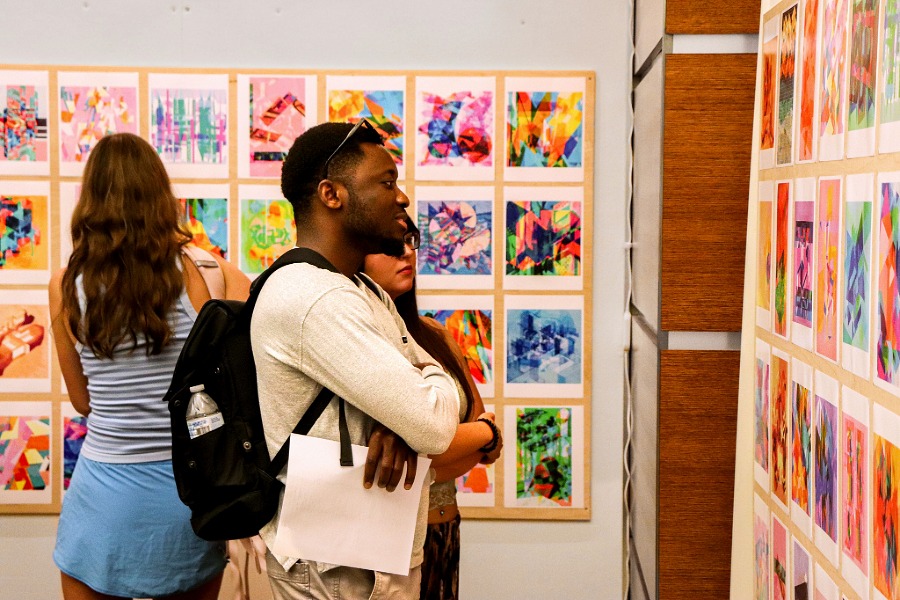
Gibbs College is pleased to present the exhibition 200 Digital Drawings by Professor Tiziana Proietti, currently on display in the Gould Hall Living Room.
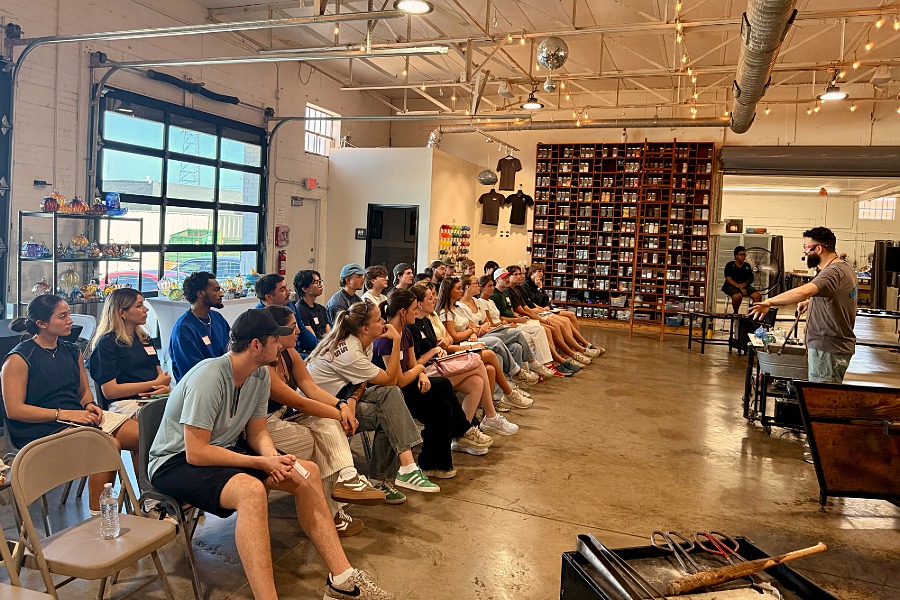
Gibbs College of Architecture Professors Amber Brown and Amy Leveno led 29 students to Dallas, Texas, in September for a learning experience as part of their Design 7 Studio course.
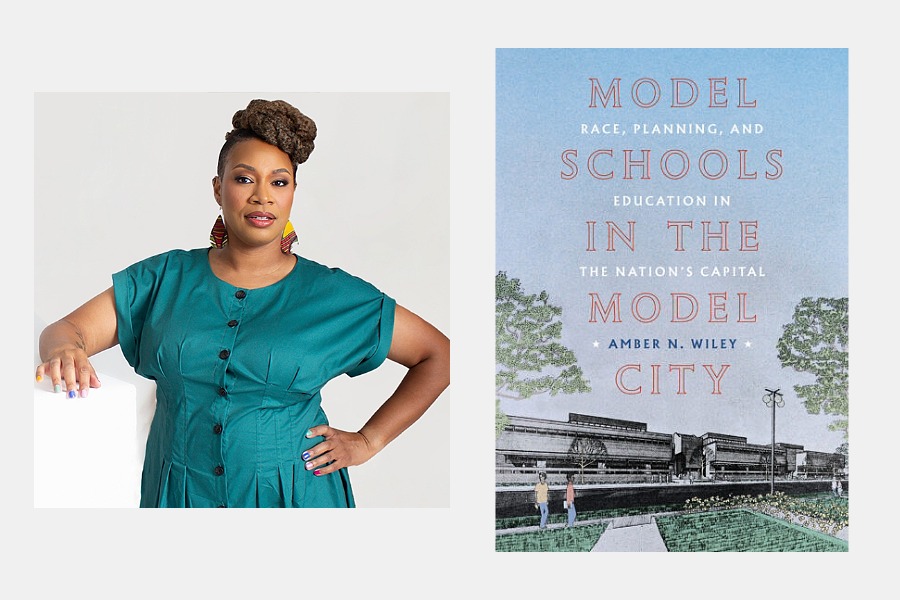
Christopher C. Gibbs College of Architecture professor and Institute for Quality Communities Director Dr. Amber N. Wiley’s book, Model Schools in the Model City: Race, Planning, and Education in the Nation’s Capital, has received two major honors from the Urban History Association.