Emad Najmi Sarooghi, a Ph.D. student in the Haskell and Irene Lemon Division of Construction Science, and Dr. Tamera McCuen, a Professor of Construction Science, recently presented their research on smart cities’ strategies for contractors at the 58th Annual International Associated Schools of Construction Conference in Atlanta, Georgia.
Emad’s paper aims to identify the construction-related strategies in smart cities that could assist contractors in disrupting traditional construction processes using new technologies and processes. Emad conducted a thematic analysis was conducted to categorize the construction-related strategies used by twenty-four smart cities in the United States and around the globe. Six different themes were identified, including 1) Modern Infrastructure, 2) Livable Climate, 3) Efficient Mobility, 4) Education/Training, 5) Inclusive Economy, and 6) Affordable Housing. While several smart cities have implemented some construction-related action plans, others have no strategies related to the construction industry.
The results of Emad and Dr. McCuen’s research could be helpful for further research to identify the future direction of construction in smart cities and define the knowledge and requirements needed for contractors to implement the action plans in smart cities.
Gibbs College of Architecture Associate Professor Dr. Lee Fithian recently had her discussion post, “Building Performance: It’s More Than Skin Deep: From Efficient Envelopes to Regenerative Urban Infrastructure,” accepted by the American Institute of Architects (AIA) Committee on the Environment (COTE) and cross-posted on the Building Performance KC Blog.
Christopher C. Gibbs College of Architecture is proud to announce the promotion of Ph.D. student Rafael Hernandez to lieutenant colonel in the U.S. Army Reserve.
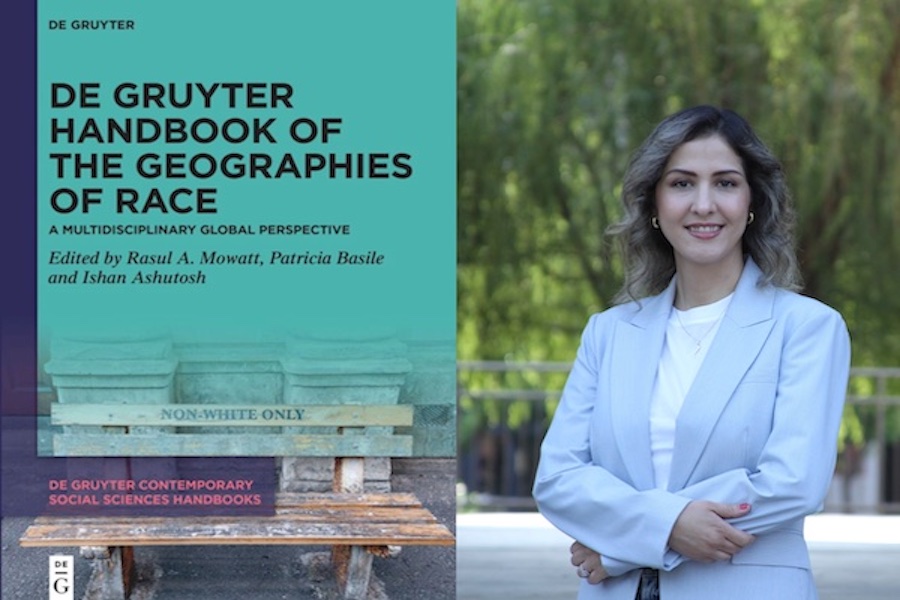
Gibbs College of Architecture Assistant Professor Dr. Ladan Mozaffarian, in the Division of Planning, Landscape Architecture and Design, has co-authored a new book chapter with Josh Newton and Andrew Born, published in De Gruyter Handbook of the Geographies of Race.