Regional + City Planning student Iman Abubakar recently published an op-ed in the OU Daily about transportation inequities in Norman. Abubakar’s article, “Dismantling transportation barriers to socioeconomic equity,” explores accessibility and frequency issues with Norman’s public transportation system.
The local public transport is mostly utilized by low-income families, people with disabilities, and international students who do not have access to cars. According to a survey by Go Norman Transit, 53% of public transportation riders make less than $25,000 a year, and 54% don’t own cars. Despite these statistics, the neighborhoods where many of these citizens live do not have bus stops nearby, leaving them without a reliable form of transportation.
According to Abubakar, another issue with Norman’s transportation system is its limited hours, as it only runs from 7 a.m. to 10 p.m. during the week, and 10 a.m. to 7 p.m. on Saturdays. The low frequency of buses limits those who are dependent on public transport to take them where they need to go, decreasing their standard of living. For instance, these citizens would have no form of transportation to attend night shift jobs, nighttime classes, or access any healthcare facilities once the buses stop running.
Abubakar’s op-ed was written as part of a Regional and City Planning course, “Planning with Diverse Communities,” which is taught by Dr. C. Aujean Lee.
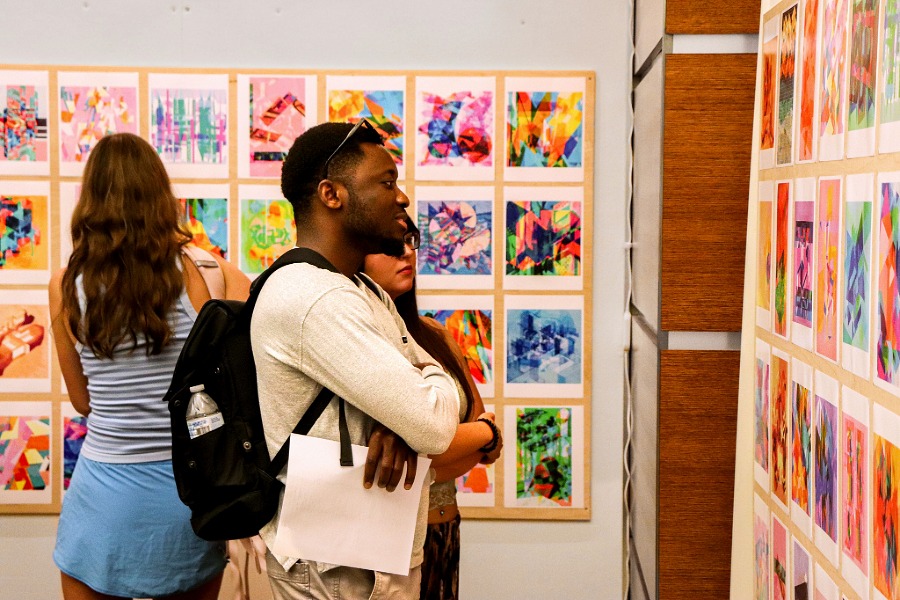
Gibbs College is pleased to present the exhibition 200 Digital Drawings by Professor Tiziana Proietti, currently on display in the Gould Hall Living Room.
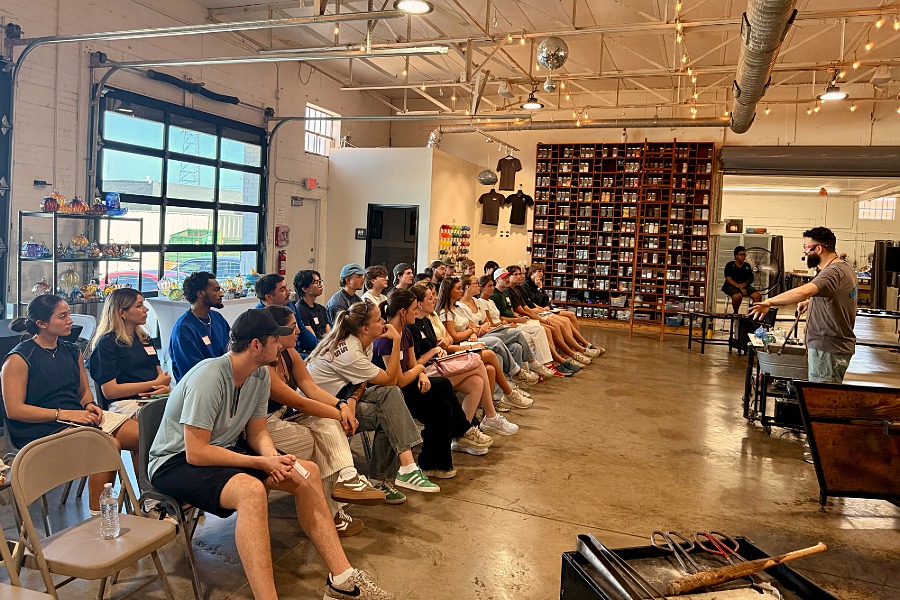
Gibbs College of Architecture Professors Amber Brown and Amy Leveno led 29 students to Dallas, Texas, in September for a learning experience as part of their Design 7 Studio course.
Christopher C. Gibbs College of Architecture professor and Institute for Quality Communities Director Dr. Amber N. Wiley’s book, Model Schools in the Model City: Race, Planning, and Education in the Nation’s Capital, has received two major honors from the Urban History Association.