Last February, University of Oklahoma Landscape Architecture (LA) and Regional + City Planning (RCPL) students worked with Oklahoma State University LA students to host a community event in Perkins, Oklahoma. Students explored the city and engaged with residents to learn more about the small town and the design problems it faces.
On Thursday, February 16, the students gathered residents’ input regarding ways to improve the town. This event allowed them to gain a deeper understanding of the town’s vibrant culture and history as well as its infrastructure issues. The students found that many residents had issues with the roads, sidewalks, and community spaces throughout the town.

The participating OU and OSU students.
The following day, the students hosted a one-day charrette to discuss the issues they discovered during the gathering. The students worked diligently to create solutions that would improve the walkability and amenities within the city. The overall goal was to provide the citizens of Perkins with a complete booklet of designs that could be used for future grant applications and placemaking projects.

OU and OSU students gather to disucss the project.
These changes would enhance Perkin’s current comprehensive plan, allowing locals and visitors to see the great potential the city holds. The team of OU and OSU students came up with 3 different design projects that would benefit the city of Perkins and address the primary issues at hand:
“Project A: Main Street Historic Block” addresses how they could preserve, enhance, and extend the character of Perkin’s Main Street Block. This important landmark has been added to the National Register of Historic Places. As the city continues to grow, it is important to expand the area while keeping it pedestrian friendly and connected with local transportation. To revitalize Main Street, the team suggests design ideas such as streetscapes, active transportation systems, and the restoration of vacant buildings.
“Project B: Active Transportation Plan: Roundabouts” addresses the hazardous state highway that runs directly between the local high school and many residential neighborhoods. The students determined that the most effective way to address this issue was to add roundabouts, which would slow the flow of traffic.
“Project C: Pocket Park” addresses residents’ concerns with the lack of community spaces in the area. A pocket park is a small outdoor space, usually within urban communities, that is surrounded by small residential homes and commercial buildings. This park would connect all the elements of the town together as well as unite the citizens of Perkins.

Students work together on a design.
The community input event and charrette are part of a larger studio project that the students will continue to work on this semester. These events gave them the opportunity to test the limits of their classroom knowledge in a real-life setting. Although this collaborative effort was challenging, the team of OU and OSU students were able to provide the citizens of Perkins with innovative designs that will guide them as their city continues to evolve.
Natalie Young, OU Master of Landscape Architecture student, appreciated the skills she gained during the fast-paced community engagement. "Usually when I approach a project, I want to spend a few days figuring out a million different details and researching multiple possibilities to figure out what best fits the site in question," Young shared. "The charette pushed me to approach things differently: Instead of a month to think on the project, I had less than 12 hours to crank out a finished product for a site I hadn't even considered until that morning. That time crunch was probably the best thing that has ever happened to my design process and my confidence in my own competence!"
Similarly, Rajith Kumar Kedarisetty, an OU Master of Landscape Architecture and Master of Regional + City Planning student, shared "Overall, the charette was an incredible opportunity that allowed me to strengthen my teamwork and communication skills while contributing to a meaningful project that positively impacts the community."

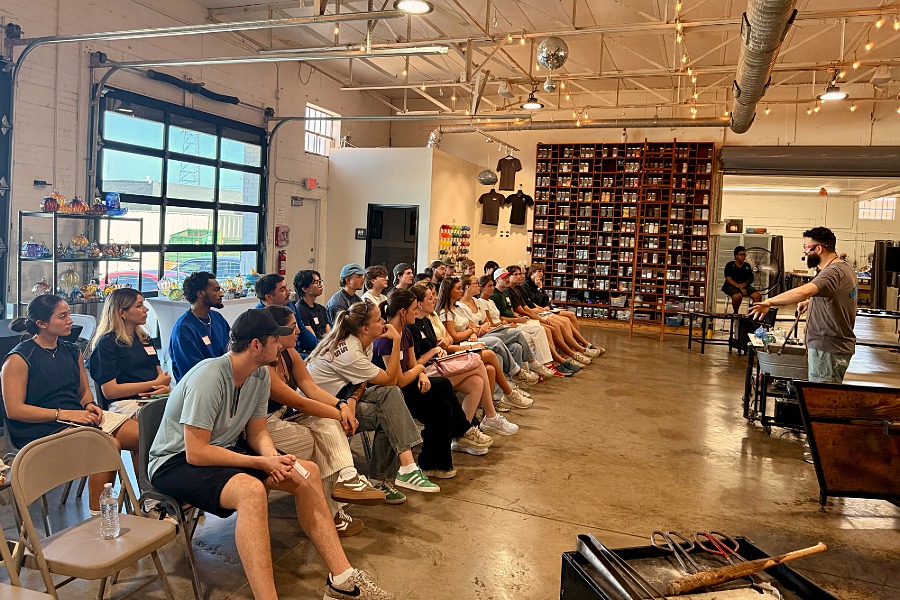
The community engagement event.
OU Master of Landscape Architecture students Jarrod Pace and Iman Moradi reflected on the benefit of additional context gained during community engagement work. "Being in the town added faces and hearts to my efforts designing outdoor spaces in their town," said Pace. "I had genuinely desired to design the best possible places before visiting the town, but now that I've been to Perkins and spoken with residents and local business owners, I feel a deeper sense of purpose."
Moradi shared, "Culture and identity are crucial elements of a community's heritage and history. In Perkins, it's apparent that the community values thair culture, identity, and history. The charette provided an excellent opportunity for designers to communicate with the people of Perkins and understand their vision for the city."
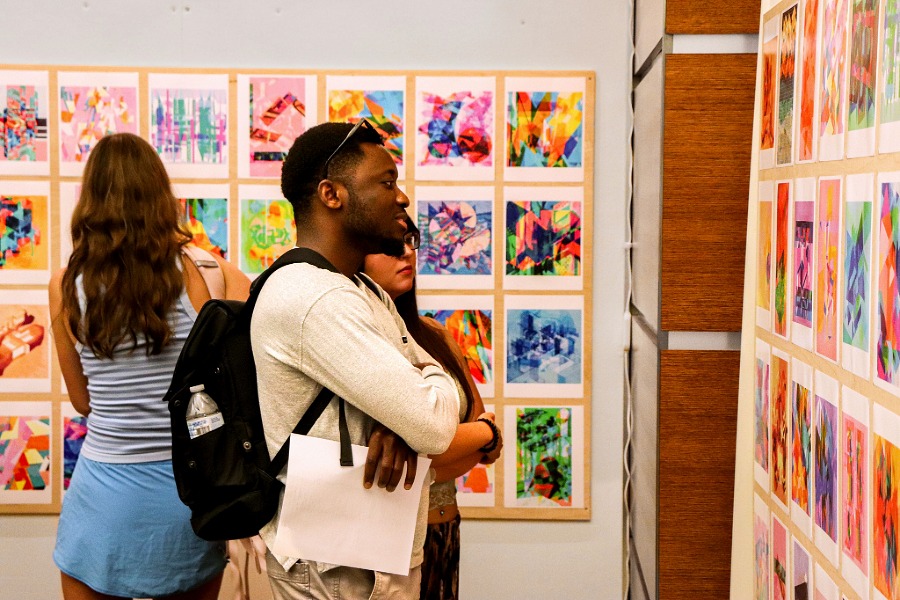
Gibbs College is pleased to present the exhibition 200 Digital Drawings by Professor Tiziana Proietti, currently on display in the Gould Hall Living Room.
Gibbs College of Architecture Professors Amber Brown and Amy Leveno led 29 students to Dallas, Texas, in September for a learning experience as part of their Design 7 Studio course.
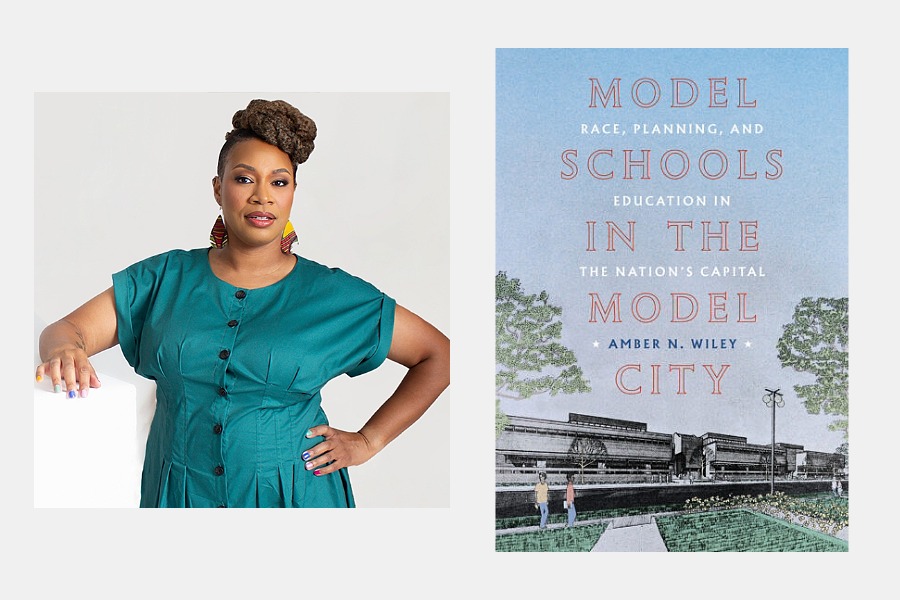
Christopher C. Gibbs College of Architecture professor and Institute for Quality Communities Director Dr. Amber N. Wiley’s book, Model Schools in the Model City: Race, Planning, and Education in the Nation’s Capital, has received two major honors from the Urban History Association.