On April 21, Gibbs College celebrated the inaugural Gibbs Design Activism Awards (GDAA). The GDAA is a grant-initiative that supports student-led design and research projects that engage topics of community, social and economic concerns across Oklahoma.
At the event, Master of Interior Design student Azra Fific and Architecture student Ryan Godfrey received awards for their innovative projects. Fific’s project, Refugees and Placemaking: Healing Trauma Through Interior Design, investigates placemaking and interior design strategies to help the Afghan refugee community heal trauma and assimilate to Oklahoma City.

GDAA Award Recipient Azra Fific presenting her project.
Godfrey’s project, Passing, explores the intersection of architecture, gender and sexual identity, focusing on the different ways in which buildings can be qualified as queer spaces.

GDAA Award Recipient Ryan Godfrey presenting his project.
Gibbs College also announced the 2023-2024 grant recipients Salma Akter, a PhD student in Planning Design and Construction, and Giselle Walker, an Environmental Design student. Their projects were selected from a pool of highly competitive proposals.
Akter’s project, titled Spatializing Refugees during Resettlement: Investigating the Role of Built Environment in Refugee Children’s Well-being, focuses on assessing the well-being of children of families who have fled Myanmar resettled in Tulsa since 1970. Tulsa is known as “Zomi Town” because of the concentration of Zomi (ethnic group) people. Due to the absence of refugee integration in the built environment process, child refugees in south Tulsa often experience profound physical and emotional vulnerabilities in their newly resettled living environment.
This project aims to identify and explore the role of the ‘people-place’ connections or the impact of the built environment and place attributes on children’s psycho-physical well-being and how these connections develop over time in new settlements. Finally, the project intends to develop a perceived “ideal” design model for children’s well-being to guide future research and design.

2023-2024 grant recipients Giselle Walker (left) and Salma Akter (right).
Walker’s project, Cut: The study of wayfinding and directional signage implementation in and around the built environment of historically Black townships in Oklahoma, brings visibility to the unique history of Black Townships in Oklahoma. Through a process of research and mapping, the project will locate and provide information about the fifty towns that have been documented, of which thirteen remain today. This digital wayfinding seeks to uncover the identity gap between passersby and the rich history of these Oklahomans.
These towns were targeted by a series of Jim Crow Laws and county-level oaths that called for white farmers to refuse to rent, lease or sell land within a mile of White or Indian residents to any Black person. With the growing Placemaking movement, under-resourced and under-represented towns are positioned to finally express and represent their unique identities in the built environment. This project will create a graphic story of these All-Black towns, which have persisted despite efforts to harm them socially and economically.
Congratulations to our students for receiving these well-deserved awards!
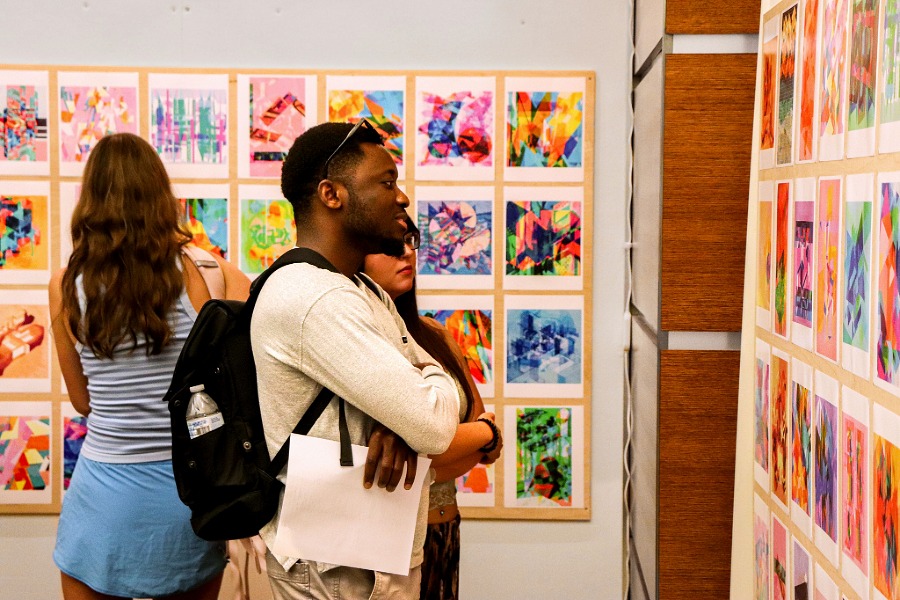
Gibbs College is pleased to present the exhibition 200 Digital Drawings by Professor Tiziana Proietti, currently on display in the Gould Hall Living Room.
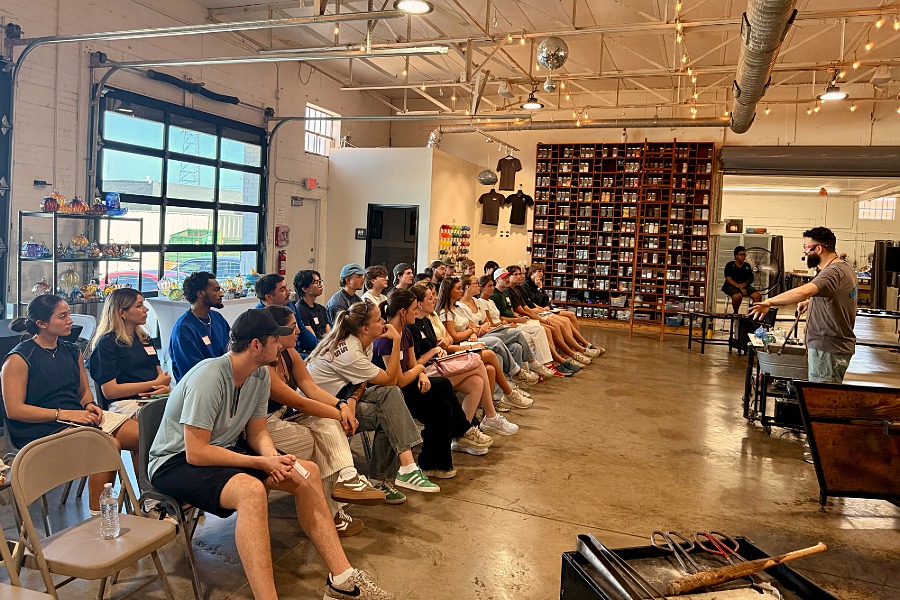
Gibbs College of Architecture Professors Amber Brown and Amy Leveno led 29 students to Dallas, Texas, in September for a learning experience as part of their Design 7 Studio course.
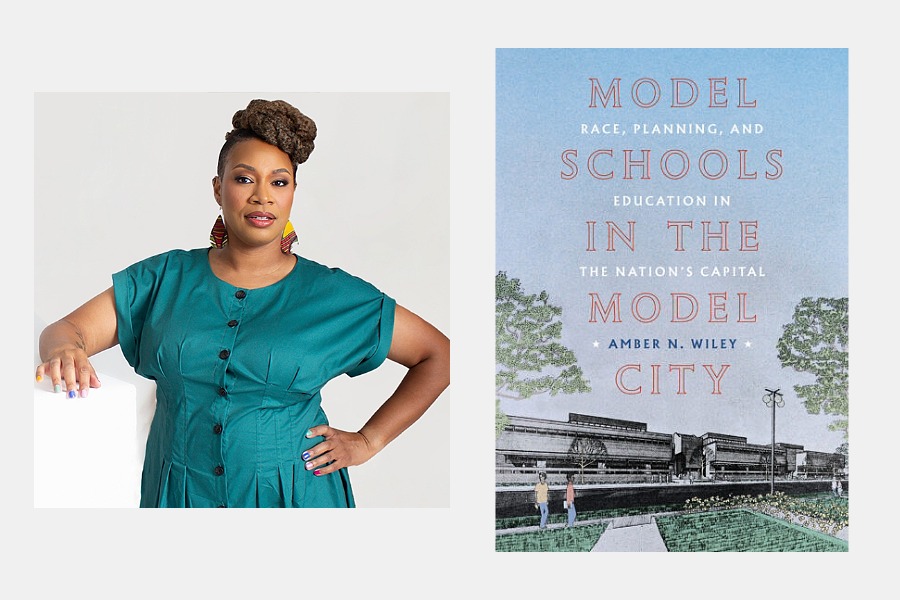
Christopher C. Gibbs College of Architecture professor and Institute for Quality Communities Director Dr. Amber N. Wiley’s book, Model Schools in the Model City: Race, Planning, and Education in the Nation’s Capital, has received two major honors from the Urban History Association.