This semester a group of construction science students enrolled in this spring’s Design+Build course has been constructing a greenhouse and outdoor learning space for Crutcho Public Schools in Oklahoma City. Each spring semester, the Design+Build course gives construction science students the opportunity to build a real-world, full-scale project for an underrepresented or under-resourced community. Previous projects have included a greenhouse for Mark Twain Elementary School in Oklahoma City and mobile medical unit for the Wichita and Affiliated Tribes. The course is supervised by instructors Bryan Bloom and Ken Marold, who complete the design work for the projects ahead of time.
In the short time frame of the spring semester, construction science students take the design from plans to completion – fabricating the necessary components in the Creating_Making Lab, working in the field to prepare the construction site, and eventually completing the on-site build. While the course is only 3 credit hours, students and instructors often go above and beyond to complete the project on time, committed to developing a project that will have local impact.

The design for the greenhouse.
For the past two years, the Design+Build course has partnered with Bart Keeton, the Executive Director of Engage Learning Oklahoma. Engage Learning is a Norman based nonprofit organization that works to bring hands-on STEM learning projects to schools and students. The organization is well connected to schools in the Oklahoma City metro area, allowing the Gibbs’ Design+Build team to be matched with schools that could benefit from their work.

Students survey the site for the new greenhouse.
Last year, the Design+Build course constructed a cedar and polycarbonate greenhouse for Mark Twain Elementary School in Oklahoma City. This year’s project for Crutcho Public Schools expanded on the greenhouse concept to create a larger outdoor learning space and greenhouse that will allow students to learn about horticulture in a hands-on approach. The greenhouse design is intended to make every feature functional, with the building’s structural components also operating as shelves, benches, and other necessary classroom elements.

Students construct the greenhouse.
Instructors Bryan Bloom and Ken Marold hope to continue their work with Engage Learning next spring, possibly to construct a fully conditioned outdoor classroom for an Oklahoma school. These Design+Build projects are free for the communities they are built for, but the program would not be possible without help from outside sponsors. Engage Learning and Ideal Homes were important partners for this semester’s project.

The greenhouse in various stages of construction.
If you are interested in helping sponsor a future Design+Build project – supporting underrepresented communities within Oklahoma as well as the development of Gibbs Construction Science students – please contact Josh Hall (jshall@ou.edu).
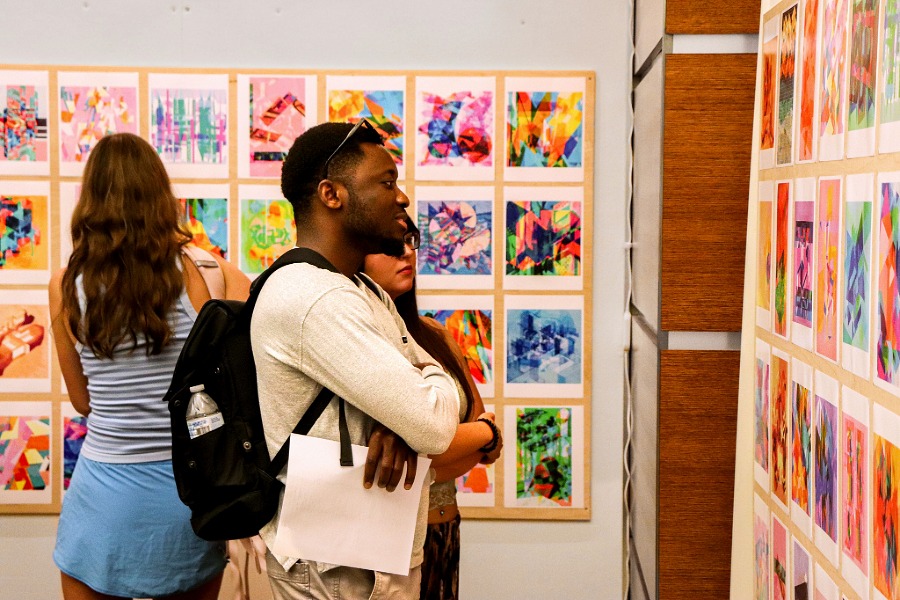
Gibbs College is pleased to present the exhibition 200 Digital Drawings by Professor Tiziana Proietti, currently on display in the Gould Hall Living Room.
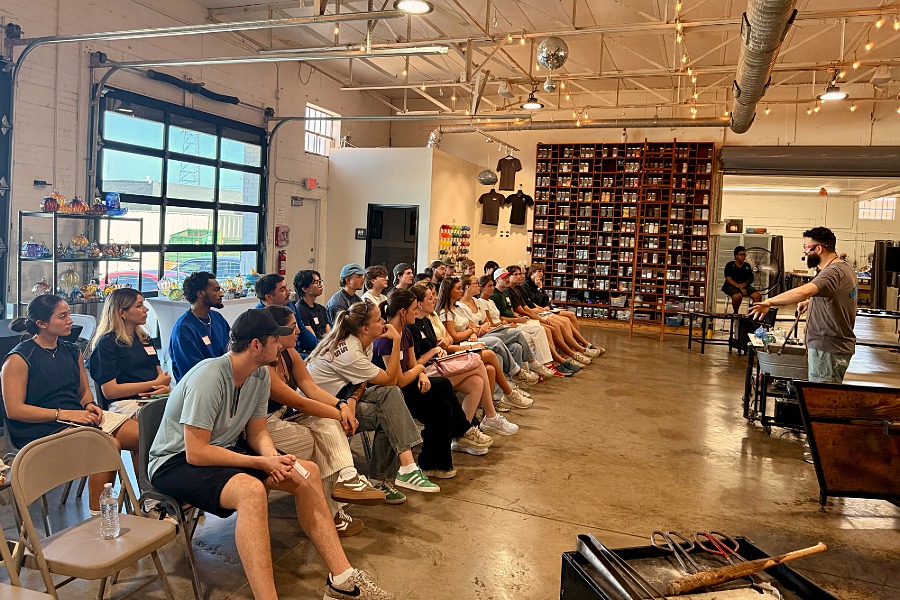
Gibbs College of Architecture Professors Amber Brown and Amy Leveno led 29 students to Dallas, Texas, in September for a learning experience as part of their Design 7 Studio course.
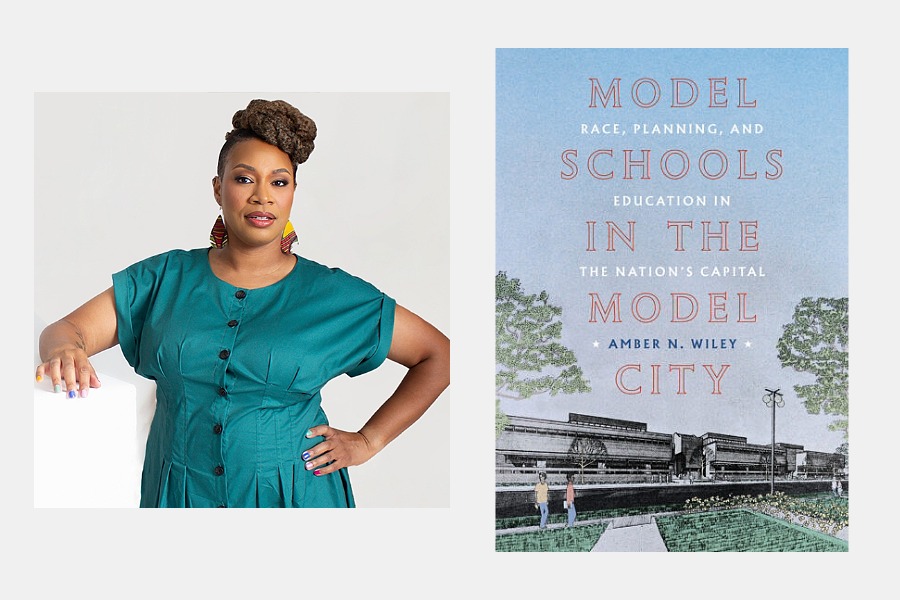
Christopher C. Gibbs College of Architecture professor and Institute for Quality Communities Director Dr. Amber N. Wiley’s book, Model Schools in the Model City: Race, Planning, and Education in the Nation’s Capital, has received two major honors from the Urban History Association.