Gibbs College Architecture professor and director of the Center for Middle Eastern Architecture and Culture, Dr. Khosrow Bozorgi, is publishing a new book, Medieval Courtyard Design Converging Urban Morphologies from Europe to the Middle East. It will be released by Routledge on December 30, 2025.
This groundbreaking edited collection examines courtyard architecture across Paris, Florence, Siena, Granada, and Yazd to reveal how the deliberate creation of emptiness—the "bounded void"—functions as architecture's primary generative principle. Moving beyond conventional object-based analysis, the book demonstrates that architecture's essence lies not in built form but in calibrated absence. In addition to four chapters written by Bozorgi, who also edited the volume, contributors include Gianluca Belli, Fabio Babbrielli, Michele Pellegrini, Juan Manuel Barrios Rozúa, and Peter Soppelsa.
Through rigorous comparative analysis, readers will discover how courtyards operate as environmental mediators, social organizers, and cosmological instruments across diverse cultures. The studies reveals striking morphological convergences that emerge through parallel evolution rather than stylistic diffusion. Drawing on spatial cognition research, urban morphology, and phenomenological analysis, the book establishes void-focused methodology as a new theoretical framework. This paradigm shift from analyzing solid to void transforms our understanding of both historical and contemporary spatial practice, uncovering universal principles that transcend geographic and temporal boundaries.
It is essential for architectural theorists questioning disciplinary orthodoxies, historians seeking alternatives to period-style categorization, and researchers investigating architecture's cognitive dimensions. The work provides both radical historiographical revision and practical insights for contemporary designers engaging with density, sustainability, and social space.
Learn more and pre-order Dr. Bozorgi’s book on www.routledge.com.
Construction Industry Speaker Series welcomed Stephen Evans from the Oklahoma City National Memorial & Museum to give a lecture on better conversations and relationship building.
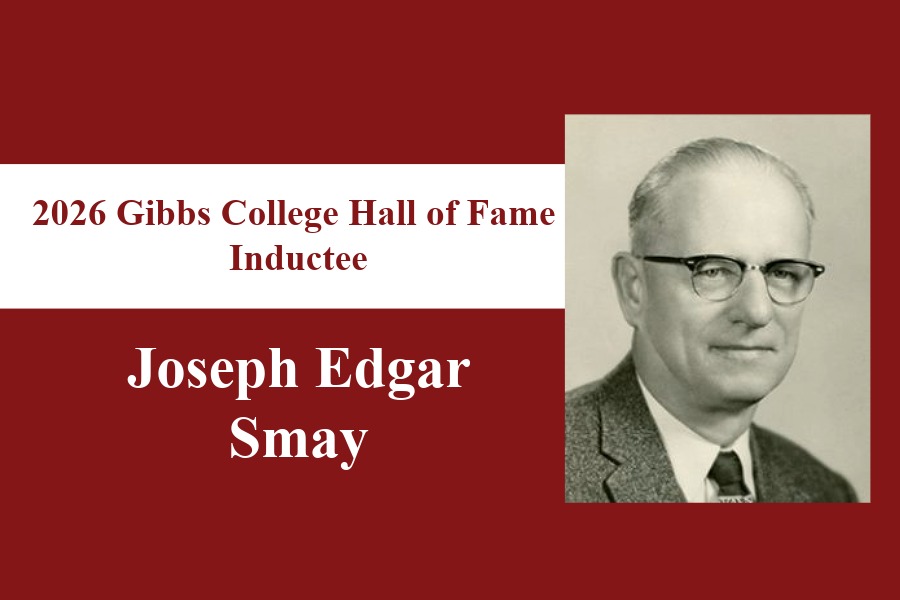
The University of Oklahoma Christopher C. Gibbs College of Architecture Hall of Fame recognizes a select number of high-character individuals who have made a significant and lasting positive impact on Gibbs College, its students, staff, faculty, alumni and/or to communities across the globe. The impact may have been, or continues to be, in the form of service and mentorship, sustained professional excellence, and/or advancement and financial support. Joseph Edgar Smay is part of the 2025 Hall of Fame class.
Christopher C. Gibbs College of Architecture congratulates three architecture students who were recognized in the 2026 AIA Dallas Student Design Awards.