Gibbs College of Architecture proudly congratulates Dr. Shakil Ahmad Shimul, assistant professor of Architecture, whose collaborative research with Dr. Wei Li, Associate Professor of Chemical Engineering at Texas Tech University, has led to a newly issued U.S. Patent (No. 12,435,903 B2) titled “Electroactive Polymer Valve,” and issued October 7, 2025.
At its core, this invention is a soft, flexible valve—a kind of flap that opens and closes when a small amount of electricity is applied. When the flap moves, it quietly lets air flow through, almost like a gentle fan but without any motors or moving blades. An onboard microcontroller with environmental sensors controls the movement of the flaps.
When built into a window or wall, many of these flaps can work together to create a “smart window” or a surface that can automatically let in fresh air or cooler air when outdoor conditions are good and seal shut when it’s too hot, cold, or windy. The system can even be powered by small solar panels or batteries, making it a low-energy, low-noise solution for natural ventilation and indoor comfort.

A window with the patented electroactive polymer valves installed.
Traditional HVAC systems use a lot of energy to heat and cool buildings. Dr. Shimul and Dr. Li’s design works to reduce that load by bringing in outdoor air only when it makes sense, helping keep buildings comfortable while saving energy. It’s a simple idea with big potential for sustainable architecture and responsive building design.
“Our goal was to create a system that enables automatic and efficient indoor-outdoor environmental exchange, ensuring a comfortable and healthier indoor atmosphere, Additionally, we aimed to design a solution that is affordable and easy to use, allowing everyone to access and benefit from it.”
This patent highlights how innovation often happens when architecture meets engineering. Dr. Shimul’s architectural expertise and Dr. Li’s expertise in soft materials combined to create a new approach to adaptive building systems—one that’s efficient, flexible, and aesthetically adaptable.
Dr. Shimul’s ongoing work in adaptive building systems, which will be presented at the 2025 ASHRAE Buildings XVI Conference, demonstrates Gibbs College’s ongoing commitment to design innovation
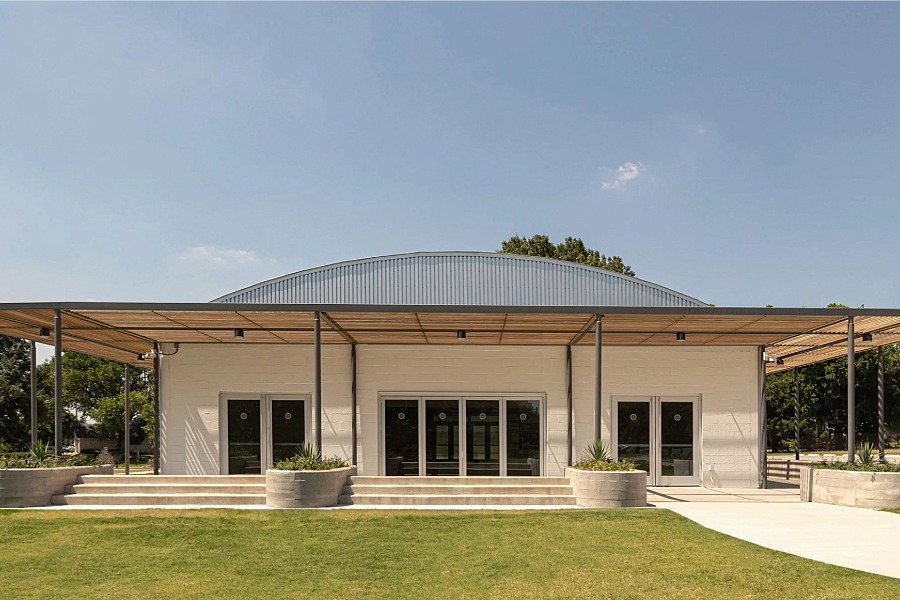
Christopher C. Gibbs College of Architecture assistant professor Amy Leveno and Mark Leveno, co-founders of OFFICIAL Design, have received a 2026 AIA Central States Region Design Award for the firm’s Granger Annex Community Center project in Garland, Texas.
Construction Industry Speaker Series welcomed Stephen Evans from the Oklahoma City National Memorial & Museum to give a lecture on better conversations and relationship building.
The University of Oklahoma Christopher C. Gibbs College of Architecture Hall of Fame recognizes a select number of high-character individuals who have made a significant and lasting positive impact on Gibbs College, its students, staff, faculty, alumni and/or to communities across the globe. The impact may have been, or continues to be, in the form of service and mentorship, sustained professional excellence, and/or advancement and financial support. Joseph Edgar Smay is part of the 2025 Hall of Fame class.