NEWS

TULSA, OKLA. – The TSET Health Promotion Research Center (HPRC), a component of OU Health Stephenson Cancer Center, is expanding to the OU-Tulsa campus. The expansion will provide an additional site for HPRC’s mission of reducing the burden of disease in Oklahoma by addressing modifiable health risk factors such as tobacco use, sedentary lifestyle, poor diet, cancer screening and risky alcohol and substance use through research, novel intervention development, and dissemination of research findings.
Stephenson Cancer Center, Oklahoma’s only National Cancer Institute-Designated Cancer Center, recently announced its expansion to Tulsa to bring NCI-level care and clinical trials to people throughout northeastern Oklahoma. The work of HPRC, supported by the cancer center and the Oklahoma Tobacco Settlement Endowment Trust (TSET), complements Stephenson’s mission with its research and educational programs.
HPRC-Tulsa will ultimately be staffed by 12 faculty members and additional support staff. Hiring has begun, and five new faculty members will begin work this fall. They will occupy offices and shared laboratory space at the Schusterman Center in midtown Tulsa at 41st and Yale. Currently, HPRC has 27 faculty members — five in Tulsa and 22 in Oklahoma City.
In collaboration with HPRC faculty in Oklahoma City, HPRC-Tulsa will support a substantial increase in health promotion research in northeastern Oklahoma. HPRC-Tulsa plans to recruit researchers with expertise in areas such as Native American health inequities, cancer survivorship (including pain), community-engaged research (especially with rural communities), physical activity, obesity, nutrition, opioid misuse, health behavior change (especially around smoking, substance use, physical activity and diet), and health services/implementation science.
The Tulsa site will also be the home of an advanced pain research laboratory supporting the work of Jamie Rhudy, Ph.D., OU’s site director for HPRC-Tulsa, and his collaborators. Rhudy, a professor of health promotion science in the OU Hudson College of Public Health, has over 25 years of research experience in affective neuroscience, studying how the brain processes emotions, specifically focusing on the interface of emotion and pain processing. His research examines the psychological, sociological/environmental, and biological mechanisms that contribute to chronic pain risk.
For the past decade, Rhudy’s work has focused on understanding health risk mechanisms in Native Americans. Nearly one in three Native Americans reports experiencing chronic pain and approximately one in seven reports chronic pain that disables them on most days.

About the University of Oklahoma
Founded in 1890, the University of Oklahoma is a public research university located in Norman, Oklahoma. As the state’s flagship university, OU serves the educational, cultural, economic and health care needs of the state, region and nation. OU was named the state’s highest-ranking university in U.S. News & World Report’s most recent Best Colleges list. For more information about the university, visit ou.edu.
The University of Oklahoma has received a transformative gift from Jon and Shannon McCartney, which will name the McCartney Family Tunnel of Champions, the McCartney Family Gate of the Gaylord Family - Oklahoma Memorial Stadium and the McCartney Family Grand Lecture Hall in the Michael F. Price College of Business. The gift will also support the Inspiring Champions and the Athletic Director’s Discretionary Fund, in addition to establishing the McCartney DFW Career Trek program at Price College.
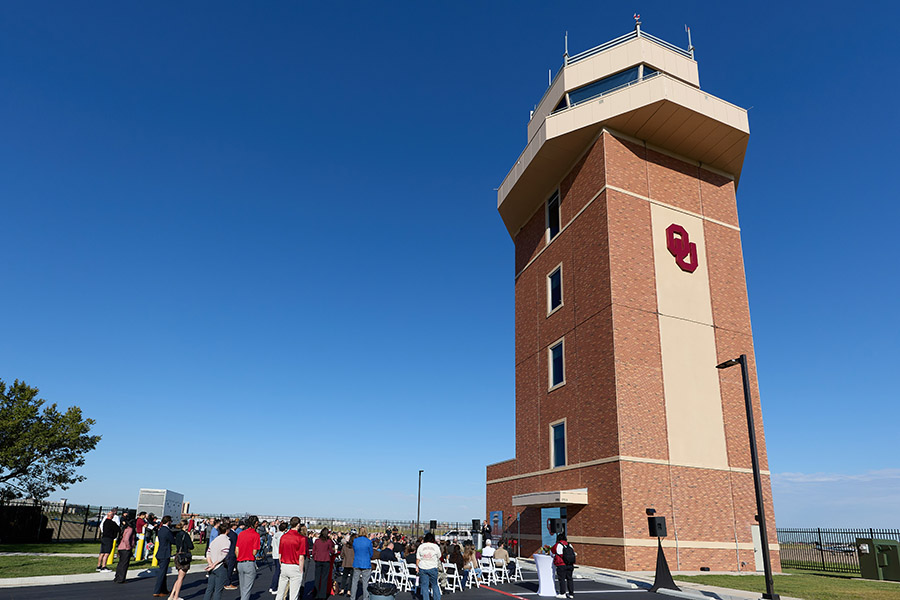
The University of Oklahoma today celebrated the opening of a new air traffic control tower at the OU Max Westheimer Airport. Standing 106 feet tall, more than double the current 52-foot facility, the new tower will modernize air traffic control operations and improve safety for pilots and students operating in the airspace.
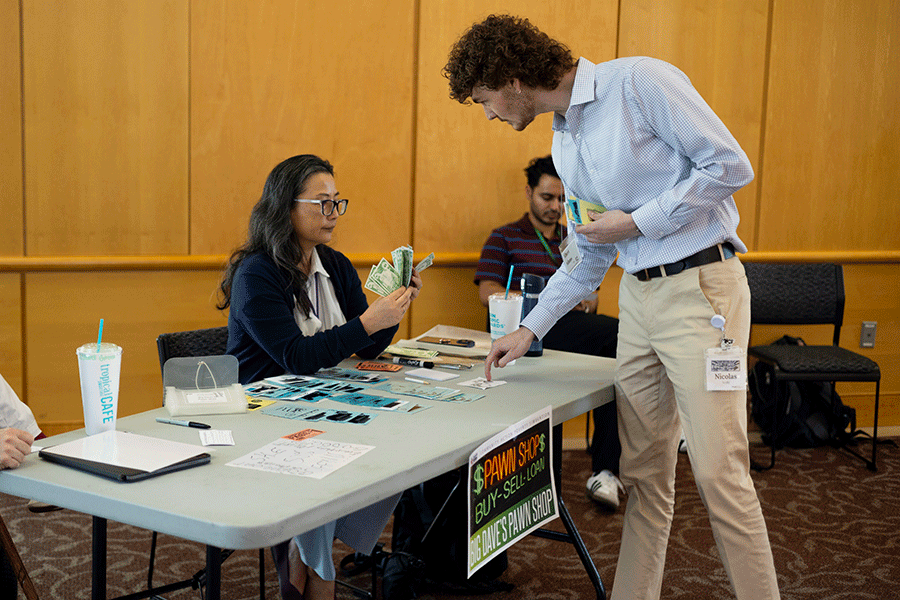
Do I buy groceries or pay the electric bill? Should I pawn some of my belongings to afford my prescription? My child is sick, so I will have to miss work to take care of him. Those are just a few of the difficult choices that OU-Tulsa health professional students confronted during the Community Access to Resources Experience. The role-playing activity challenged students to navigate the financial, family and other pressures that can affect a person’s health and ability to follow medical advice. Held annually during the SCM Institute orientation week, the experience is designed to generate understanding and build empathy.