NEWS


NORMAN, OKLA. – The University of Oklahoma, through its Data Institute for Societal Challenges, has signed a memorandum of understanding with the College of Liberal Arts and Convergence Science at the Korea Advanced Institute of Science and Technology to facilitate long-term data science collaboration.
This agreement will allow OU and KAIST faculty and students to solve societal challenges in data science, data-enabled science, public policy and strategic communication to counter misinformation and disinformation. Furthermore, the two organizations will develop courses on data-enabled future strategies in graduate courses and data science-informed policy interventions for Asia-specific and global problems.
“This new partnership with KAIST enhances DISC’s mission of driving convergent solutions to grand societal challenges,” said David Ebert, director of the Data Institute for Societal Challenges. “We look forward to elevating our commitment to this collaboration and strengthening this trans-Pacific partnership with like-minded, data-driven researchers.”
This partnership builds on the already-established relationship between DISC and KAIST. In 2023, OU signed a previous MOU with KAIST’s Moon Soul Graduate School of Future Strategies, a program in the College of Liberal Arts and Convergence Sciences.
Learn more about KAIST’s College of Liberal Arts and Convergence Sciences and about the prior MOU between DISC and KAIST.
About the University of Oklahoma
Founded in 1890, the University of Oklahoma is a public research university located in Norman, Oklahoma. As the state’s flagship university, OU serves the educational, cultural, economic and health care needs of the state, region and nation. OU was named the state’s highest-ranking university in U.S. News & World Report’s most recent Best Colleges list. For more information about the university, visit ou.edu.
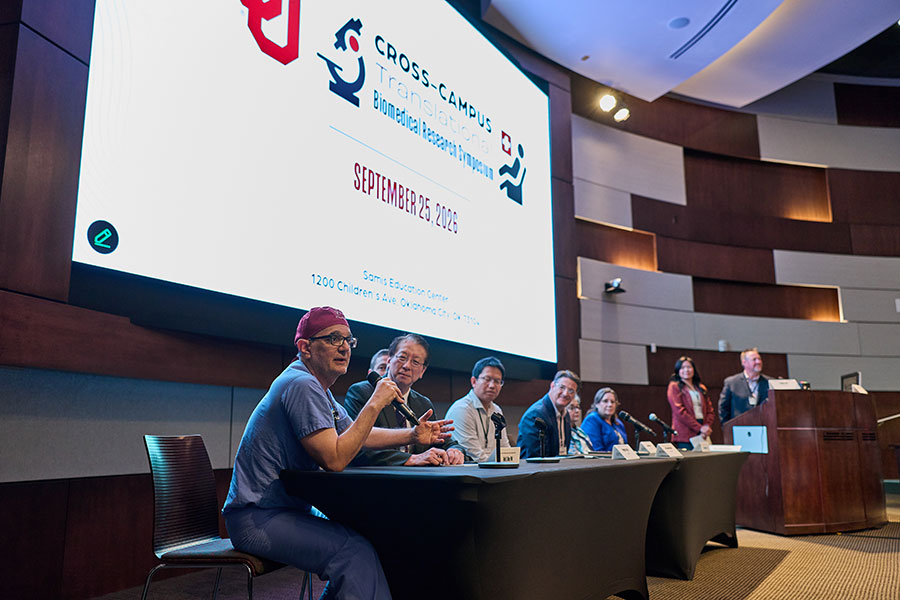
More than 250 researchers, clinicians, engineers, entrepreneurs and students gathered Sept. 25 for the University of Oklahoma’s first Cross-Campus Translational Biomedical Research Symposium.
State agencies across the United States rely on irrigation maps for managing freshwater resources. Researchers from the University of Oklahoma are improving these critical maps by leading two projects that will support timely, reliable information.
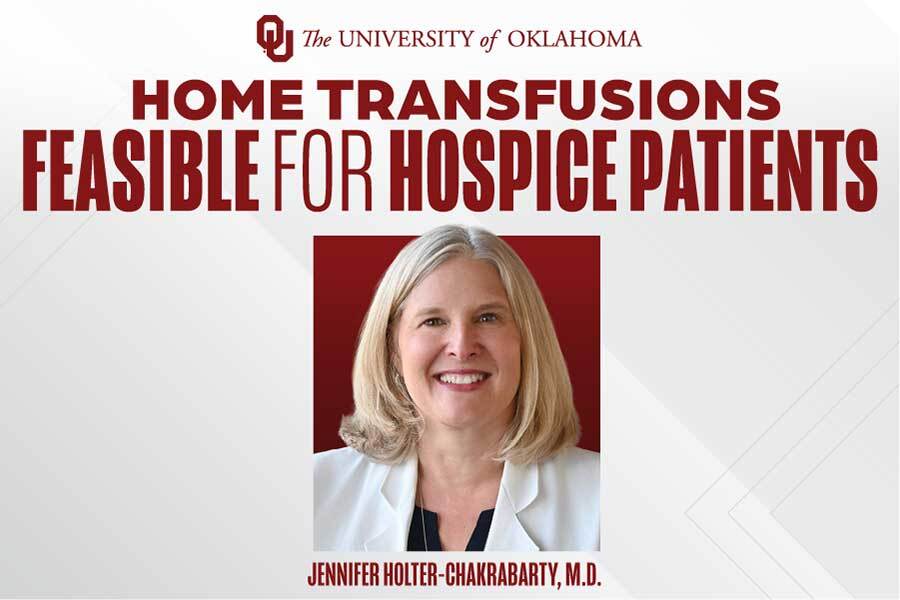
A first-of-its-kind study from the University of Oklahoma found that hospice agencies can provide blood and platelet transfusions at home for patients with blood cancers who are no longer pursuing aggressive treatment. The approach allowed patients to receive transfusions for symptom relief without repeated trips to a hospital or clinic, giving them more opportunity to spend time with loved ones.