NEWS


NORMAN, OKLA. – Mikhail Kellawan, an associate professor in the Department of Health and Exercise Science and director of the Human Circulation Research Laboratory at the University of Oklahoma, has been awarded the John F. Perkins Jr. Research Career Enhancement Award from the American Physiological Society. This award allows early-career researchers to obtain special training or for an established researcher to develop new skills or retrain in areas of developing interest.
“My research focuses on studying how the body matches blood flow to the demands of tissue, specifically during exercise or environmental stress,” he said. “With this award, we will begin using microneurography to record nervous signals in humans. That’s important because the nervous system helps control blood pressure.”
According to Kellewan, his lab employs a wide array of techniques to measure blood flow during exercise. Adding microneurography will enhance their ability to learn how the cardiovascular system is controlled in humans.
“We use ultrasound to measure blood flow through a limb. At the same time, we’re employing a transcranial doppler to measure blood flow through the middle cerebral arteries. We also have many ways to measure the amount of oxygen consumed, carbon dioxide produced, heart rate, blood pressure and more,” he said. “However, the missing piece is the measurements of the sympathetic nervous system that the microneurography can produce. Once we have that, we’ll have a really advanced setup.”
While his lab already provides training for students interested in his research, adding this new technique will enhance their learning experiences and give them specialized knowledge that will likely help them in the future.
“Because we’re interested in measuring two circulations at the same time in the same person, our lab involves a lot of people. We currently have four doctoral students, two master’s students and another six or seven undergrads who volunteer with us,” he said. “With this new application, we’ll not only be able to capture new data sets, but we’ll be able to give our student researchers a more robust experience and make them more attractive candidates for faculty positions or fellowships in the future.”
Learn more about Kellawan’s research through the Human Circulation Research Lab and see the full list of award recipients from the American Physiological Society.
About the University of Oklahoma
Founded in 1890, the University of Oklahoma is a public research university located in Norman, Oklahoma. As the state’s flagship university, OU serves the educational, cultural, economic and health care needs of the state, region and nation. OU was named the state’s highest-ranking university in U.S. News & World Report’s most recent Best Colleges list. For more information about the university, visit ou.edu.
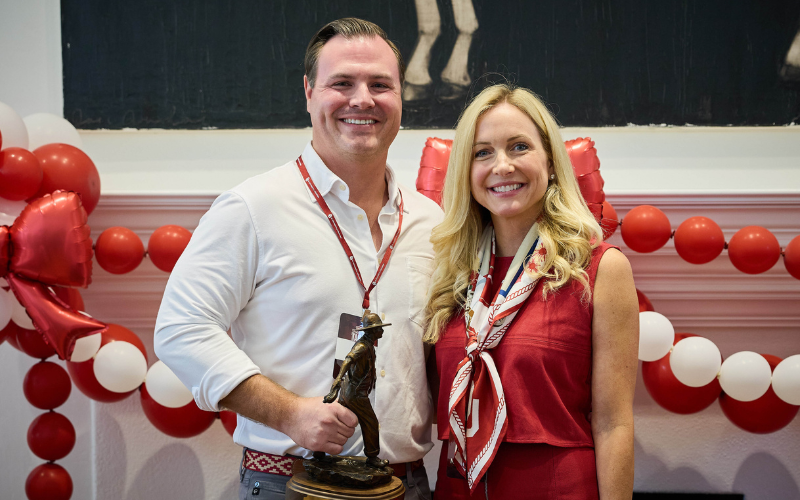
The University of Oklahoma has received a transformative gift from Jon and Shannon McCartney, which will name the McCartney Family Tunnel of Champions, the McCartney Family Gate of the Gaylord Family - Oklahoma Memorial Stadium and the McCartney Family Grand Lecture Hall in the Michael F. Price College of Business. The gift will also support the Inspiring Champions and the Athletic Director’s Discretionary Fund, in addition to establishing the McCartney DFW Career Trek program at Price College.
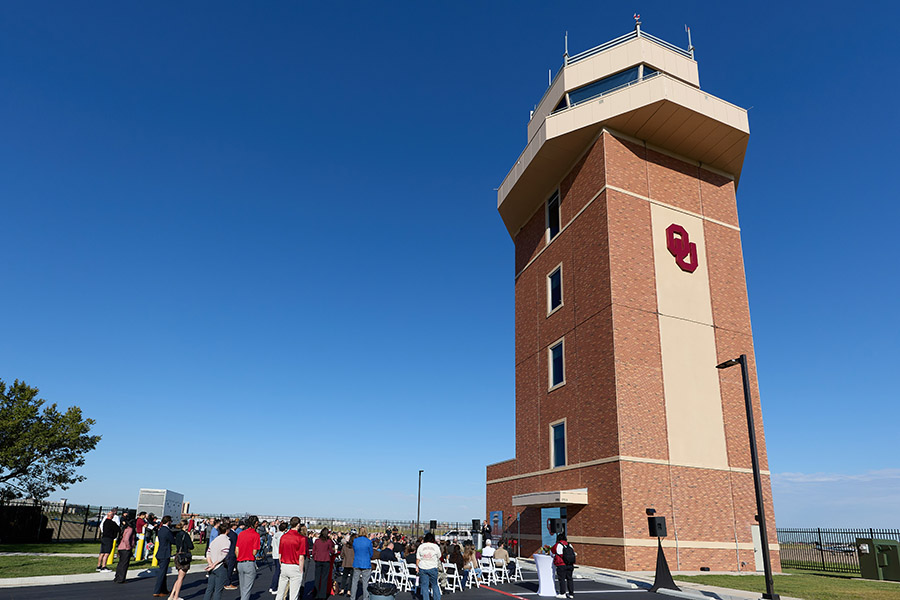
The University of Oklahoma today celebrated the opening of a new air traffic control tower at the OU Max Westheimer Airport. Standing 106 feet tall, more than double the current 52-foot facility, the new tower will modernize air traffic control operations and improve safety for pilots and students operating in the airspace.
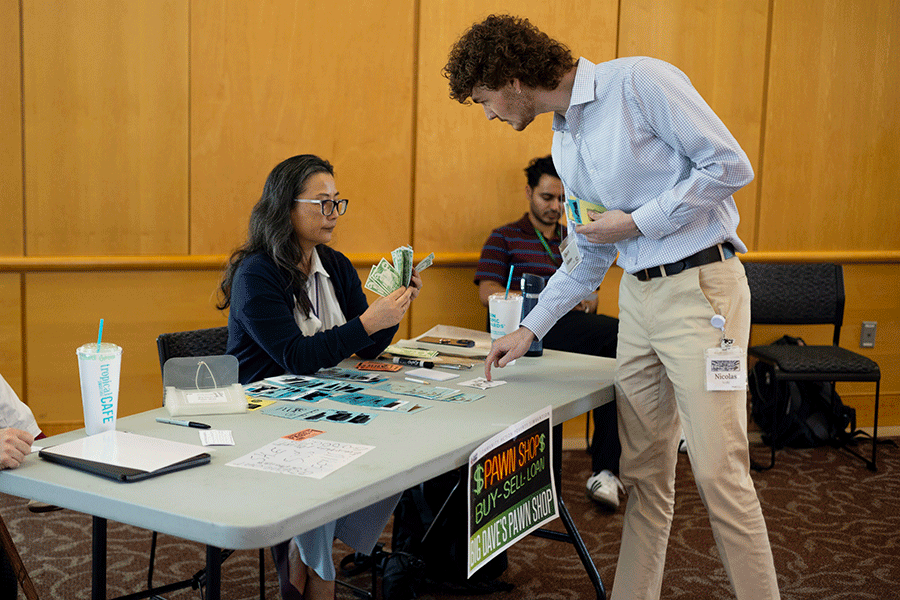
Do I buy groceries or pay the electric bill? Should I pawn some of my belongings to afford my prescription? My child is sick, so I will have to miss work to take care of him. Those are just a few of the difficult choices that OU-Tulsa health professional students confronted during the Community Access to Resources Experience. The role-playing activity challenged students to navigate the financial, family and other pressures that can affect a person’s health and ability to follow medical advice. Held annually during the SCM Institute orientation week, the experience is designed to generate understanding and build empathy.