NEWS


NORMAN, OKLA. – Alisa Javadi, Ph.D., professor at the University of Oklahoma School of Electrical and Computer Engineering and the Homer L. Dodge Department of Physics and Astronomy, has received funding from the U.S. Department of Energy Early Career Research Program for research that offers the potential for advancing quantum technology development.
Javadi’s research will test the use of cerium oxide as a host for quantum bits, or qubits. Qubits, the building blocks of quantum computing, need an environment free of magnetic noise to function properly. Isotopic purification, which removes magnetic nuclei, is the only guaranteed solution, but it is costly. Currently, diamond is the leading material for quantum emitters. However, diamonds are expensive and contain magnetic carbon atoms, which require further isotopic purification.
Javadi’s project explores a promising alternative. Cerium oxide is made of cerium and oxygen, which both lack magnetic nuclei. By providing a noise-free environment, it is an ideal candidate for hosting qubits. Javadi says that this project will contribute to the progress of photonic quantum technologies and that these discoveries could significantly impact a broad range of disciplines, such as secure communication technologies and biology.
The study's first phase will focus on identifying color centers, or optically active quantum bits, and understanding their properties. Color centers are typically arrangements of extrinsic atoms in the host, atoms that are not native to the host. The team will use theoretical studies to narrow the search for the right combination of these atoms to a handful of candidates. They will then grow the host crystals through pulsed laser deposition, a technique that allows for testing with short turnaround times. The team will then conduct room-temperature and cryogenic studies to test the photon emission from these color centers and validate the theoretical predictions.
The project will also explore the role that geometry plays in the optical emission of ensembles of emitters. One phenomenon of interest is superradiance, where quantum emitters work collectively to generate bursts of energy. Javadi will compare how geometry influences superradiance in different forms of arrangement of emitters, including a three-dimensional crystal and a two-dimensional sheet.
Javadi earned his doctoral degree from the Niels Bohr Institute at the University of Copenhagen. He was a postdoctoral researcher at the University of Copenhagen and at the University of Basel. He has received a European Research Council Starting Grant and the Marie Skłodwska-Curie Postdoctoral Fellowship from the European Commission. His research interests include quantum sensing, communication and quantum light sources.
Learn more about Javadi’s research group here.
About the project
“Color Centers in Noise-Free Hosts for Quantum Sensing and Communication Applications” will receive $875,524 from the Office of Basic Energy Sciences and the Department of Energy’s Established Program to Stimulate Competitive Research. The project began on July 1, 2024 and will conclude on June 30, 2029.
About the University of Oklahoma
Founded in 1890, the University of Oklahoma is a public research university located in Norman, Oklahoma. As the state’s flagship university, OU serves the educational, cultural, economic and health care needs of the state, region and nation. For more information about the university, visit www.ou.edu.
One in eight Oklahomans has type 2 diabetes, and an estimated one-third of the state’s adult population has undiagnosed prediabetes. University of Oklahoma researchers are developing a digital outreach program to help people understand their risk and connect with resources to help prevent the disease.
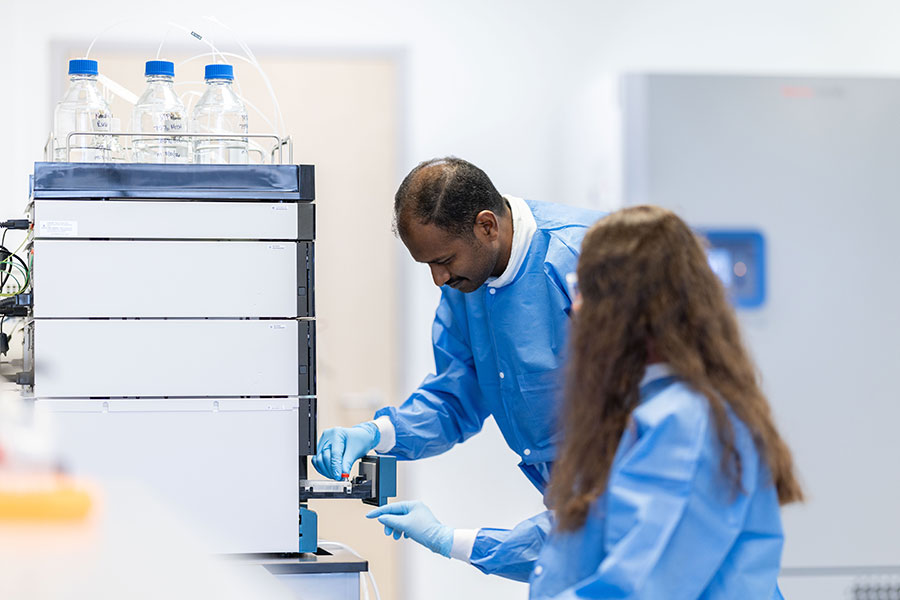
The Presbyterian Health Foundation has provided a grant for the University of Oklahoma College of Pharmacy to obtain its first liquid chromatography mass spectrometry equipment system. This acquisition expands the health campus’s ability to turn research into real-world impact.
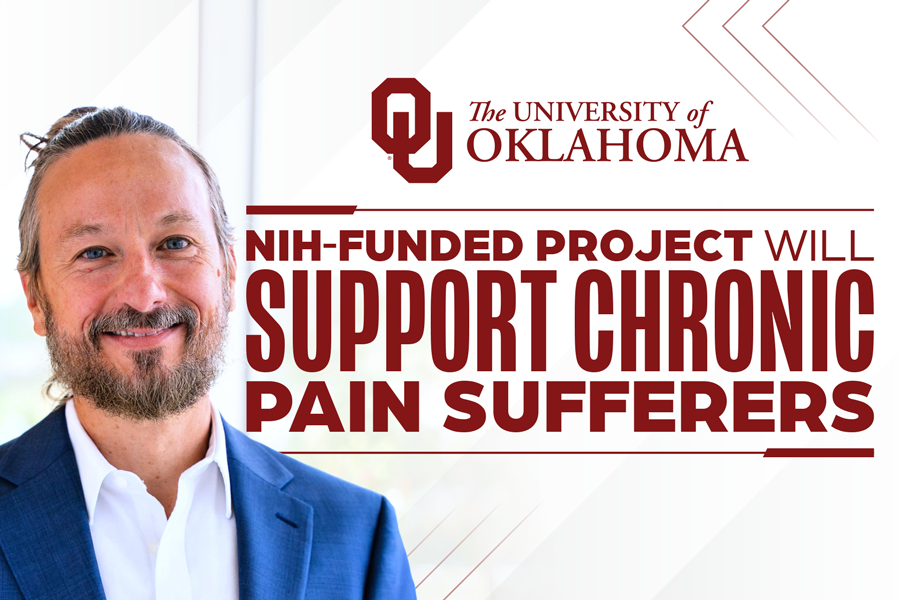
Armed with a new five-year, $3.4 million grant from the National Institutes of Health, OU healthcare leaders are building the first chronic pain mHealth intervention app made with and for Native Americans.