NEWS


OKLAHOMA CITY - Hans E. Butzer, dean of the Christopher C. Gibbs College of Architecture and director of Butzer Architects and Urbanism, recently achieved a first for the state of Oklahoma. Dolese Headquarters in Oklahoma City, designed by Butzer’s architecture practice, received WELL Building “Silver” Certification through the International WELL Building Institute. As the first in the state, this project sets a new benchmark for building practices that support health and well-being in Oklahoma.
WELL certification is part of an international evidence-based standard focusing on the health and well-being of building occupants with a people-first approach to buildings, organizations and communities. The certification process is rigorous, as a building must meet a range of predefined standards. The completed building must then undergo performance testing and a final evaluation by a third party to verify compliance with WELL requirements.
Dolese is a leading producer of concrete, aggregate, stone and sand in Oklahoma and Texas. The newly certified Dolese Customer Service Center serves as the company’s first new headquarters in more than 80 years. The building was designed to support the health of employees through its form and function. Inspired by the chemistry of concrete, the design incorporates elements drawn from Dolese’s natural and engineered products. Large windows, glass details, and sculptural light fixtures brighten interior spaces and create welcoming areas for conversation and collaboration.
According to the IWBI website, “The WELL Building Standard is the world’s leading health-focused building rating system. Developed over 10 years and backed by the latest scientific research, WELL sets pathways for accomplishing health-first factors that help everyone by supporting physical and mental health across 10 core concepts: air, water, nourishment, light, movement, materials, sound, thermal comfort, mind and community.”
About the University of Oklahoma
Founded in 1890, the University of Oklahoma is a public research university located in Norman, Oklahoma. As the state’s flagship university, OU serves the educational, cultural, economic and health care needs of the state, region and nation. For more information about the university, visit www.ou.edu.
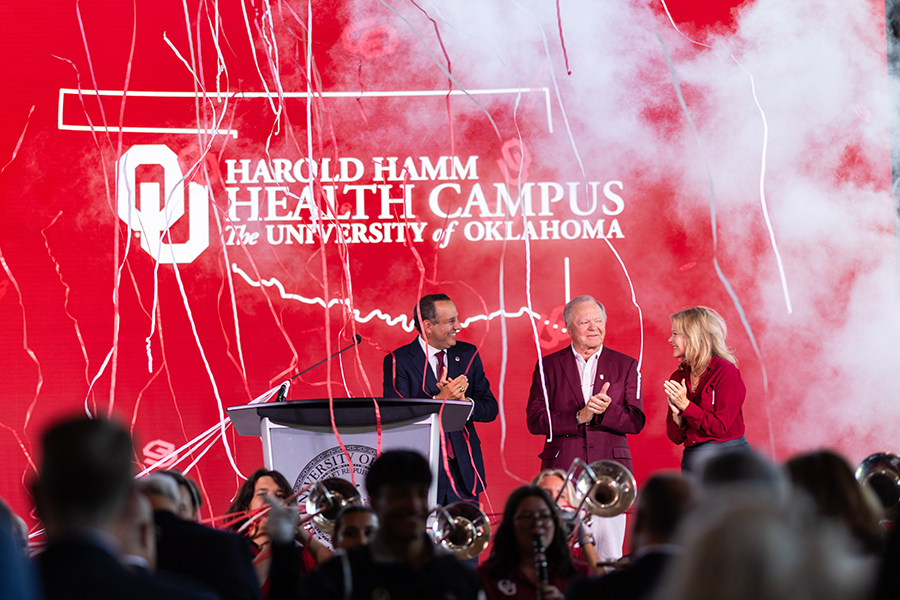
The University of Oklahoma today announced an historic $150 million gift from Harold Hamm, the largest single gift in university history, to lift the health of Oklahoma by advancing health education, research and discovery, strengthening the state’s health care workforce and accelerating the pursuit of breakthroughs against Oklahoma’s critical public health challenges.
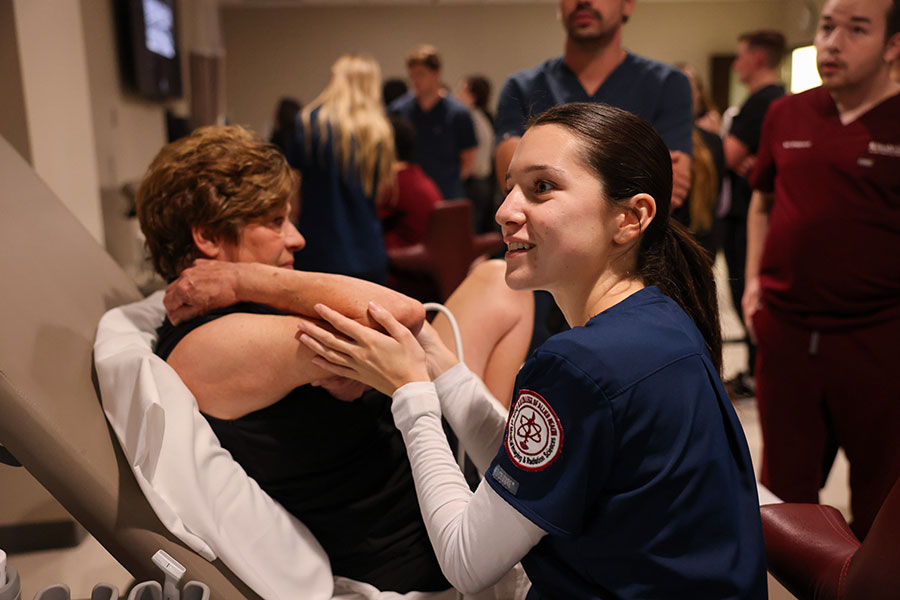
Experienced sonography students in the OU College of Allied Health work with students in the OU College of Medicine on how to utilize modern ultrasound systems. This interprofessional setting is made possible through a recently opened laboratory and cross-college collaboration on the OU Health Campus.
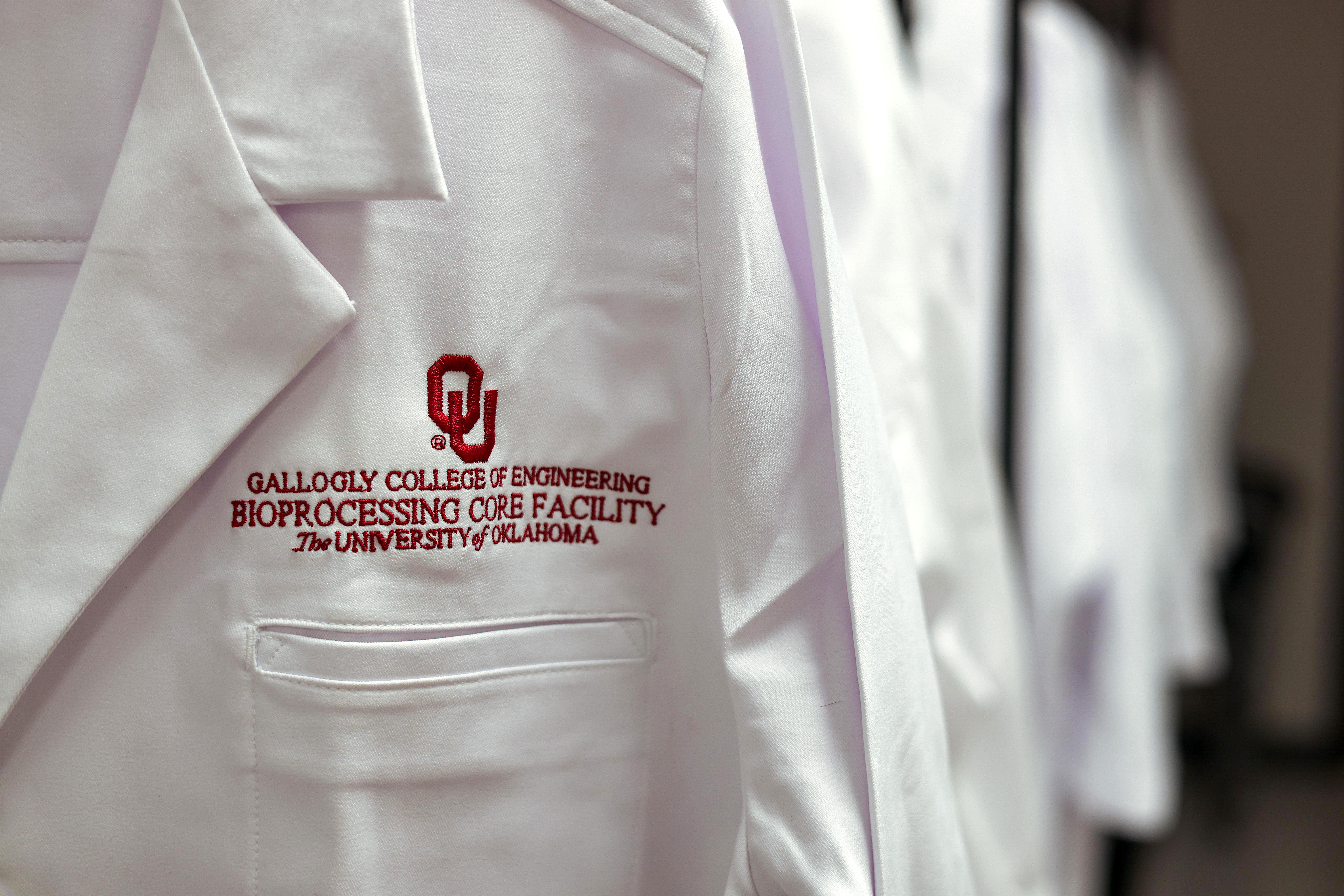
The Gallogly College of Engineering at the University of Oklahoma has launched a new Online Graduate Certificate in Bioprocessing, a forward thinking program designed to expand access to bioprocessing education while strengthening the nation’s biotechnology workforce.