NEWS


NORMAN, OKLA. – Researchers at the University of Oklahoma have developed a breakthrough method of adding a single nitrogen atom to molecules, unlocking new possibilities in drug research and development. Now published in the journal Science, this research is already gaining international attention from drug manufacturers.
Nitrogen atoms and nitrogen-containing chemical structures, called heterocycles, play a pivotal role in medicinal chemistry and drug development. A team led by OU associate professor Indrajeet Sharma has demonstrated that by using a short-lived chemical called sulfenylnitrene, researchers can insert one nitrogen atom into bioactive molecules and transform them into new pharmacophores that are useful for making drugs. This process is called skeletal editing and takes inspiration from Sir Derek Barton, the recipient of the 1969 Nobel Prize in Chemistry.
“85% of all existing FDA-approved drugs have one or more nitrogen atoms. And, when you look at the top 200 brand name drugs, 75-80% have nitrogen heterocycles,” he said. “By selectively adding one nitrogen atom to these existing drug heterocycles in the later stages of development, we can change the molecule’s biological and pharmacological properties without changing its functionalities. This could open uncharted regions of chemical space in drug discovery.”
According to Sharma, this skeletal editing process allows for more drug diversity because, rather than developing new drugs from scratch, researchers can incorporate a single nitrogen atom to make a new set of drugs. Nitrogen is important in this process because DNA, RNA, proteins and amino acids are all made with nitrogen, meaning Sharma’s research has far-reaching impacts on potentially treating diseases like cancer and neurological disorders.
Previously published research in this field demonstrated a similar concept but required conventional nitrenes and generated an excessive amount of oxidizing agent, which was not compatible with many drug molecules. Sharma’s team uses a method for producing sulfenylnitrenes that is additive-free, metal-free and compatible with other functional groups within the molecule.
“The cost of many drugs depends on the number of steps involved in making them, and drug companies are interested in finding ways to reduce these steps. By adding a nitrogen atom in the late stages of development, you can make new drugs cheaper. It’s like renovating a building rather than building it new from scratch,” he said. “Not everyone has equal access to healthcare. Even in the United States, per capita health expenditures increase to over $12,000 per year. By making these drugs easier to produce at large scale, we could reduce the cost of healthcare for vulnerable populations around the world.”
Learn more about the Sharma Laboratory in the OU Institute for Natural Products Application and Research Technologies.

About the project
“Sulfenylnitrene-mediated nitrogen-atom insertion for late-stage skeletal editing of N-heterocycles” is published in the journal Science, DOI no. 10.1126/science.adp0974. Sharma is an associate professor of chemistry and biochemistry in the OU Dodge Family College of Arts and Science and is the 2024 chair of the American Chemical Society Oklahoma Section. This research was supported by Sharma’s 2018 National Science Foundation Early Career Award 1753187.
About the University of Oklahoma
Founded in 1890, the University of Oklahoma is a public research university located in Norman, Oklahoma. As the state’s flagship university, OU serves the educational, cultural, economic and health care needs of the state, region and nation. For more information about the university, visit www.ou.edu.
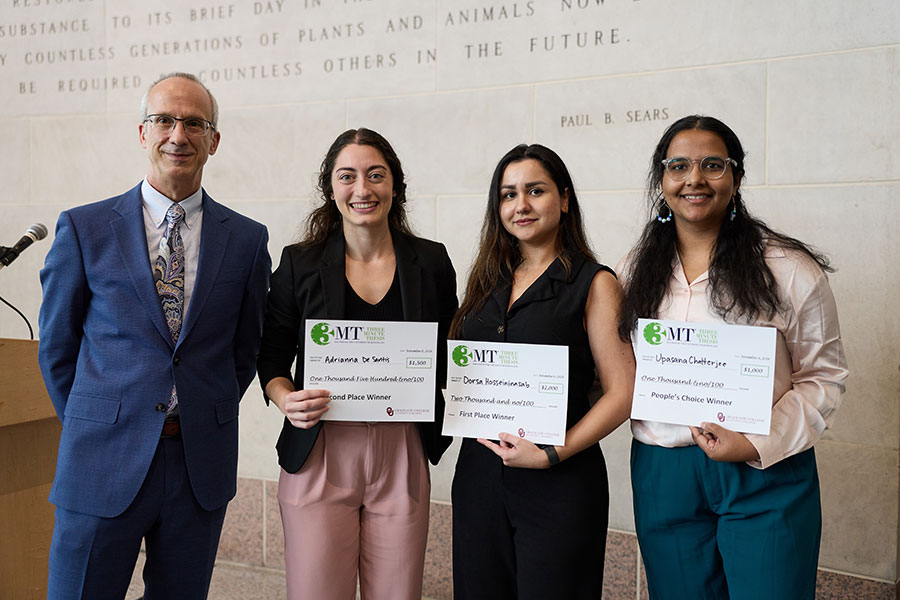
Three University of Oklahoma graduate students earned top honors in the 2026 Three Minute Thesis (3MT) competition, an annual event that challenges students to explain their research to a general audience in 3 minutes.
Researchers at the OU Health Harold Hamm Diabetes Center are investigating diabetes from numerous angles, including how the disease affects other organs, what factors contribute to its development and complications, and how new approaches to prevention and treatment could improve health.
A new five-year, $3 million grant from the National Cancer Institute will enable researchers at OU’s TSET Health Promotion Research Center (HPRC) to scale up a smartphone-based mHealth solution that uses targeted and tailored messages to motivate smokers to kick the habit.