NEWS


NORMAN, OKLA. Enhanced weather forecasting is crucial for minimizing damage caused by extreme weather and protecting lives. A multi-university initiative led by the University of Oklahoma – the Consortium for Advanced Data Assimilation Research and Education, or CADRE – is addressing this need by training the next generation of data assimilation experts.
“Our eventual goal is to revolutionize forecasting capabilities,” said Xuguang Wang, Ph.D., the Robert Lowry Chair Professor and Presidential Research Professor in the School of Meteorology at OU, and director of CADRE.
The OU-led consortium, which includes Penn State, the University of Maryland, Colorado State University, the University of Utah, and Howard University, educates students and postdoctoral researchers in data assimilation techniques.
The data assimilation field integrates observational data with numerical models to analyze the evolving state of the Earth system. Data assimilation plays a crucial role in initializing weather forecasts and in ensuring accuracy by continuously updating models with new observational data.
When done well, the technique significantly improves forecast quality, giving anyone who relies on accurate prediction, such as emergency officials, energy traders, homeowners and logistics specialists, valuable time to prepare.
Extreme weather causes billions of dollars in destruction each year. In 2021, a series of severe storms, hurricanes, floods, droughts, heatwaves, wildfires and cold waves resulted in more than 500 deaths and nearly $105 billion in damages, according to a report on Priorities for Weather Research, a congressionally mandated study.
Enhancements in data assimilation methods are expected to advance numerical weather models, leading to more precise forecasting – and fewer losses.
Despite its importance, growth in the data assimilation field has been hampered by a shortage of people with such knowledge. The report on Priorities for Weather Research identified “a serious gap in workforce expertise in data assimilation,” and called for greater participation with universities to enhance training initiatives.
The CADRE program was created in response.
First, CADRE is nurturing expertise across 12 data assimilation areas, from enhancing the use of satellite and radar data to combining land surface, ocean and atmosphere observations. Expertise is also nurtured on artificial intelligence, machine learning, algorithm development and modeling, among other areas.
Second, the consortium is enhancing relevant curriculum. At each of the partner institutions, students can enroll in courses on data assimilation, attend guest lectures and access specially developed education materials.
In OU’s Advanced Data Assimilation Methods course taught by Wang, students are introduced to various advanced data assimilation methods used in scientific and engineering fields such as meteorology, hydrology, biological modeling and petroleum engineering.
Third, CADRE offers public training, an essential piece, Wang says, since that to succeed as a modern weather expert, interdisciplinary knowledge is essential.
“If you're doing hurricane data assimilation and predictability work, you’d need to not only understand how hurricanes function, but you also need to understand weather observations, high performance computing, data science and simulation,” said Wang. “It involves multiple disciplines.”
Wang believes that being honest about the field’s complexity and providing effective training – combined with enthusiasm – can inspire the weather workforce of tomorrow.
Early results are promising.
During a recent public training for students in Fort Collins, Colo., led by CADRE and co-sponsored by the Earth Prediction Innovation Center, 70 participants from all over the United States – from more than 150 applicants – were introduced to key data assimilation concepts. The program started with statistical theory and fundamentals of algorithms.
Lunch hadn’t even been served on day one before students began asking for more. “We were only halfway into the first day of the three-day workshop and participants were already talking about next year,” when the event is expected to be held in Oklahoma, Wang said. “That confirmed the interest is real – and so is the need.”
About the University of Oklahoma
Founded in 1890, the University of Oklahoma is a public research university located in Norman, Oklahoma. As the state’s flagship university, OU serves the educational, cultural, economic and health care needs of the state, region and nation. For more information about the university, visit www.ou.edu.
The University of Oklahoma College of Medicine has honored two residents with the Lloyd Rader Award, which recognizes outstanding clinical and research achievements in residency.
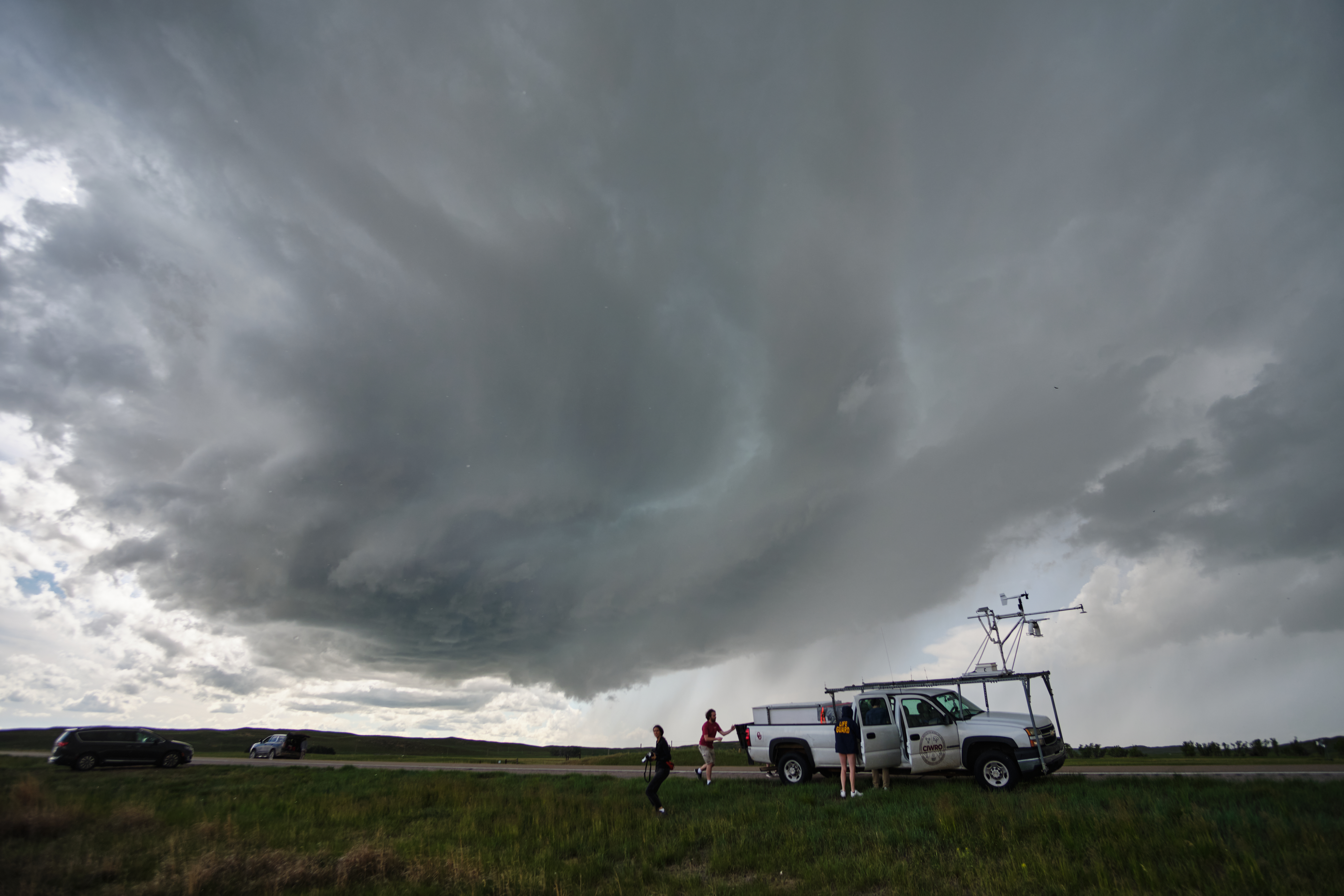
The University of Oklahoma will receive up to $220 million over five years from the U.S. Department of Commerce and the National Oceanic and Atmospheric Administration to continue the life-saving weather research led by the OU-NOAA Cooperative Institute for Severe and High-Impact Weather Research and Operations, extending a nearly 50-year partnership that has helped give Americans earlier, more accurate weather warnings
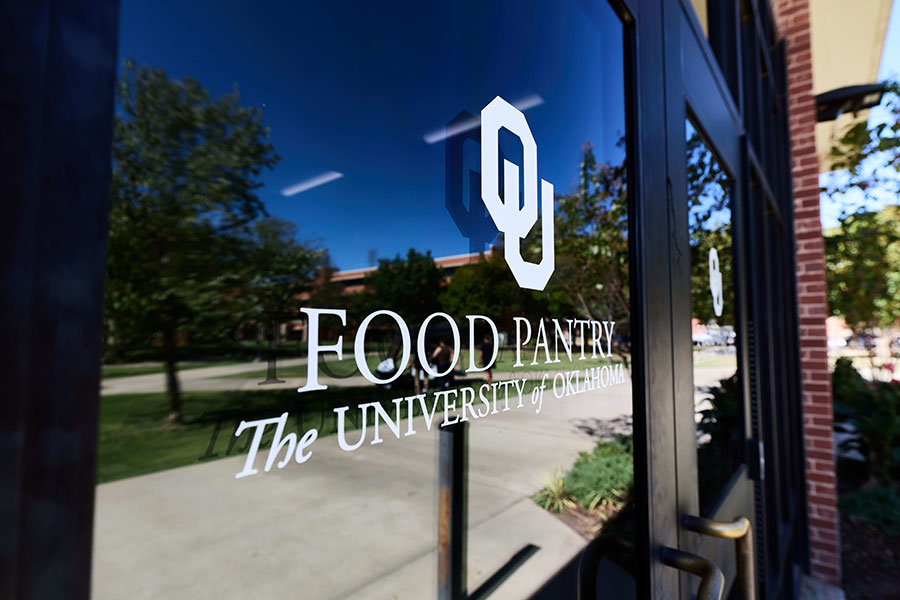
The OU Food Pantry won the annual Red River Food Fight, collecting 31,815.9 pounds of shelf-stable food and drinks to top UT Outpost’s 22,567 pounds. OU has won the competition four years in a row.