NEWS


NORMAN, OKLA. – Three students from the University of Oklahoma’s Gallogly College of Engineering have become the first to earn the college’s new bioprocessing certificate. Launched to provide real-world, hands-on experience, the program prepares graduates for advanced careers in the growing biotechnology sector.
Juliana Hartwick, Trent Norred and Natalie Norton are the first to complete the requirements for the certificate. The program builds a comprehensive foundation in bioprocessing, covering genetic engineering, biochemistry and the application of advanced techniques in industrial biomanufacturing.
For Hartwick of Overland Park, Kansas, the certificate opened new doors. “Being able to work with state-of-the-art biotechnology equipment has given me hands-on application of concepts learned in the classroom,” she said. “This experience has been invaluable in shaping my academic education and career goals.”
Norred, of Ada, Oklahoma, pursued the program for the skills it offers not only in bioprocessing but also in emerging fields like tissue and genetic engineering. His interest in marine molecular research, particularly enhancing coral and algae resilience against climate change, made the course highly relevant.
Norton, of Midwest City, Oklahoma, says that she had planned to attend medical school, but the new certificate opened her eyes to other career paths. “The lab course provided real-world experience with the concepts I had learned. I was thrilled to work with cutting-edge equipment. I’m grateful to everyone who helped establish this program – it’s had a lasting impact on my college experience,” she said.
The Bioprocessing Certificate Program marks an advance in preparing students for the quickly evolving biotechnology industry. Utilizing state-of-the-art technology and immersive learning experiences, graduates gain the skills to make a meaningful impact in both academia and industry.
“By fostering hands-on learning, supporting high-impact research and cultivating strategic industry partnerships, this facility plays a vital role in shaping an innovative workforce. It positions OU as a leader in biomanufacturing education while contributing meaningfully to regional economic development,” said John Klier, Ph.D., the college’s dean.
Offered through the OU School of Sustainable Chemical, Biological, and Materials Engineering, the program leverages the Bioprocessing Core Facility, which features nine specialized labs and advanced biotechnology tools. The facility combines theoretical instruction with hands-on training. “Students not only learn how to work with this equipment but also develop skills that make them job-ready,” said Farid Talebnia Rowshan, Ph.D., the facility’s director.
As the bioprocessing certificate program grows, its impact on academia and industry becomes clearer and positions it as a leader in the emerging sector, says Zahed Siddique, Ph.D., the college’s associate research dean. “The center will help OU produce well-prepared engineers, advance research and bolster the regional talent base in this growing field,” he said.
“The goal of the certificate program is to bridge academic knowledge with industry-relevant experience,” said Daniel Baker, program project manager. “We are proud of these students and excited to see how their experiences will shape the future of bioprocessing and biotechnology.”
Backed by the Oklahoma Biotech Innovation Cluster that includes the Gallogly College of Engineering, the Greater Oklahoma City Chamber, the Oklahoma City Innovation District and local biotech industry partners, the facility is a key deliverable of Oklahoma’s Build Back Better Regional Challenge grant. It is designed to combine academic innovation with industrial application, catalyzing economic growth while training a new generation of bioengineers.
To learn more, visit the program’s website.
About the University of Oklahoma
Founded in 1890, the University of Oklahoma is a public research university located in Norman, Oklahoma. As the state’s flagship university, OU serves the educational, cultural, economic and health care needs of the state, region and nation. For more information about the university, visit www.ou.edu.
The University of Oklahoma has received a transformative gift from Jon and Shannon McCartney, which will name the McCartney Family Tunnel of Champions, the McCartney Family Gate of the Gaylord Family - Oklahoma Memorial Stadium and the McCartney Family Grand Lecture Hall in the Michael F. Price College of Business. The gift will also support the Inspiring Champions and the Athletic Director’s Discretionary Fund, in addition to establishing the McCartney DFW Career Trek program at Price College.
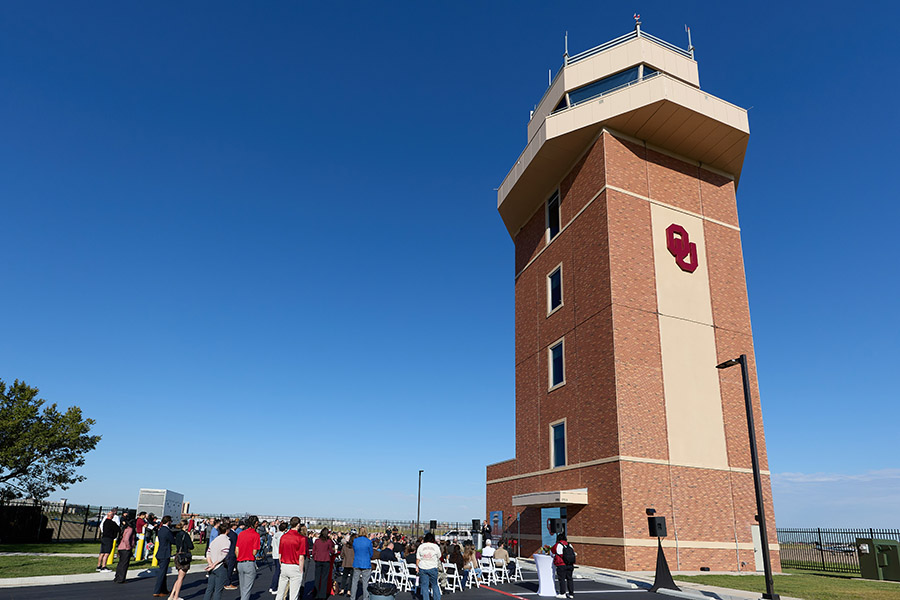
The University of Oklahoma today celebrated the opening of a new air traffic control tower at the OU Max Westheimer Airport. Standing 106 feet tall, more than double the current 52-foot facility, the new tower will modernize air traffic control operations and improve safety for pilots and students operating in the airspace.
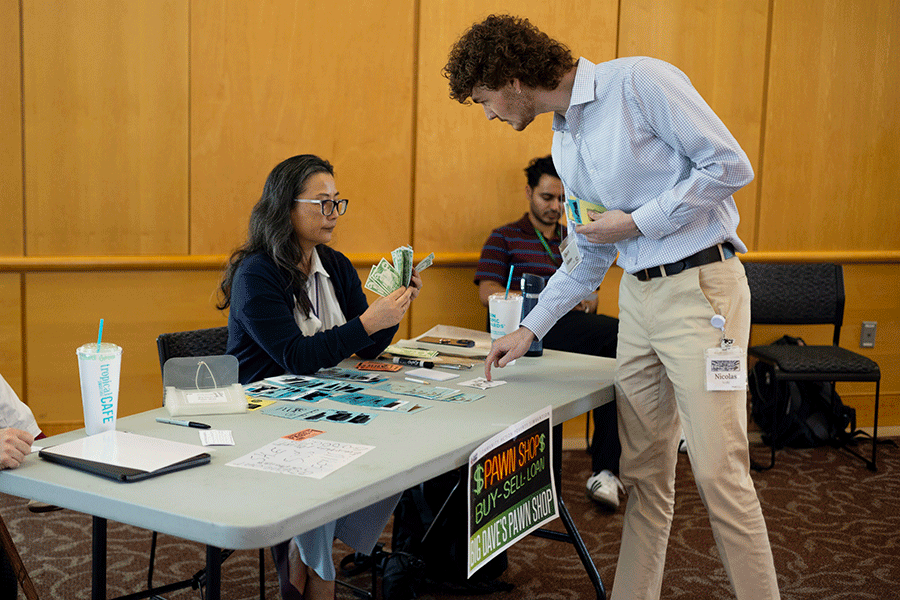
Do I buy groceries or pay the electric bill? Should I pawn some of my belongings to afford my prescription? My child is sick, so I will have to miss work to take care of him. Those are just a few of the difficult choices that OU-Tulsa health professional students confronted during the Community Access to Resources Experience. The role-playing activity challenged students to navigate the financial, family and other pressures that can affect a person’s health and ability to follow medical advice. Held annually during the SCM Institute orientation week, the experience is designed to generate understanding and build empathy.