NEWS


NORMAN, OKLA. – Junle Jiang, an assistant professor in the School of Geosciences at the University of Oklahoma, has received a prestigious CAREER Award from the National Science Foundation to study how major subduction zone earthquakes occur and evolve over time. This research could help improve earthquake hazard forecasting in some of the world’s most seismically active regions.
During this five-year project, Jiang will use seismometer data, satellite imagery, seafloor readings and tsunami water height readings to develop computational frameworks to better understand megathrust faulting. A megathrust is a type of fault that occurs when one tectonic plate slides beneath another and is responsible for some of the largest earthquakes and tsunamis. Jiang’s research will focus on recent megathrust earthquakes in Alaska, Chile and Japan.
“We're looking at how large earthquakes interact with smaller ones over timescales ranging from seconds to centuries,” Jiang said. “By combining data from satellites, seismometers and even tsunami sensors, we can build a more complete picture of what happens deep beneath the surface.”
Unlike traditional machine learning approaches, Jiang’s team will use Bayesian statistical inference to analyze how fast and where faults rupture during an earthquake. These findings will inform sophisticated models that incorporate rock friction and fluid interactions to simulate how stresses in the Earth’s crust evolve after a major seismic event and influence future hazards.
“Using the Bayesian approach, we’ll be able to more robustly determine which parts of the subsurface fault actually move during the earthquake and how fast it unzips,” he said. “If we can understand the stress changes in the crust, we can also make inferences about the aftershocks and long-lasting impacts that follow these historic events.”
While the project’s immediate focus is on past earthquakes and their aftermaths over decades, including the 2010 Maule event in Chile and the 2011 Tohoku event in Japan, the team will also use the developed computer tools to explore the impacts of induced earthquakes related to human activity, including those in Oklahoma.
As part of the CAREER Award, Jiang will engage OU graduate students, postdoctoral researchers, and nearly a dozen undergraduate students in this unique research experience. He will collaborate with a professor from the University of Chile and host students from Chile. In collaboration with education experts at the OU TRIO Center and the Oklahoma Geological Survey, he also plans to co-develop educational materials with a teacher at Westmoore High School in Oklahoma City. These efforts are designed to strengthen the pipeline of geoscience students and enhance public understanding of earthquake research.
“This grant gives us the opportunity to take on high-impact science while training the next generation of geoscientists,” Jiang said. “This integration of science research and education is incredibly exciting, both scientifically and personally.”
Learn more about Jiang’s research.

About the project
“Bridging Multiscale Observations and Models of Megathrust Faulting and Subduction Zone Hazards” is funded by a $729,600 CAREER Award from the National Science Foundation, no. 2442777. It began in July 2025 and is expected to end in June 2030. Junle Jiang is an assistant professor in the OU School of Geosciences, Mewbourne College of Earth and Energy and leads the Crustal Dynamics and Computational Geophysics Group.
About the University of Oklahoma
Founded in 1890, the University of Oklahoma is a public research university located in Norman, Oklahoma. As the state’s flagship university, OU serves the educational, cultural, economic and health care needs of the state, region and nation. For more information about the university, visit www.ou.edu.
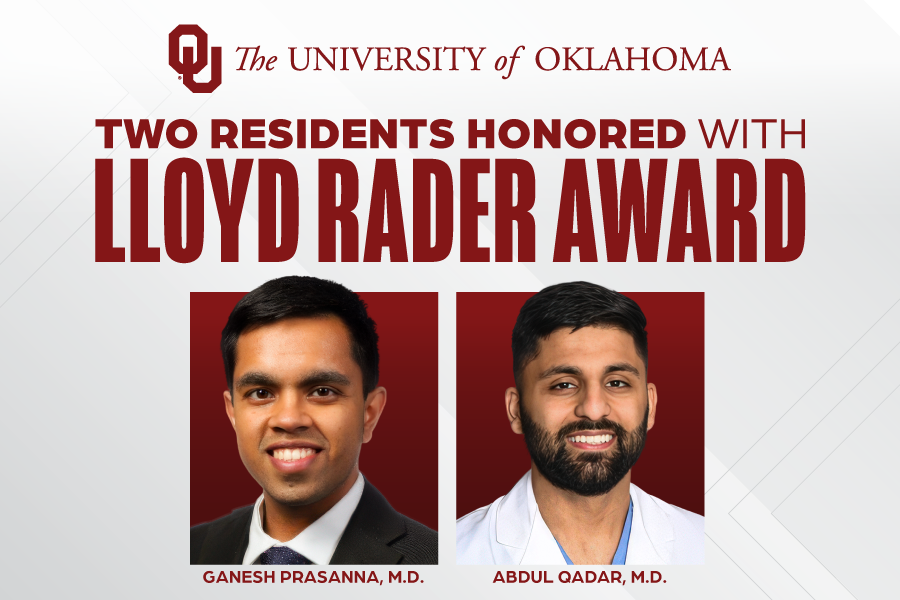
The University of Oklahoma College of Medicine has honored two residents with the Lloyd Rader Award, which recognizes outstanding clinical and research achievements in residency.
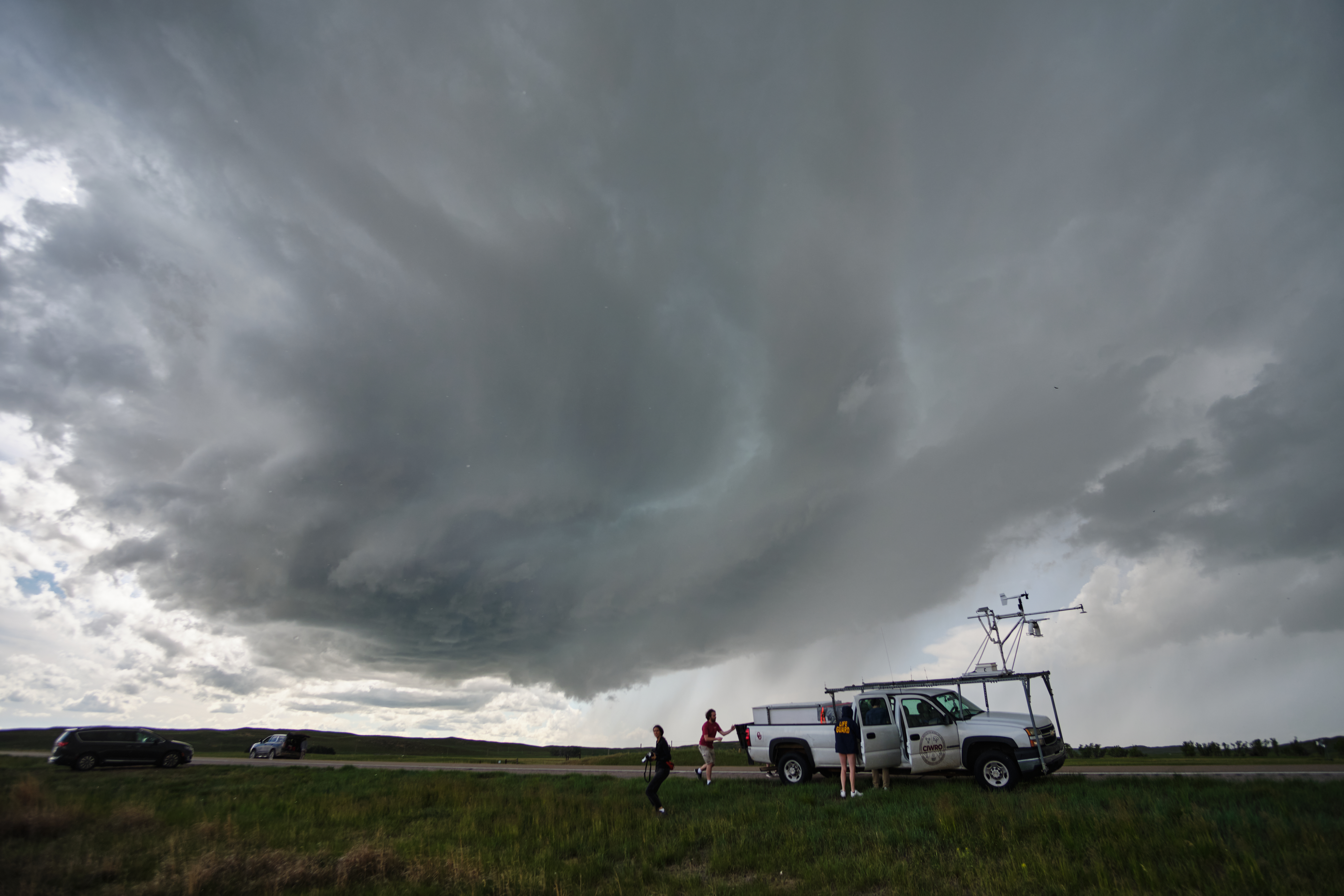
The University of Oklahoma will receive up to $220 million over five years from the U.S. Department of Commerce and the National Oceanic and Atmospheric Administration to continue the life-saving weather research led by the OU-NOAA Cooperative Institute for Severe and High-Impact Weather Research and Operations, extending a nearly 50-year partnership that has helped give Americans earlier, more accurate weather warnings
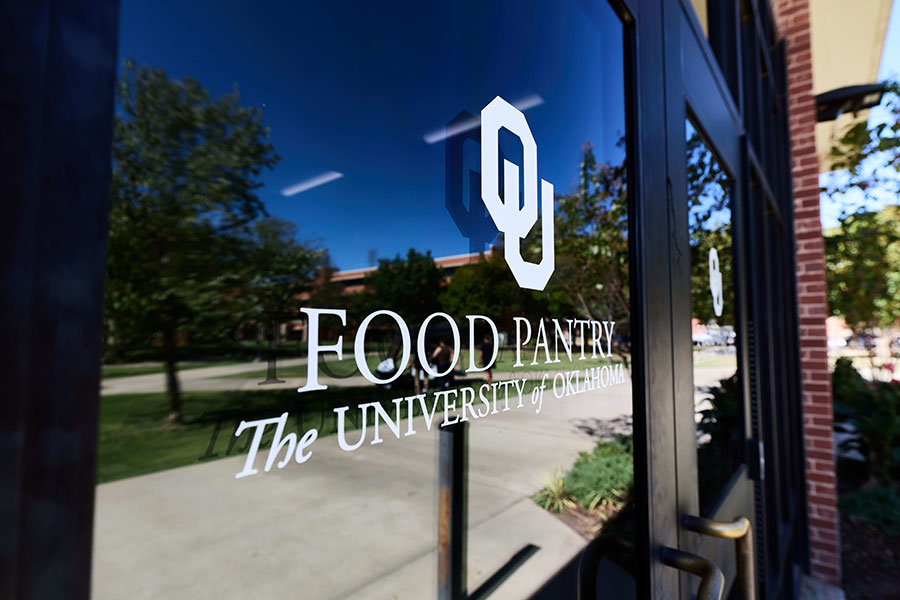
The OU Food Pantry won the annual Red River Food Fight, collecting 31,815.9 pounds of shelf-stable food and drinks to top UT Outpost’s 22,567 pounds. OU has won the competition four years in a row.