NEWS


NORMAN, OKLA. – With several well-timed shimmies and a few spins, the rectangular, ruby-red robot swerved its way through the narrow course. At each obstacle, the autonomous robot – controlled entirely by its software – seemed to pause and think before deftly avoiding the traffic cones, pilons and speed bumps in its path.
By the time “Twistopher” crossed the finish line last month with a time of 00:02:20, the University of Oklahoma’s Sooner Competitive Robotics team had secured its third consecutive win – and fourth in five years – at the prestigious Intelligent Ground Vehicle Competition (IGVC), reaffirming its place atop collegiate robotics.
“It’s always an amazing event,” said Dylan Zemlin, an OU master’s student in computer science and president of the robotics club. “It can be stressful at times, but it’s always a fun way to learn things you can’t get in the classroom.”
Hosted at Oakland University in Rochester, Mich., IGVC challenges students to research, design, build and test unmanned ground vehicles that navigate outdoor courses marked with lanes, GPS waypoints and obstacles. At this year’s event, the 32nd edition, 29 teams competed from seven countries: the U.S., Canada, Australia, Japan, Turkey, India and Egypt.
Sponsored by BAE Systems and others, IGVC offers a multidisciplinary, hands-on engineering experience judged by experts in design, self-driving and autonomous navigation. Over the years, it has become a rigorous proving ground for top engineering students to design and test technologies with applications in automotive, defense and other sectors.
For the Sooner team, knowledge sharing is key to success. Every project is documented so that future students can understand what works and what doesn’t. “We’re always building on lessons learned,” said Zemlin.
During previous competitions, for example, team members observed that a common cause of collisions was obstructed views on robots’ sides. To avoid this, the Twistopher team placed a camera on each of its vehicle’s four sides, enabling complete vision. This helped to facilitate a second innovation, 360-degree “swerve drive,” which enabled the robot to move in any direction to avoid obstacles detected by the side cameras.
Other innovations included early 3D-printed prototypes of the swerve modules, which allowed for assembly testing before final machining in aluminum; a mast with sensors and more cameras to provide additional course visibility; and strategically placed weatherstripping to protect electronics.
A final touch, the OU logo on the vehicle’s rear, ensured competitors always knew which team was in front of them.
“We really try to have fun with our robots,” Zemlin said. “Last year, our vehicle had six wheels, three on each side for stability and easy ramp traversal. This year’s goal was a robot that could move in any direction without turning, which is why we went with swerve drive. It was a major technical innovation.”
Founded in 2013, Sooner Competitive Robotics provides students across disciplines with engineering experiences that mirror industry practice. Team sponsors include Boeing, Altium, Toro and OU’s Gallogly College of Engineering. Many alumni credit the club’s complex, team-based projects for career readiness.
“It doesn’t hurt when you are job hunting to say, ‘Yeah, I won first at IGVC,”’ said Zemlin. “That looks pretty good to potential employers and has helped a lot of our alumni land positions they might not have gotten otherwise.”
Zemlin concedes that robot naming may be the team’s least technical aspect. Twistopher, unsurprisingly, twists when it moves. Last year’s robot, Danger Zone, was named after the team blasted the Top Gun song during their winning run. In 2021, The Aluminum Whale took top honors at IGVC. Its composition? Aluminum.
But beyond branding, OU robotics is clearly a cut above – on the course and beyond.
“Each year, the SCR team takes on complex real-world challenges, pushing the boundaries of autonomous navigation while demonstrating the power of collaboration and creative problem-solving,” said Golnaz Habibi, Ph.D., an assistant professor in the OU School of Computer Science and one of the robotics team’s faculty advisers.
“Their success on an international stage underscores the exceptional talent and determination of our OU students, and I’m excited to see how they continue to shape the future of robotics.”
About the University of Oklahoma
Founded in 1890, the University of Oklahoma is a public research university located in Norman, Oklahoma. As the state’s flagship university, OU serves the educational, cultural, economic and health care needs of the state, region and nation. For more information about the university, visit www.ou.edu.
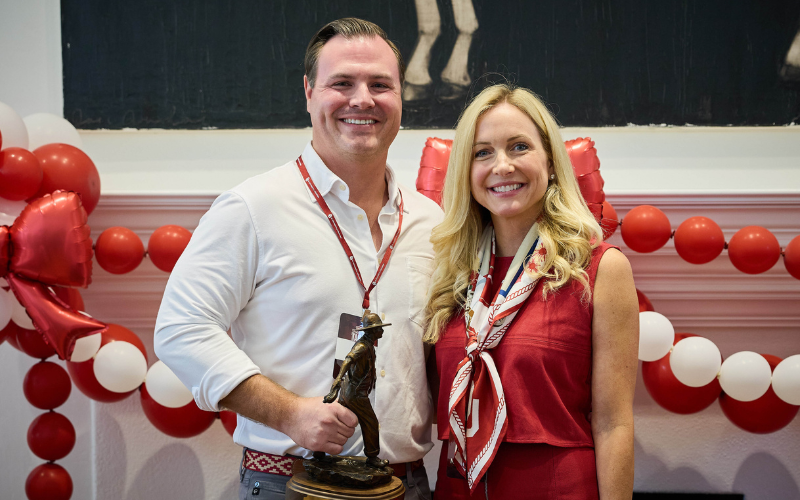
The University of Oklahoma has received a transformative gift from Jon and Shannon McCartney, which will name the McCartney Family Tunnel of Champions, the McCartney Family Gate of the Gaylord Family - Oklahoma Memorial Stadium and the McCartney Family Grand Lecture Hall in the Michael F. Price College of Business. The gift will also support the Inspiring Champions and the Athletic Director’s Discretionary Fund, in addition to establishing the McCartney DFW Career Trek program at Price College.
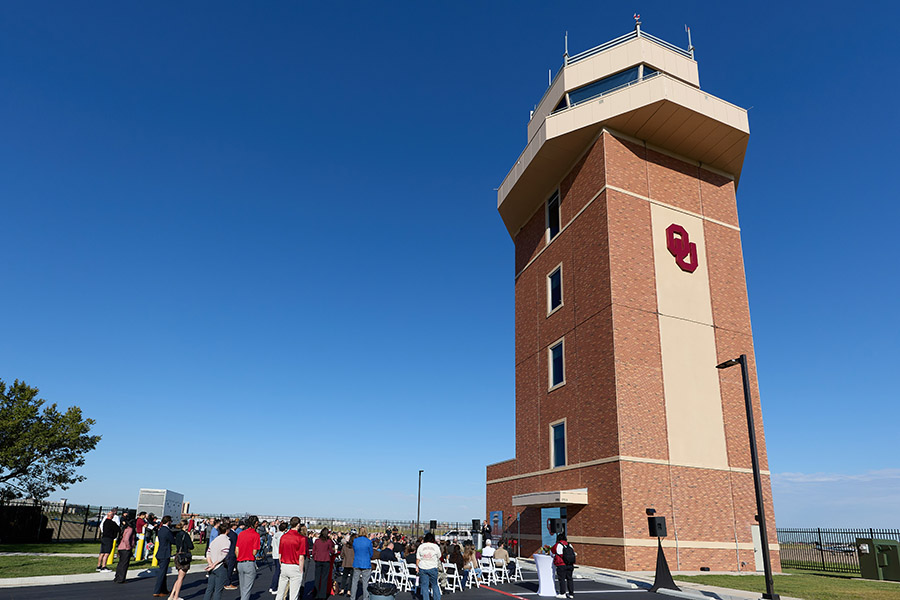
The University of Oklahoma today celebrated the opening of a new air traffic control tower at the OU Max Westheimer Airport. Standing 106 feet tall, more than double the current 52-foot facility, the new tower will modernize air traffic control operations and improve safety for pilots and students operating in the airspace.
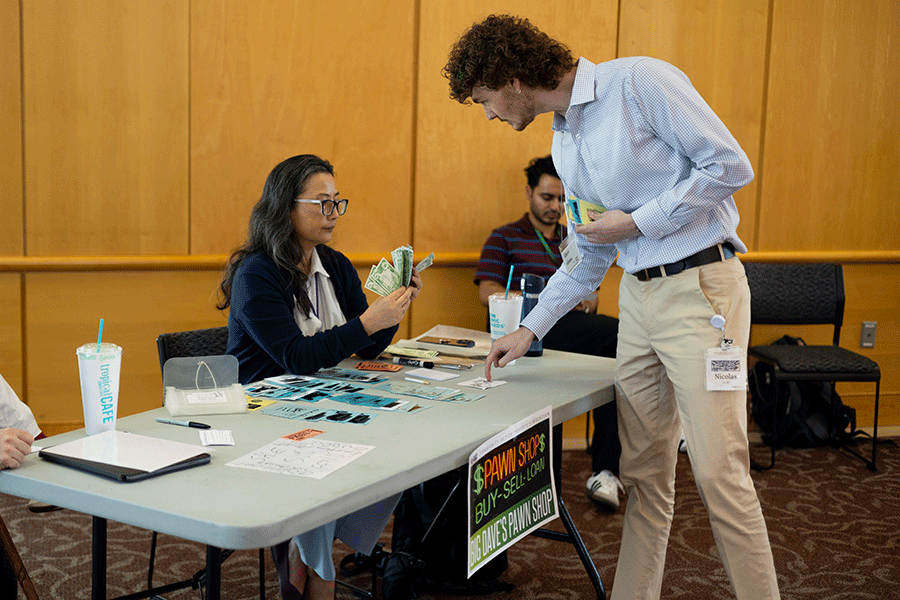
Do I buy groceries or pay the electric bill? Should I pawn some of my belongings to afford my prescription? My child is sick, so I will have to miss work to take care of him. Those are just a few of the difficult choices that OU-Tulsa health professional students confronted during the Community Access to Resources Experience. The role-playing activity challenged students to navigate the financial, family and other pressures that can affect a person’s health and ability to follow medical advice. Held annually during the SCM Institute orientation week, the experience is designed to generate understanding and build empathy.