NEWS


Media Contact
Kristie Edelen
kristie-edelen@ouhsc.edu
Date
OKLAHOMA CITY, OKLA. – With unintentional poisonings on the rise, Gov. Kevin Stitt has officially proclaimed March 16-22 as Oklahoma Poison Prevention Week to highlight the critical role of poison prevention in protecting families, children and seniors across the state.
The Oklahoma Poison Center, a program of the University of Oklahoma College of Pharmacy, provides free, 24/7 expert medical guidance to all Oklahomans. Every 8 minutes, someone in Oklahoma calls the Poison Helpline for lifesaving advice.
To commemorate Oklahoma Poison Prevention Week, the Oklahoma Poison Center is calling on Oklahomans to be proactive, be informed and be prepared. From accidental medication overdoses to venomous bites, poisoning emergencies can happen to anyone – but knowing what to do can save a life.
A Hidden Danger in Every Home
Poisoning remains the leading cause of injury-related death in Oklahoma, surpassing car accidents and gun-related injuries. In 2024 alone, the Oklahoma Poison Center managed over 30,000 poisoning cases, helping prevent unnecessary emergency room visits and saving lives.
“Every second counts in a poisoning emergency,” said Kristie Edelen, managing director of the Oklahoma Poison Center. “Whether it’s a child swallowing household cleaner, a senior misreading medication labels, or someone bitten by a rattlesnake, our specialists are here to provide fast, expert guidance – often preventing serious harm or even death.”
Who’s at Risk? Everyone.
Many Oklahomans are unaware that common household items, like cleaning products, pesticides and even personal care products, can pose serious risks if misused. Meanwhile, opioid overdoses, medication errors and dangerous interactions remain a major concern.
“As pharmacists and health care professionals, we see firsthand how preventable poisoning incidents can be,” said Melissa Medina, dean of the OU College of Pharmacy. “By educating the public and ensuring easy access to expert poison center services, we can help protect Oklahomans and prevent unnecessary medical emergencies.”
What Oklahomans Can Do During Poison Prevention Week:
· Save the Poison Help number (1-800-222-1222) in your phone – it could save a life.
· Store medications, cleaning products and chemicals securely, out of reach of children.
· Read and follow labels carefully – many poisonings happen due to accidental misuse.
· Be aware of local poisoning risks – from venomous snake bites in rural areas to carbon monoxide poisoning in winter months.
· Call the Poison Help line first – before rushing to the ER. Expert guidance is free, fast and could prevent unnecessary medical visits.
Help Is Only a Call Away
Unlike online searches that can lead to misinformation, the Oklahoma Poison Center provides accurate, science-based medical guidance in real time. Trained specialists, including doctors, nurses and pharmacists, are available 24/7 at 1-800-222-1222.
Join Us in Spreading Awareness
Oklahoma Poison Prevention Week is an opportunity for families, schools and communities to take simple steps that could prevent a tragedy. The Oklahoma Poison Center encourages media outlets, educators and community leaders to help spread the message: Poisonings are preventable, and help is always available.
About the Oklahoma Poison Center
The Oklahoma Poison Center is dedicated to providing expert advice and support in cases of poisoning and exposure to harmful substances. Our mission is to prevent poisonings and reduce their impact through education, prevention and providing emergency treatment recommendations. The Oklahoma Poison Center is a program of the University of Oklahoma College of Pharmacy.
About the University of Oklahoma
Founded in 1890, the University of Oklahoma is a public research university with campuses in Norman, Oklahoma City and Tulsa. As the state’s flagship university, OU serves the educational, cultural, economic and health care needs of the state, region and nation. In Oklahoma City, OU Health Sciences is one of the nation’s few academic health centers with seven health profession colleges located on the same campus. OU Health Sciences serves approximately 4,000 students in more than 70 undergraduate and graduate degree programs spanning Oklahoma City and Tulsa and is the leading research institution in Oklahoma. For more information about OU Health Sciences, visit www.ouhsc.edu.
The University of Oklahoma has received a transformative gift from Jon and Shannon McCartney, which will name the McCartney Family Tunnel of Champions, the McCartney Family Gate of the Gaylord Family - Oklahoma Memorial Stadium and the McCartney Family Grand Lecture Hall in the Michael F. Price College of Business. The gift will also support the Inspiring Champions and the Athletic Director’s Discretionary Fund, in addition to establishing the McCartney DFW Career Trek program at Price College.
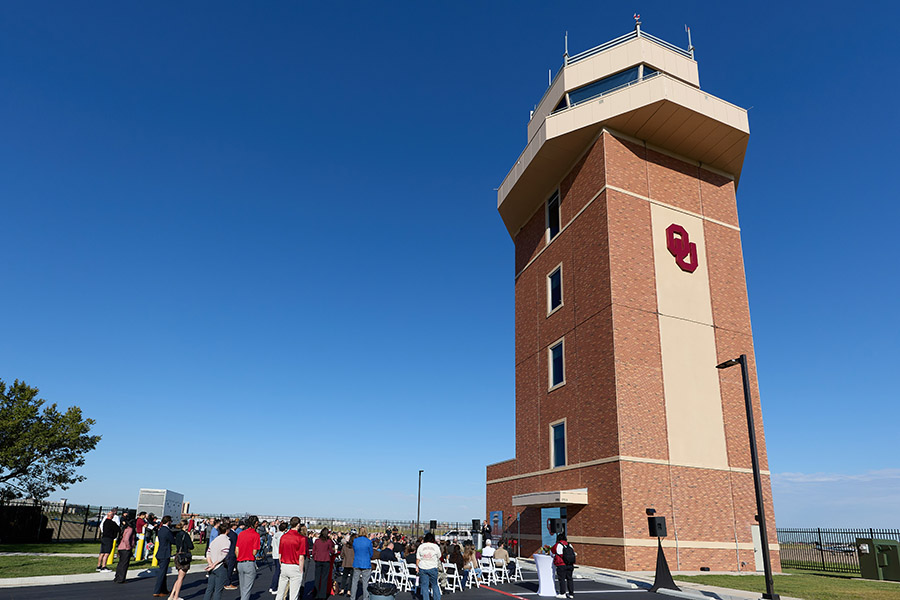
The University of Oklahoma today celebrated the opening of a new air traffic control tower at the OU Max Westheimer Airport. Standing 106 feet tall, more than double the current 52-foot facility, the new tower will modernize air traffic control operations and improve safety for pilots and students operating in the airspace.
Do I buy groceries or pay the electric bill? Should I pawn some of my belongings to afford my prescription? My child is sick, so I will have to miss work to take care of him. Those are just a few of the difficult choices that OU-Tulsa health professional students confronted during the Community Access to Resources Experience. The role-playing activity challenged students to navigate the financial, family and other pressures that can affect a person’s health and ability to follow medical advice. Held annually during the SCM Institute orientation week, the experience is designed to generate understanding and build empathy.