NEWS


NORMAN, OKLA. – Sera Tolgay, a graduating master’s student from the University of Oklahoma, has been named a 2025 Gates Cambridge Scholar. This award gives her a full scholarship to pursue a doctoral degree in engineering at the University of Cambridge.
“This opportunity aligns with my planning and engineering experience,” she said. “Over the past decade, I have worked as a consultant to city and state agencies primarily along the Atlantic coast, but also in California at Scape Studio and previously at WSP Engineering. I started my career in the United States working as a planner at the New York City Department of City Planning on the citywide zoning for coastal flood resilience after Hurricane Sandy. I also had the opportunity to work internationally, consulting for the World Bank and U.N. Habitat, and received research funding from the National Geographic Society.”
Her doctoral research at Cambridge will focus on resilient water management systems in the Eastern Mediterranean region. She will examine satellite imagery and remote sensing data of the Orontes River Basin, which flows from Lebanon through Syria into the Mediterranean Sea, as well as the Tigris and Euphrates Rivers, where real-time remote sensing data can support transboundary cooperation and water security.
Originally from Istanbul, Turkey, Tolgay has lived in the United States for more than 15 years, earning a bachelor’s degree in political science from Yale and a master’s degree in city and regional planning from the Massachusetts Institute of Technology. She is now completing a master’s degree in hydrology and water security at OU.
“I had always heard about my grandfather’s experience studying geology at OU,” she said. “I was interested in the University of Oklahoma because I was already doing work in climate adaptation, especially flood resilience and post-disaster recovery. I wanted to dig deeper into both the science and management aspects of hydrology, and the program offered a strong foundation in both, making it a great fit.”
Since 2020, Tolgay has been an associate at Scape Studio, an urban design studio focused on nature-based infrastructure and an ecological approach to building flood resistance. In the fall of 2024, she was part of NASA’s DEVELOP program, which focused on integrating Earth observations to inform environmental decision-making and policy. She has also co-founded Bluescapes Alliance, a nonprofit that uses remote sensing and drones to assess the conservation status of protected wetlands and coastal habitats.
The Gates Cambridge Scholarship will cover all associated costs and fees for four years for Tolgay to complete her doctoral degree. She was chosen alongside 94 other scholars and future leaders to form the 25th cohort of Gates Cambridge Scholars.
Professor Eilís Ferran, Provost of the Gates Cambridge Trust, said: “Gates Cambridge has always selected scholars based on their outstanding academic achievement and their commitment to change the world for the better. We know that our new scholars will thrive in the rich, international community at Cambridge, and we trust that they will go on to have a significant impact in their various fields and more broadly, tackling the urgent global challenges we face today.”
About the University of Oklahoma
Founded in 1890, the University of Oklahoma is a public research university located in Norman, Oklahoma. As the state’s flagship university, OU serves the educational, cultural, economic and health care needs of the state, region and nation. For more information about the university, visit www.ou.edu.
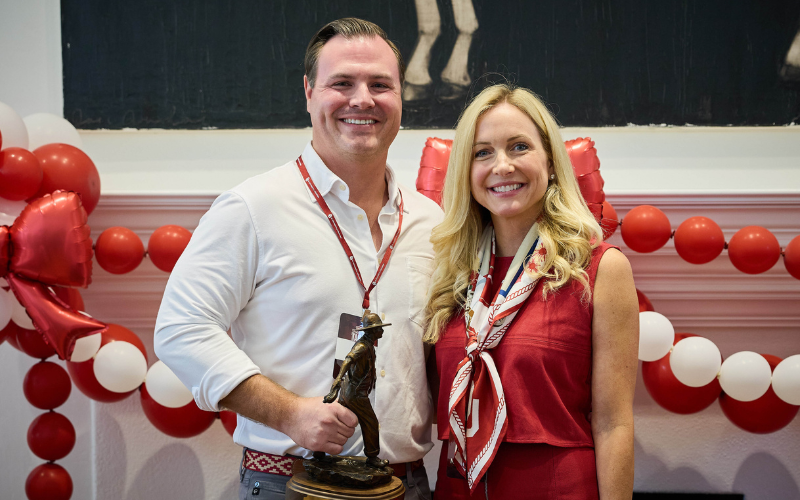
The University of Oklahoma has received a transformative gift from Jon and Shannon McCartney, which will name the McCartney Family Tunnel of Champions, the McCartney Family Gate of the Gaylord Family - Oklahoma Memorial Stadium and the McCartney Family Grand Lecture Hall in the Michael F. Price College of Business. The gift will also support the Inspiring Champions and the Athletic Director’s Discretionary Fund, in addition to establishing the McCartney DFW Career Trek program at Price College.
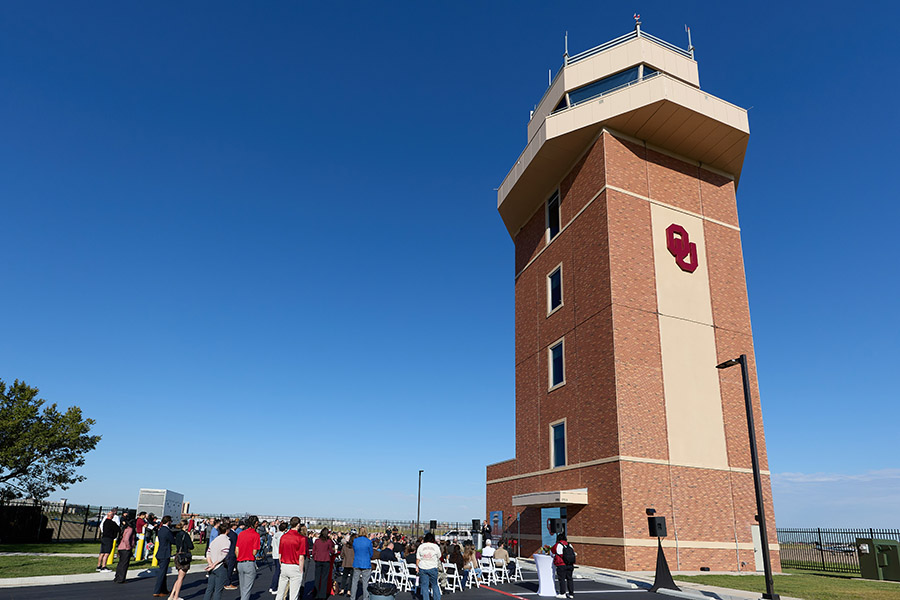
The University of Oklahoma today celebrated the opening of a new air traffic control tower at the OU Max Westheimer Airport. Standing 106 feet tall, more than double the current 52-foot facility, the new tower will modernize air traffic control operations and improve safety for pilots and students operating in the airspace.
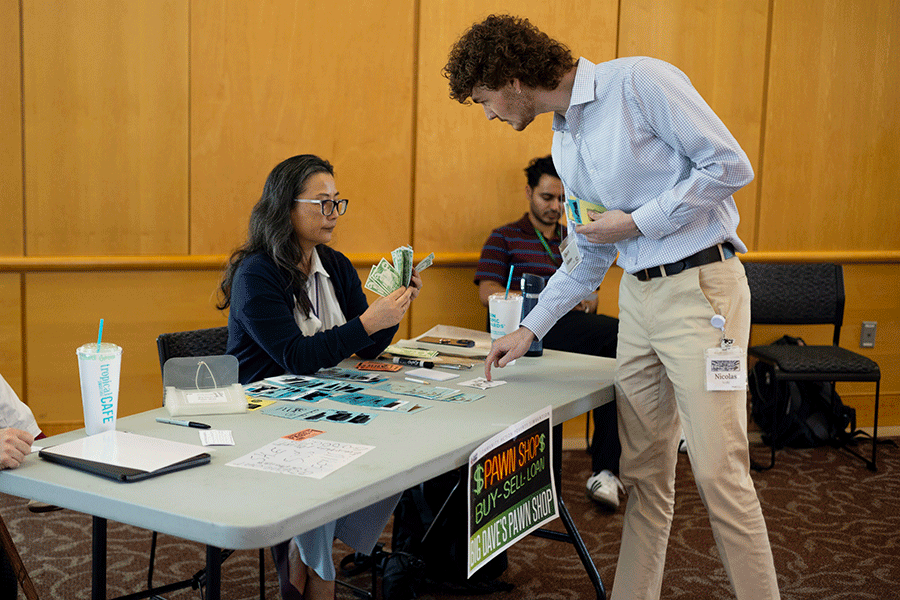
Do I buy groceries or pay the electric bill? Should I pawn some of my belongings to afford my prescription? My child is sick, so I will have to miss work to take care of him. Those are just a few of the difficult choices that OU-Tulsa health professional students confronted during the Community Access to Resources Experience. The role-playing activity challenged students to navigate the financial, family and other pressures that can affect a person’s health and ability to follow medical advice. Held annually during the SCM Institute orientation week, the experience is designed to generate understanding and build empathy.