NEWS


NORMAN, OKLA. – On Tuesday, May 13, the University of Oklahoma’s Institute for Public Policy Research and Analysis hosted the final Academy meeting of the Socially Sustainable Solutions for Water, Carbon, and Infrastructure Resilience in Oklahoma, or S3OK, project. Funded by the National Science Foundation through the EPSCoR program, the event brought together academic researchers and statewide practitioners for a forward-looking capstone event in Oklahoma City.
Since its launch, S3OK has pioneered a model of sustained, iterative engagement between scientists and a 65-member Opinion Leader Advisory Network, which includes representatives from tribal nations, state and local governments, nonprofit organizations and private industry. Through this unique collaboration, the project has advanced research capacity and interdisciplinary innovation in Oklahoma’s most pressing infrastructure, water and carbon challenges.
“The S3OK project demonstrates the power of partnership in addressing complex environmental and infrastructure systems,” said Hank Jenkins-Smith, IPPRA director and science lead for the S3OK project. “By directly engaging stakeholders in the research process, we’ve ensured that scientific solutions are practical, equitable and sustainable.”
The annual S3OK Academy has served as the flagship meeting for the project’s team and advisory network, providing structured forums to evaluate progress and co-develop solution strategies. This final convening featured three key working groups presenting actionable insights on:
Beyond presenting research outcomes, participants engaged in strategic discussions about the path forward for resilient infrastructure and environmental systems in Oklahoma.
“This isn’t the end of the conversation. It’s a launch point for new partnerships and next-generation research,” said Jenkins-Smith. “We remain committed to progress toward solutions by exploring future research, impact areas, and partnerships to tackle Oklahoma’s most wicked problems.”
Learn more about the S3OK program and other projects led by IPPRA at OU.
About the project
The S3OK initiative was supported through a $20 million cooperative agreement from the National Science Foundation to Oklahoma Established Program to Stimulate Competitive Research, Award no. OIA-1946093. The project integrates social and environmental science to develop sustainable responses to Oklahoma’s climate-related infrastructure and resource challenges.
About the University of Oklahoma
Founded in 1890, the University of Oklahoma is a public research university located in Norman, Oklahoma. As the state’s flagship university, OU serves the educational, cultural, economic and health care needs of the state, region and nation. For more information about the university, visit www.ou.edu.
From strengthening severe-weather preparedness to advancing national security, MITRE and the University of Oklahoma (OU) are joining forces to tackle some of the nation’s most critical challenges.
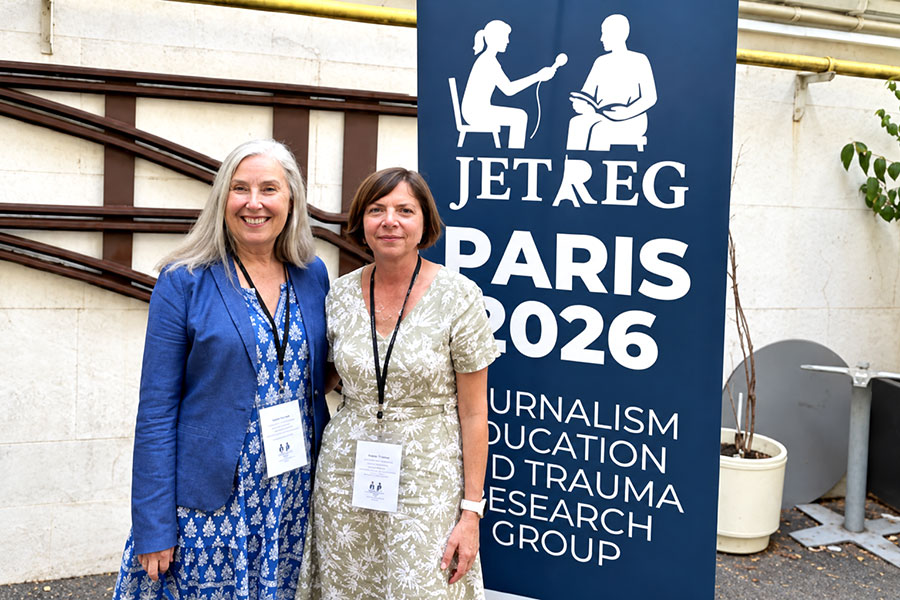
Desiree Hill was an executive producer at News 9 when the Oklahoma City bombing put local journalists in the middle of a story they would carry with them long after the coverage ended. Years later, she returned to the bombing as a researcher, interviewing journalists about its effects on their lives and work.
Jensen Moore, Ph.D., an associate professor of public relations at the University of Oklahoma’s Gaylord College of Journalism and Mass Communication, has been elected to a three-year term on the Association for Education in Journalism and Mass Communication’s Standing Committee on Professional Freedom and Responsibility.