NEWS


Date
Media Contact
Kristie Edelen
kristie-edelen@ouhsc.edu
OKLAHOMA CITY – Thanksgiving brings families together for food, gratitude and time with loved ones, but it also brings a spike in preventable holiday hazards, the Oklahoma Poison Center warns.
Before Oklahomans turn on the oven, sneak a bite of raw cookie dough or leave a purse within reach of children or pets, the center is reminding families that Thanksgiving can lead to more than a full table. Calls related to foodborne illness, alcohol exposures, medication mix-ups and chocolate-related pet emergencies often increase this time of year.
Don’t Wash the Turkey
Although many people were raised on the tradition of rinsing the turkey in the sink, federal food safety experts have advised against washing raw poultry for nearly two decades. A 2020 survey found that 78% of people still wash their turkey, unknowingly spreading bacteria throughout the kitchen.
Raw turkey may contain Salmonella, Campylobacter or Clostridium perfringens, one of the most common causes of Thanksgiving food poisoning. Outbreaks peak in November and December and often result from food left cooling on countertops for too long before refrigeration.
To keep your feast safe:
The Secret Ingredients That Make People Sick
Some holiday favorites hide hazards many people overlook:
Visitors and Gatherings Raise Other Poisoning Risks
Thanksgiving often means a full house – and full purses left where children and pets can access medications, nicotine products, marijuana edibles or alcohol.
Children may also drink from half-finished glasses placed around the home. Alcohol poisoning in children can cause vomiting, breathing problems, seizures and unresponsiveness and requires immediate medical attention.
Simple prevention steps:
When Things Go Wrong: Help Is Available 24/7
“Thanksgiving should be memorable for the right reasons,” said Kristie Edelen, managing director of the Oklahoma Poison Center. “If something looks off, tastes wrong or your child or pet gets into something questionable, calling us first can save time, money and panic.”
The Oklahoma Poison Center is staffed around the clock by toxicology experts who can help determine whether a situation can be safely managed at home or requires emergency care.
If someone is exposed to a potential poisoning, call 1-800-222-1222 immediately. Assistance is free, confidential and available statewide.
Our Commitment
The Oklahoma Poison Center remains dedicated to providing expert guidance and support to families and communities. For immediate assistance or if you have concerns about a potential poisoning, please contact our Poison Helpline at 1-800-222-1222. Together, we can take proactive steps to foster a healthier community. Pharmacists and registered nurses at the Oklahoma Poison Center are available 24 hours a day, seven days a week. Please do not email the poison center or members of the poison center staff, as poisoning emergencies are not handled through email.
About Oklahoma Poison Center
Oklahoma Poison Center is dedicated to providing expert advice and support in cases of poisoning and exposure to harmful substances. Our mission is to prevent poisonings and reduce their impact through education, prevention, and providing emergency treatment recommendations. The Oklahoma Poison Center is a program of the University of Oklahoma Health Sciences College of Pharmacy.
About the University of Oklahoma
Founded in 1890, the University of Oklahoma is a public research university located in Norman, Oklahoma. As the state’s flagship university, OU serves the educational, cultural, economic and health care needs of the state, region and nation. For more information about the university, visit www.ou.edu.
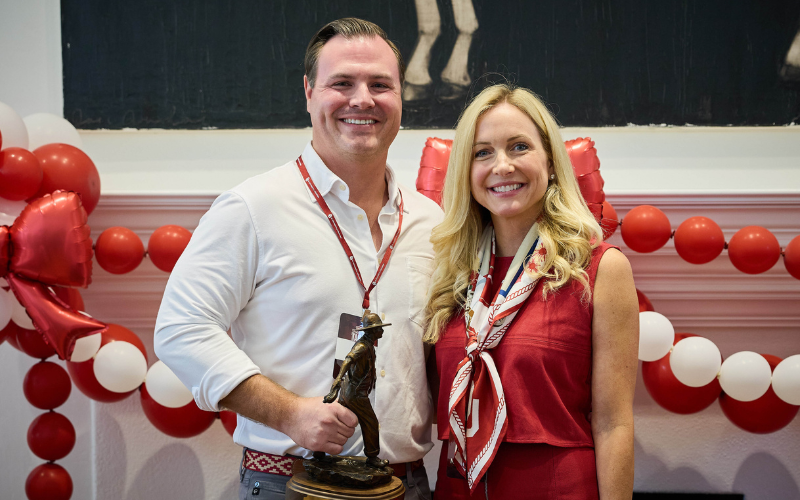
The University of Oklahoma has received a transformative gift from Jon and Shannon McCartney, which will name the McCartney Family Tunnel of Champions, the McCartney Family Gate of the Gaylord Family - Oklahoma Memorial Stadium and the McCartney Family Grand Lecture Hall in the Michael F. Price College of Business. The gift will also support the Inspiring Champions and the Athletic Director’s Discretionary Fund, in addition to establishing the McCartney DFW Career Trek program at Price College.
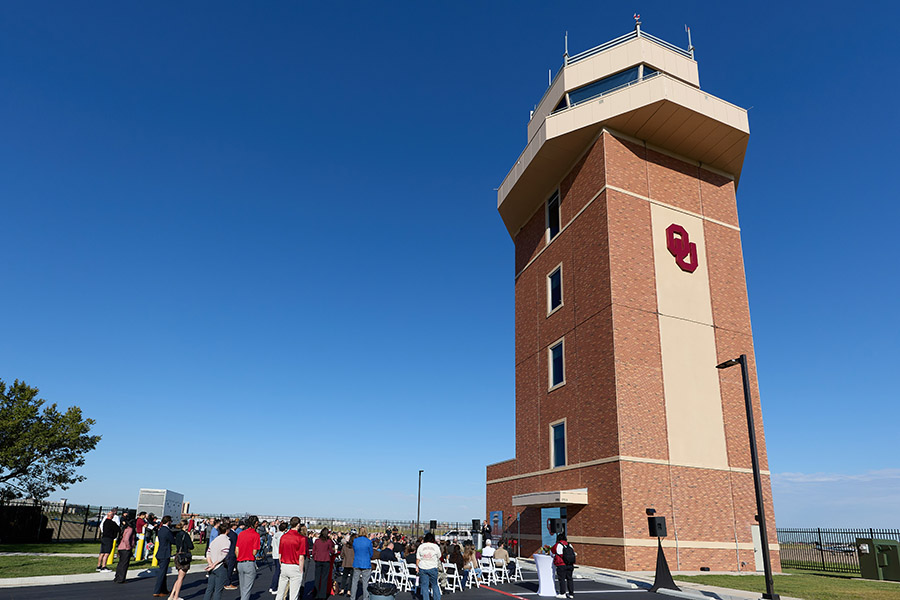
The University of Oklahoma today celebrated the opening of a new air traffic control tower at the OU Max Westheimer Airport. Standing 106 feet tall, more than double the current 52-foot facility, the new tower will modernize air traffic control operations and improve safety for pilots and students operating in the airspace.
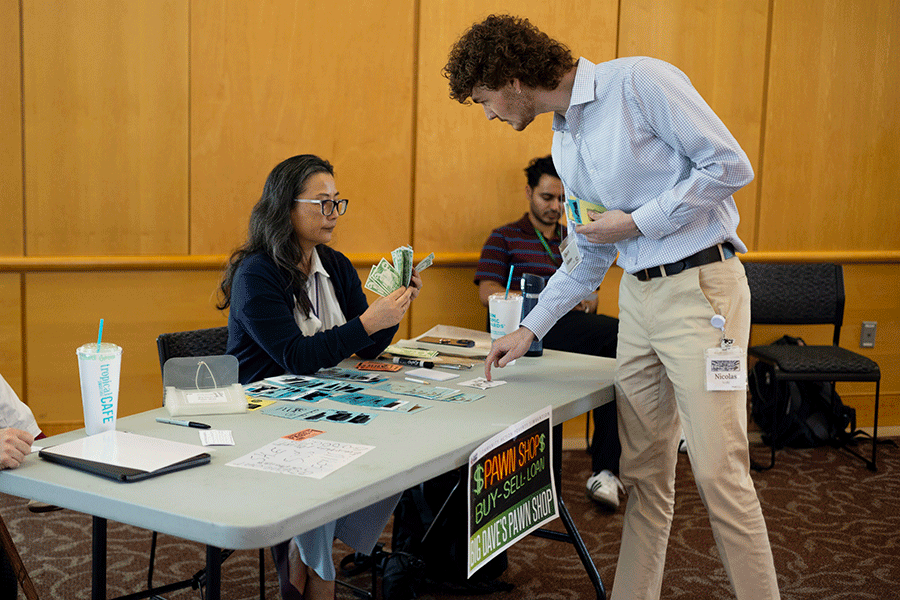
Do I buy groceries or pay the electric bill? Should I pawn some of my belongings to afford my prescription? My child is sick, so I will have to miss work to take care of him. Those are just a few of the difficult choices that OU-Tulsa health professional students confronted during the Community Access to Resources Experience. The role-playing activity challenged students to navigate the financial, family and other pressures that can affect a person’s health and ability to follow medical advice. Held annually during the SCM Institute orientation week, the experience is designed to generate understanding and build empathy.