NEWS


NORMAN, Okla. – The University of Oklahoma today broke ground for the construction of a new Life Sciences Laboratories Building on the Norman campus, dedicated to supporting Oklahoma’s health care workforce while advancing education and research capabilities at OU. The new facility will be supported in part by a transformative $80 million investment from the Oklahoma State Legislature, coupled with private giving.
“Thanks to this remarkable support, we will soon open the doors to new opportunities in research and education that will heighten OU’s excellence while strengthening the state’s workforce and economic impact,” said OU President Joseph Harroz Jr. “Together, we are creating a space where innovation and progress will thrive for generations.”
The 105,000-square-foot facility, located at the former location of Sutton Hall, will house 25 state-of-the-art teaching labs, a 250-seat auditorium and modern classroom and research spaces tailored to the evolving demands of biology and chemistry education. About 80,000 square feet of the facility will be dedicated to undergraduate education, while the remaining 20,000 square feet will feature biomedical research labs for OU faculty.
The project was first approved by the OU Board of Regents in March 2024 as part of the Campus Master Plan of Capital Improvement projects. Guided by OU’s “Lead On, University: The Next Phase” Strategic Plan, the new facility provides the world-class infrastructure necessary for the university to lead as a top-tier public research university while helping to lift the health of Oklahoma.
“This building will be essential for meeting Oklahoma’s health care workforce needs by expanding the pipeline of students with the foundational training in biology and chemistry that is necessary to enter OU’s nursing, allied health, and medical training programs,” said Michael Markham, dean of the Dodge Family College of Arts and Sciences. “In addition, the building’s state-of-the-art faculty research laboratories will enable the Dodge Family College of Arts and Sciences to significantly expand our biomedical research initiatives in our School of Biological Sciences.”
Construction of the new Life Sciences Laboratories Building is expected to be completed in fall 2027.

About the University of Oklahoma
Founded in 1890, the University of Oklahoma is a public research university located in Norman, Oklahoma. As the state’s flagship university, OU serves the educational, cultural, economic and health care needs of the state, region and nation. For more information about the university, visit www.ou.edu.
One in eight Oklahomans has type 2 diabetes, and an estimated one-third of the state’s adult population has undiagnosed prediabetes. University of Oklahoma researchers are developing a digital outreach program to help people understand their risk and connect with resources to help prevent the disease.
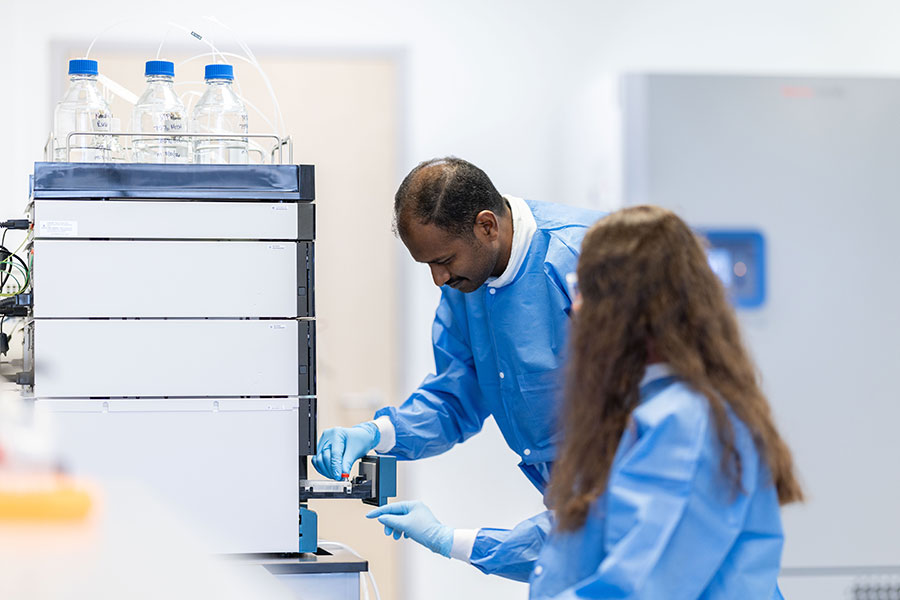
The Presbyterian Health Foundation has provided a grant for the University of Oklahoma College of Pharmacy to obtain its first liquid chromatography mass spectrometry equipment system. This acquisition expands the health campus’s ability to turn research into real-world impact.
Armed with a new five-year, $3.4 million grant from the National Institutes of Health, OU healthcare leaders are building the first chronic pain mHealth intervention app made with and for Native Americans.