NEWS


By
Greg Bruno
Date
Media Contact
Bonnie Rucker
brucker@ou.edu
TULSA, Okla. – On a recent Tuesday afternoon at the University of Oklahoma’s family medicine clinic in Tulsa, food, not pharmaceuticals, was the featured medication.
Tables in the foyer overflowed with fruits and vegetables – crisp carrots and hearty onions, shiny apples and ripe bananas. Nearby, medically tailored grocery bags filled with shelf-stable nutrition prescriptions – dry beans, seeds and intact whole grains – awaited pickup.
Patients lined up not only for checkups and follow-up visits, but also for nourishment meant to support their health beyond the exam room.
“When patients come to the clinic for their initial appointment, they’re screened for food insecurity and their interest in improving their current eating habits,” said Sheridan Miller Kardos, an OU graduate research assistant who runs the clinic’s food pharmacy.
“We're not expecting to be the only source of healthy eating,” Miller Kardos said, “but we're trying to make these changes more accessible.”
For nearly a decade, the University of Oklahoma Tulsa campus has been at the center of a bold but simple concept in health care known as “food is medicine.” Through the development of client-facing and student-centered programs and services, the initiative seeks to demonstrate the importance of diet and nutrition in treating and preventing chronic disease.
The food pharmacy at OU is one of several food is medicine programs created by Marianna Wetherill, Ph.D., the George Kaiser Family Foundation Chair in Population Healthcare and associate director for the OU Culinary Medicine Program at the OU-Tulsa School of Community Medicine. She is also an associate professor at the TSET Health Promotion Research Center and the Hudson College of Public Health.
Supported by grants from the National Institutes of Health, the U.S. Department of Agriculture, along with philanthropic foundations and local partnerships, Wetherill is working to position OU as a national leader in the food is medicine movement.
“Food plays a major role in our ability to prevent and treat chronic disease, but most healthcare providers are not trained in nutrition,” said Wetherill. “They're not prepared to counsel patients on how nutrition can manage many chronic conditions, from diabetes to high blood pressure.”
Education is a cornerstone of that effort. Since its launch in 2018, the OU-Tulsa Culinary Medicine Program has grown from a few dozen students to hundreds – including medical and physician assistant students, residents and other interprofessional disciplines trained in the medical power of food.
The need for such programs is especially acute in Oklahoma. The state ranks 49th in fruit and vegetable consumption and struggles with some of the poorest health outcomes in the nation. Approximately 685,000 Oklahomans depend on SNAP benefits – about 16% of the population.
As the need has grown, so has the relevance of OU’s work. Today, every medical student and physician’s assistant at OU-Tulsa must take culinary medicine to graduate. Excerpts from the curriculum have also been converted into patient education materials that can be used by any healthcare provider in Oklahoma to promote the state’s fruit and vegetable nutrition incentive program, Double Up Oklahoma (DUO).
Meanwhile, medical students are encouraged to pursue food is medicine activities beyond the school’s teaching kitchen, and many apply their training directly in the community.
One recent project, spearheaded by two OU medical students, Kristy Chong and Saramarie Azzun, delivered a 12-week nutrition curriculum developed by Wetherill for women in the early stages of recovery, a population whose nutrition deficiencies may play a role in recovery success. Another student-led initiative implemented several nutrition-based strategies to help residents of a Tulsa-based residential facility for women and children make healthier food choices.
Wetherill’s own research anchors OU-Tulsa’s leadership in the field. Her largest study, a multi-year, $2.4 million initiative known as NOURISH-OK, is testing a novel anti-inflammatory grocery and the “My Food Journey” self-care curriculum to determine whether diabetes in HIV-positive patients can be managed through nutritional interventions.
Another study, called FLOURISH, is testing a food is medicine approach to reduce maternal morbidity within the state’s Indigenous communities.
At the clinic’s food pharmacy, which operates with food supplied and delivered thanks to a long-standing partnership with the Food Bank of Eastern Oklahoma, OU-Tulsa students are often the ones putting theory into practice.
Miller Kardos, who is pursuing a master’s degree in social work, said the food pharmacy that she helps manage has two goals.
The first is to educate medical students working in the clinic about the role of nutrition in health care. When patients visit OU Family Medicine for the first time, their attending physician – often, a medical student – conducts a nutrition screening. Based on the results, the doctors then directly provide food-based prescriptions to help patients meet their therapeutic nutrition goals.
The second objective is to encourage patients – most of whom are uninsured – to see food itself as a new option for their medical treatment plan.
Miller Kardos said the impact is tangible. “Patients will give us handwritten notes, telling us, for instance, their A1C (average blood sugar) was 12% and now it’s 6%,” she said. “We have quite a few notes like that.”
More than 700 pounds of produce were distributed in the 60 minutes that the food pharmacy was open on that Tuesday, a pace that has become routine in recent weeks. Demand has surged so dramatically that lines often form before the doors open at 1 p.m., Miller Kardos said. An hour later, nearly everything is gone.
It’s just one more example, said Wetherill, of how OU-Tulsa is leading the charge making healthy food part of everyone’s healthcare routine.
“In everything we do, the goal is to educate patients and future physicians about the power of food,” she said.
About the University of Oklahoma
Founded in 1890, the University of Oklahoma is a public research university located in Norman, Oklahoma. As the state’s flagship university, OU serves the educational, cultural, economic and health care needs of the state, region and nation. For more information about the university, visit www.ou.edu.
One in eight Oklahomans has type 2 diabetes, and an estimated one-third of the state’s adult population has undiagnosed prediabetes. University of Oklahoma researchers are developing a digital outreach program to help people understand their risk and connect with resources to help prevent the disease.
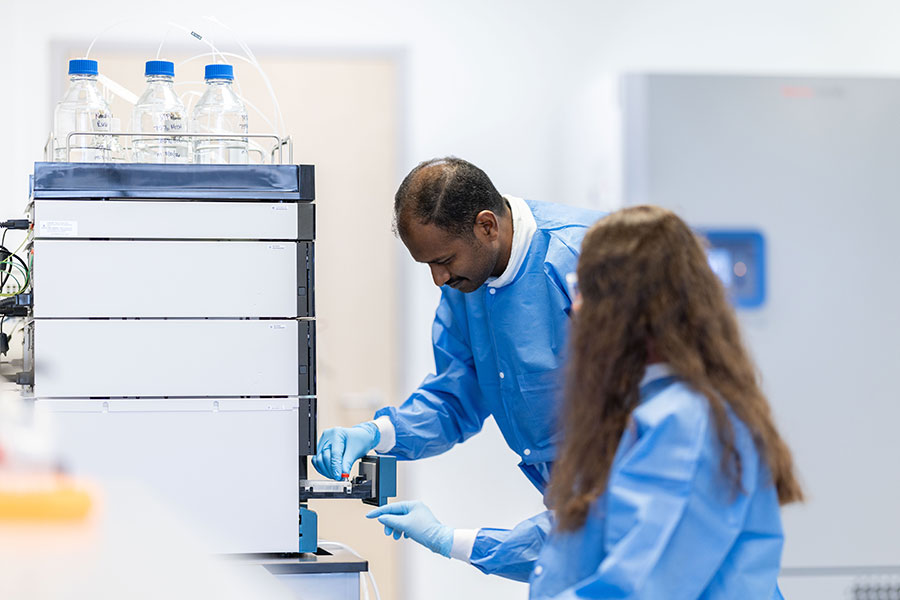
The Presbyterian Health Foundation has provided a grant for the University of Oklahoma College of Pharmacy to obtain its first liquid chromatography mass spectrometry equipment system. This acquisition expands the health campus’s ability to turn research into real-world impact.
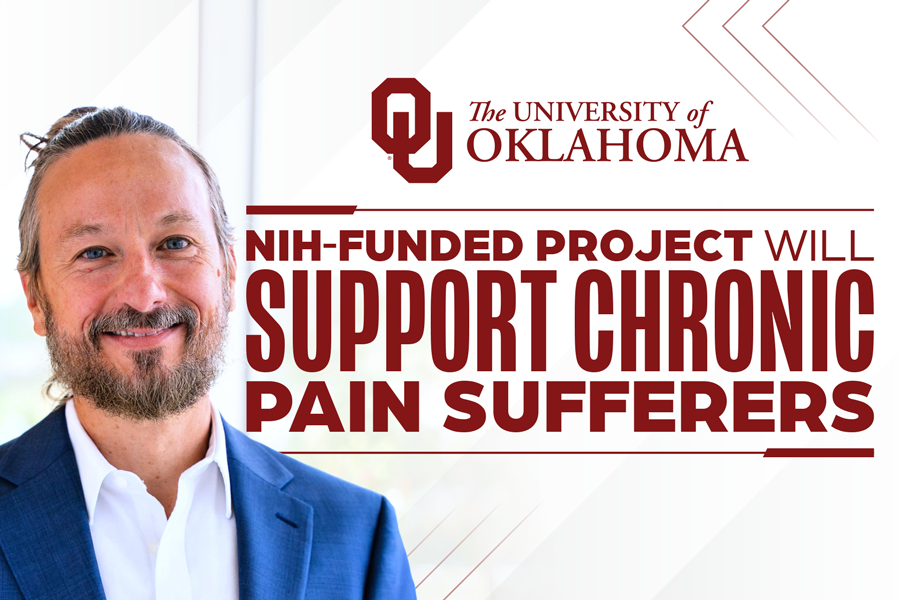
Armed with a new five-year, $3.4 million grant from the National Institutes of Health, OU healthcare leaders are building the first chronic pain mHealth intervention app made with and for Native Americans.