NEWS


NORMAN, Okla. – The University of Oklahoma Board of Regents today approved new bachelor’s degrees for its Online Campus and introduced a limited number of reduced credit hour degree programs in high-demand fields for its on-campus students, ensuring students have more options than ever to graduate faster, reduce costs, and enter Oklahoma’s workforce with the skills employers need most.
“At OU, our purpose is clear: We change lives,” said OU President Joseph Harroz Jr. “In a time of rapid change across higher education, we continue to aggressively innovate, putting the needs of our students and the demands of Oklahoma's workforce as our top priorities. The degrees approved today enhance our offerings for OU Online—a key strategy for OU—to continue to meet students where they are in their academic journeys. The reduced-credit hour degrees—which are only currently offered at about a dozen colleges nationwide—will allow students to accelerate their education to more quickly join the workforce in high-demand fields while lowering the overall cost of their education. Each of these steps builds on our momentum and reinforces our commitment to delivering lasting impact for our students, our communities and our state.”
The Board approved six bachelor’s degree programs for OU Online: Communication, Community Health, Economics, Social Work, Sociology and History of Science, Technology and Medicine.
“Today, OU has 70 online programs at the undergraduate, graduate and doctoral degree level, reflecting the university’s commitment to expanding access to high-quality, workforce-aligned education,” said OU Education Services Chief Executive Officer Sanam Raza. “With more than 37 million working-age adults nationwide who have some college credits but have not completed a college degree, OU’s online and undergraduate degree-completion offerings play an important role in helping learners reach their educational and career goals while strengthen the state’s talent pipeline.”
The university also received approval to reduce the number of credit hours required from 120 to 90 for eight select high-demand degrees. These degrees will be available in social work, applied artificial intelligence, cybersecurity, digital manufacturing, healthcare information systems, software development and integration, integrative studies, and interdisciplinary studies. They will maintain full academic rigor while reducing a student’s time to graduation, their educational costs, and expediting their entry into the workforce. Implementation is contingent on final approval by the Oklahoma State Regents for Higher Education. If approved, OU will become the first R-1 Research University to have such programs.
"These 90-credit bachelor’s degree options help widen the options available to our students, who come to OU with varied backgrounds and experiences and who desire a more structured, affordability-focused pathway,” said OU Senior Vice President and Provost André-Denis Wright. “These programs—in high-demand areas—will allow these students to graduate one year earlier so they can enter the workforce sooner.”
The Board also approved the naming of the Department of Ophthalmology in the OU College of Medicine as the Dean McGee Department of Ophthalmology, recognizing the university’s longstanding partnership between the college and the Dean McGee Eye Institute. It approved revisions to the University’s Sabbatical Leave policy, clarifying obligations for faculty while on sabbatical and conditions for future eligibility.
The Board will next meet in March.
About the University of Oklahoma
Founded in 1890, the University of Oklahoma is a public research university located in Norman, Oklahoma. As the state’s flagship university, OU serves the educational, cultural, economic and health care needs of the state, region and nation. For more information about the university, visit www.ou.edu.
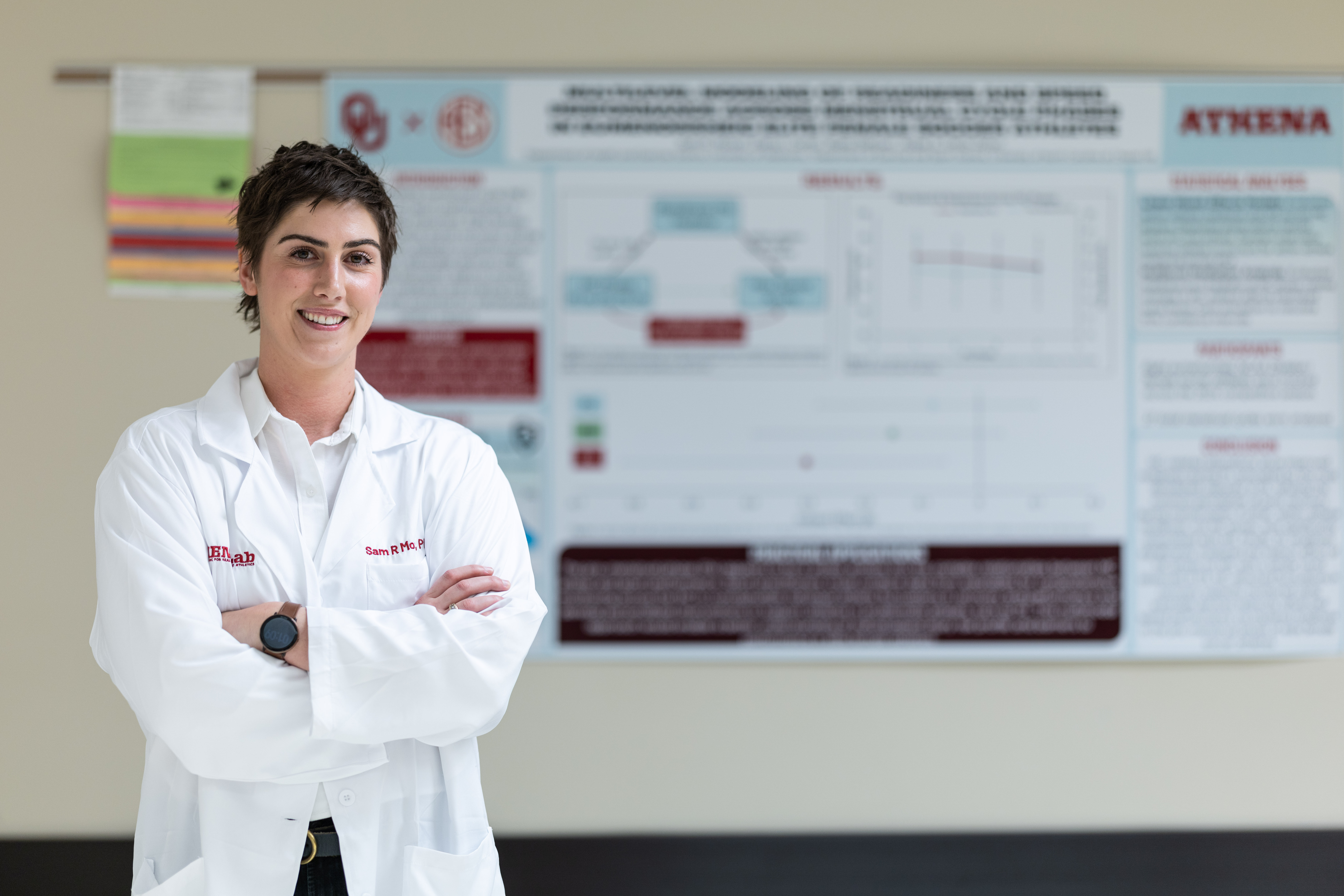
A new study led by a University of Oklahoma faculty member shows that heavier training loads can hurt next-day performance for athletes. Researchers monitored players on a college women's soccer team, gathering data over the course of their season.
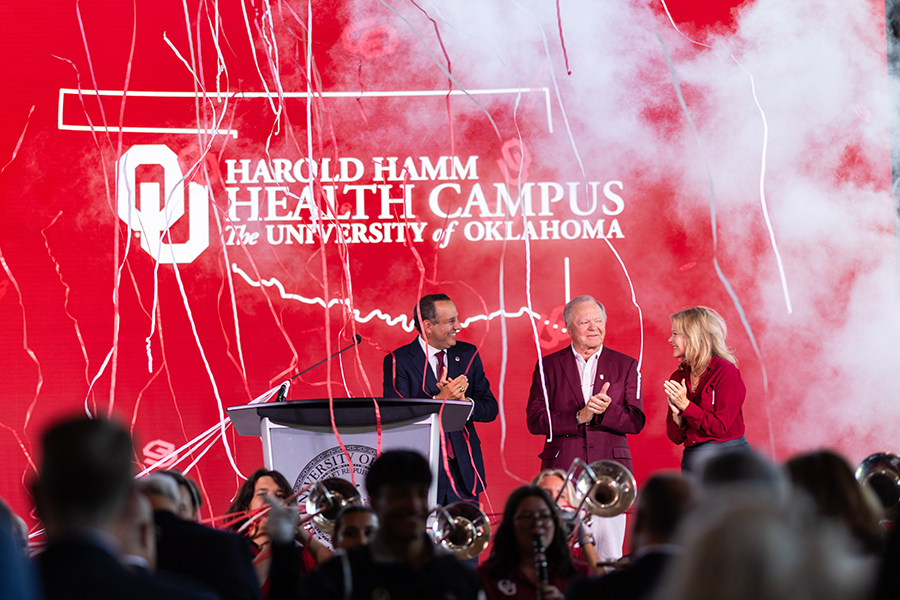
The University of Oklahoma today announced an historic $150 million gift from Harold Hamm, the largest single gift in university history, to lift the health of Oklahoma by advancing health education, research and discovery, strengthening the state’s health care workforce and accelerating the pursuit of breakthroughs against Oklahoma’s critical public health challenges.
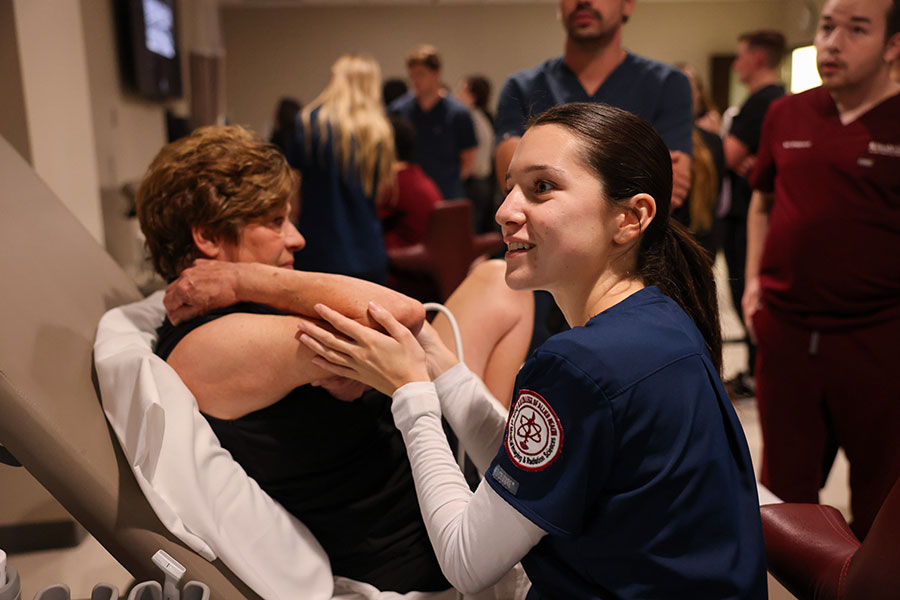
Experienced sonography students in the OU College of Allied Health work with students in the OU College of Medicine on how to utilize modern ultrasound systems. This interprofessional setting is made possible through a recently opened laboratory and cross-college collaboration on the OU Health Campus.