NEWS


NORMAN, Okla. – In a rare achievement for an undergraduate student, Colby Higdon, a geology major on the paleontology track with the University of Oklahoma has published original paleontological research conducted at the Sam Noble Oklahoma Museum of Natural History that reveals new insights into whether competition between ancient animals was responsible for their extinction. The study, which explores the feeding ecology of extinct echinoderms, was published in the Journal of Paleontology and sheds new light on ancient marine ecosystems preserved in Oklahoma’s Bromide Formation.
Higdon’s research began in 2022 after taking Fundamentals of Invertebrate Paleontology with Dr. Lena Cole, assistant curator of invertebrate paleontology at the Sam Noble Museum and assistant professor in OU’s School of Geosciences.
“I approached Dr. Cole after class and asked if she had any research opportunities,” Higdon said. “Eventually, I settled on a project that sparked my curiosity. Then came the lengthy period of data collection.”
Over the course of three semesters, Higdon examined more than 4,000 fossil specimens from the museum’s collections, focusing on five groups of extinct echinoderms– relatives of modern sea stars, sea urchins, and sea lilies–paracrinoids, rhombiferans, diploporans, eocrinods and crinoids. His goal was to determine whether these species competed for food, which could help explain why some of these groups ultimately went extinct while others survived.
“My research suggests that not much, if any, competition was taking place between these groups,” Higdon said. “They fed at different heights above the sea floor, which affected how they accessed food particles. This diversity in feeding strategies shows how complex these ancient ecosystems really were.”
For her own part, Dr. Cole praised Higdon’s dedication and scientific rigor throughout the long months of collection research.
“Colby’s curiosity and self-taught knowledge stood out immediately,” she said. “He expanded a model I developed to quantify feeding strategies and collected thousands of measurements. His findings ruled out competition as a major factor in echinoderm extinction and revealed surprisingly complex ecological structures.”
The fossils Higdon studied came from the Bromide Formation in the Arbuckle Mountains of southern Oklahoma, a late Ordovician rock sequence known for its extraordinary abundance of marine fossils.
“The Bromide is home to one of the most diverse echinoderm faunas in the world,” Higdon said. “It’s a snapshot of life just before a major mass extinction.”
Higdon’s work was supported by museum staff and volunteers, including collections manager Lyndsey Farrar and longtime volunteer Steve Vanlandingham, who donated key specimens and served as a mentor.
“It’s easy to get excited about charismatic fossils like dinosaurs,” Cole said. “But it takes a special level of dedication to appreciate tiny, often imperfect fossils like the echinoderms Colby worked on.”
In addition to publishing his research, Higdon presented his findings at a national conference and received two competitive student research grants. He credits the museum and its staff for providing an environment where undergraduate research can thrive.
“Professors like Dr. Cole are the bridge between being told information and discovering it for yourself,” Higdon said. “The support I received from her, Lyndsey Farrar and the entire Invertebrate Paleontology department was more than I could have imagined.”
Dr. Cole emphasized the unique opportunities available to OU students through the Sam Noble Museum.
“The museum’s presence on campus allows geology students to earn course credit and gain hands-on experience. There is an especially strong relationship between the museum and students in the School of Geosciences’ Paleobiology program,” she said. “Students from any major can also volunteer in collections and educational outreach. It’s a vital part of our mission to inspire curiosity and advance science.”
For more information about research and volunteer opportunities at the Sam Noble Museum, visit samnoblemuseum.ou.edu.

About the University of Oklahoma
Founded in 1890, the University of Oklahoma is a public research university located in Norman, Oklahoma. As the state’s flagship university, OU serves the educational, cultural, economic and health care needs of the state, region and nation. For more information about the university, visit www.ou.edu.
About the Sam Noble Oklahoma Museum of Natural History
The Sam Noble Museum is the officially designated natural history museum for the state of Oklahoma and is located on the University of Oklahoma Norman campus at 2401 Chautauqua Ave.
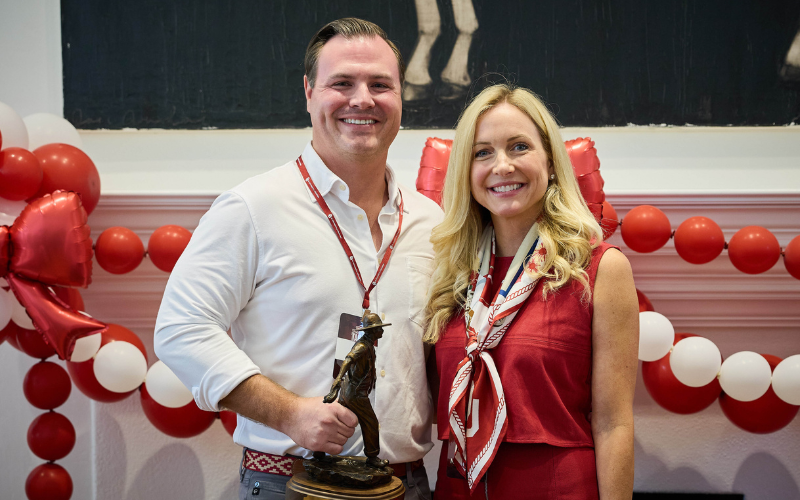
The University of Oklahoma has received a transformative gift from Jon and Shannon McCartney, which will name the McCartney Family Tunnel of Champions, the McCartney Family Gate of the Gaylord Family - Oklahoma Memorial Stadium and the McCartney Family Grand Lecture Hall in the Michael F. Price College of Business. The gift will also support the Inspiring Champions and the Athletic Director’s Discretionary Fund, in addition to establishing the McCartney DFW Career Trek program at Price College.
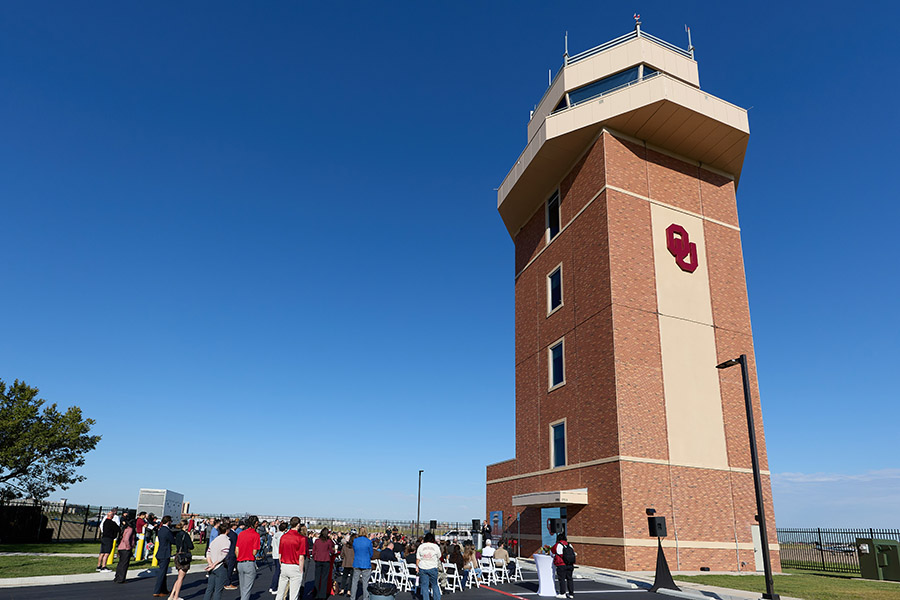
The University of Oklahoma today celebrated the opening of a new air traffic control tower at the OU Max Westheimer Airport. Standing 106 feet tall, more than double the current 52-foot facility, the new tower will modernize air traffic control operations and improve safety for pilots and students operating in the airspace.
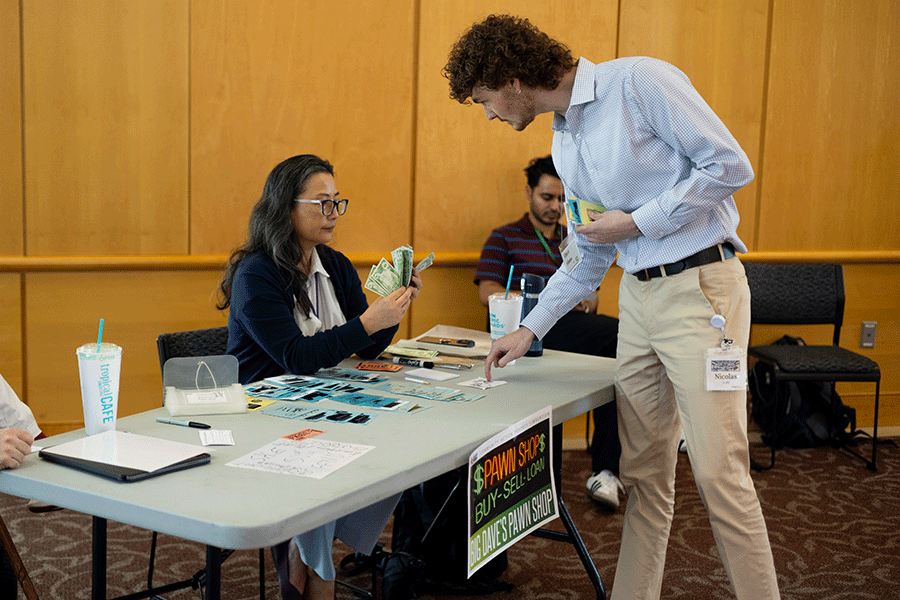
Do I buy groceries or pay the electric bill? Should I pawn some of my belongings to afford my prescription? My child is sick, so I will have to miss work to take care of him. Those are just a few of the difficult choices that OU-Tulsa health professional students confronted during the Community Access to Resources Experience. The role-playing activity challenged students to navigate the financial, family and other pressures that can affect a person’s health and ability to follow medical advice. Held annually during the SCM Institute orientation week, the experience is designed to generate understanding and build empathy.