NEWS


Media Contact
April Wilkerson
april-j-wilkerson@ouhsc.edu
Date
OKLAHOMA CITY – U.S. Poison Centers save $3.1 billion every year in medical costs and lost productivity, according to a new independent study released by America’s Poison Centers®. Conducted by RAND, the report confirms that U.S. Poison Centers provide substantial economic and societal benefits for communities across the country. In 2025, the Oklahoma Poison Center managed 31,462 human exposure cases and handled a total of 36,167 incoming calls, including 4,580 informational calls. To ensure patient safety and continuity of care, specialists conducted 34,335 follow-up calls, resulting in more than 70,500 total calls answered and placed in support of Oklahoma families and health care providers.
The RAND report, “Poison Prevention, Treatment, and Detection as Public Health Investments,” found that for every $1 invested in Poison Center services, communities receive $16.77 in benefits. These cost-savings reflect reduced emergency department use, shortened hospital stays, decreased mortality risk, enhanced public health surveillance and improved patient outcomes.
However, despite their growing value, overall funding for Poison Centers has decreased by 8% from 2011 to 2024 in real dollars, in addition to a decrease in subsidized support. Amid rising health care costs, these budget cuts are an increasing threat to the ability of Poison Centers to provide life-saving services and essential 24/7 coverage.
“This study confirms what we experience on every call – fast access to our specialists can keep people safe at home, prevent costly ER visits, and guide health care providers in treating complex cases,” said Kristie Edelen, Pharm.D., managing director, Oklahoma Poison Center. “We are here 24/7 for Oklahoma families, caregivers and clinicians.”
In addition to providing 24/7 expert guidance to the public and health care professionals, the Oklahoma Poison Center manages the majority of exposure cases while people are safely at home, reducing unnecessary emergency department visits and costs. The Oklahoma Poison Center also supports the state through medication safety education, substance use and overdose prevention initiatives, public health surveillance, and real-time consultation for hospitals, EMS and clinics. During public health emergencies and disasters, the Oklahoma Poison Center serves as a trusted clinical and informational resource for both the public and health care system.
For additional information or to read the full report, visit poisoncenters.org/national-impact-study.
For fast, free, confidential help for a potential poisoning or question, contact the Poison Helpline at 1-800-222-1222, PoisonHelp.org, or reach your local poison center by visiting oklahomapoison.org.
About the University of Oklahoma
Founded in 1890, the University of Oklahoma is a public research university with campuses in Norman, Oklahoma City and Tulsa. As the state’s flagship university, OU serves the educational, cultural, economic and health care needs of the state, region and nation. In Oklahoma City, the OU Health Campus is one of the nation’s few academic health centers with seven health profession colleges located on the same campus. The OU Health Campus serves approximately 4,000 students in more than 70 undergraduate and graduate degree programs spanning Oklahoma City and Tulsa and is the leading research institution in Oklahoma. For more information about the OU Health Campus, visit www.ouhsc.edu.
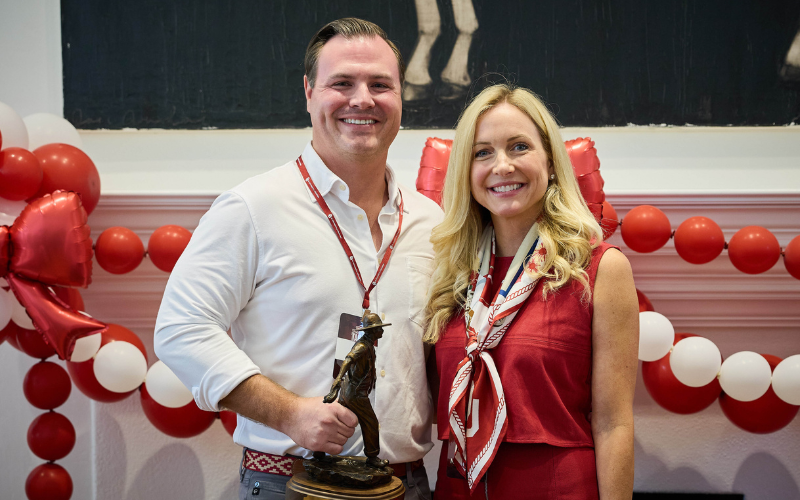
The University of Oklahoma has received a transformative gift from Jon and Shannon McCartney, which will name the McCartney Family Tunnel of Champions, the McCartney Family Gate of the Gaylord Family - Oklahoma Memorial Stadium and the McCartney Family Grand Lecture Hall in the Michael F. Price College of Business. The gift will also support the Inspiring Champions and the Athletic Director’s Discretionary Fund, in addition to establishing the McCartney DFW Career Trek program at Price College.
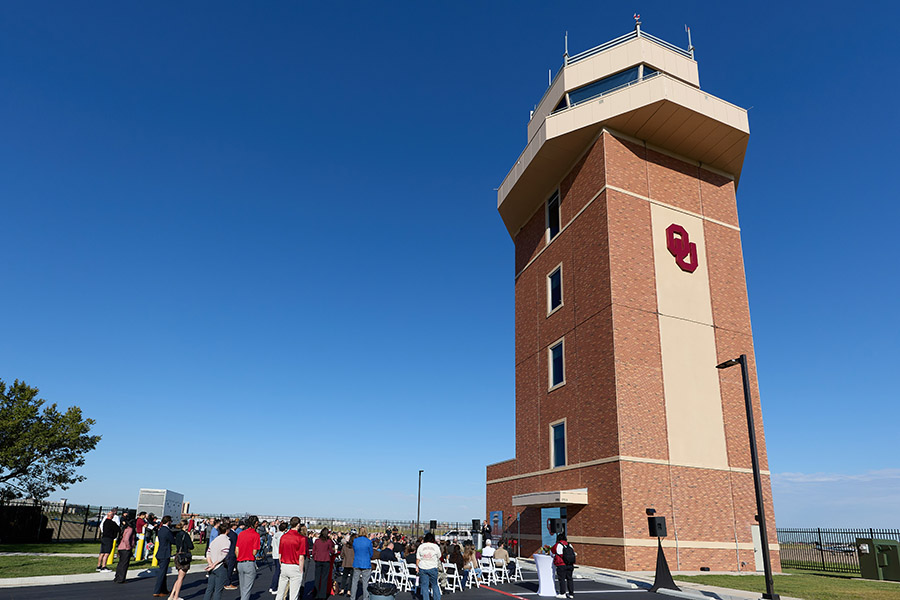
The University of Oklahoma today celebrated the opening of a new air traffic control tower at the OU Max Westheimer Airport. Standing 106 feet tall, more than double the current 52-foot facility, the new tower will modernize air traffic control operations and improve safety for pilots and students operating in the airspace.
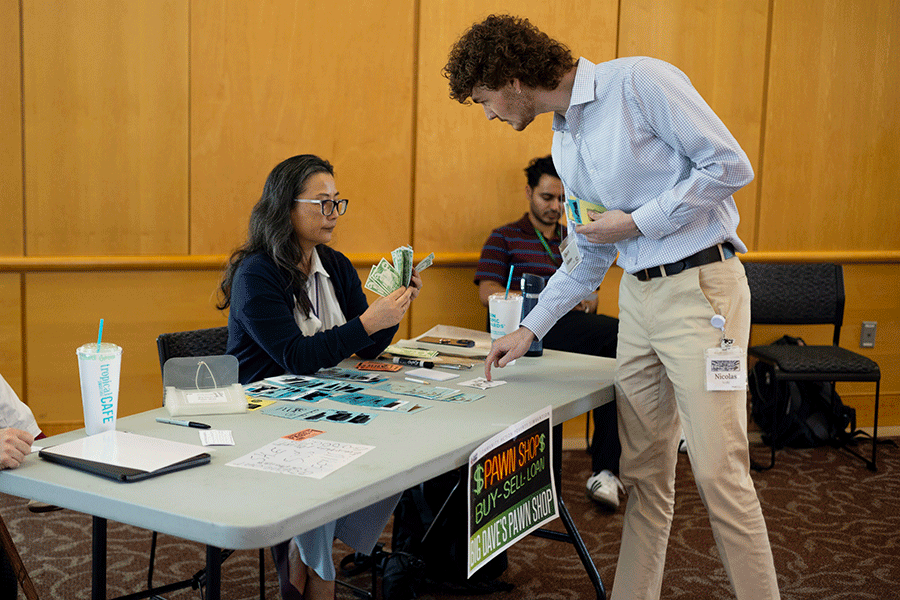
Do I buy groceries or pay the electric bill? Should I pawn some of my belongings to afford my prescription? My child is sick, so I will have to miss work to take care of him. Those are just a few of the difficult choices that OU-Tulsa health professional students confronted during the Community Access to Resources Experience. The role-playing activity challenged students to navigate the financial, family and other pressures that can affect a person’s health and ability to follow medical advice. Held annually during the SCM Institute orientation week, the experience is designed to generate understanding and build empathy.