NEWS

Date
NORMAN, Okla. — On December 3-5, 2025, 50 thought leaders in undergraduate STEM (science, technology, engineering, and math) education met at the headquarters of the American Association for the Advancement of Science (AAAS) in Washington, D.C. to discuss the future of undergraduate education in the U.S. and the successes and barriers related to providing a relevant and engaging STEM education for all undergraduate students—regardless of their career pursuits.
This meeting was supported by awards from the National Science Foundation to two of the four leaders, (Gordon Uno, David Ross Boyd Professor at the University of Oklahoma, and James Collins, Virginia M. Ullman Professor of Natural History and the Environment at Arizona State University) who organized this event with Eliza Reilly (Director of the National Center for Science and Civic Engagement), and Susan Elrod (former Chancellor of the University of Indiana, South Bend). Participants included current and former academic leaders; STEM Education Program Directors from the National Academy of Sciences, the Howard Hughes Medical Institute, the AAAS, and the National Science Foundation; Executive Directors of STEM and STEM education societies and organizations; and STEM faculty in multiple disciplines from two-year and four-year colleges and universities. Through their associations, these participants reach thousands of STEM faculty and many more undergraduates across the United States.
Attendees expressed concern about the current state of STEM education in the United States and the diminished role of scientific, evidence-based critical thinking in addressing individual and societal science-related problems. Participants characterized the STEM ecosystem by describing what qualities they hoped future students, faculty members and programs would possess and the major issues that currently impact reaching those ideals, including the use of artificial intelligeence, the policies and levels of support from the government for STEM education, the aftereffects of the COVID-19 pandemic, and the influence of social media on students’ and the public’s understanding and use of science.
While participants recognize there are no quick fixes for the evolving and complex problems identified, there was great satisfaction in the opportunity to speak with other experts in STEM education and learn about their activities and challenges. Various projects and groups often work toward similar goals, but in parallel without interaction; one commitment made by participants was to increase collaborative efforts. The group also identified institutional and national leadership moves and strategies that focus on realistic activities to address the recommendations and ideas that emerged from group discussions. Participants left the meeting with heightened resolve to support the education of all undergraduate students for their future interactions with science at the personal, professional, and civic levels.
For more information, please contact Gordon Uno at guno@ou.edu.
About the University of Oklahoma
Founded in 1890, the University of Oklahoma is a public research university located in Norman, Oklahoma. As the state’s flagship university, OU serves the educational, cultural, economic and health care needs of the state, region and nation. For more information about the university, visit www.ou.edu.
A newly funded study at the University of Oklahoma aims to increase prostate-specific antigen (PSA) screening among Black men in Oklahoma, who die from prostate cancer at rates two to four times higher than other racial groups.
Young adults who want to quit vaping may turn to social media for support, but keeping them engaged with digital cessation programs over time can be challenging. A University of Oklahoma researcher is testing whether adding support from trained peers can help keep young adults engaged as they try to quit vaping.
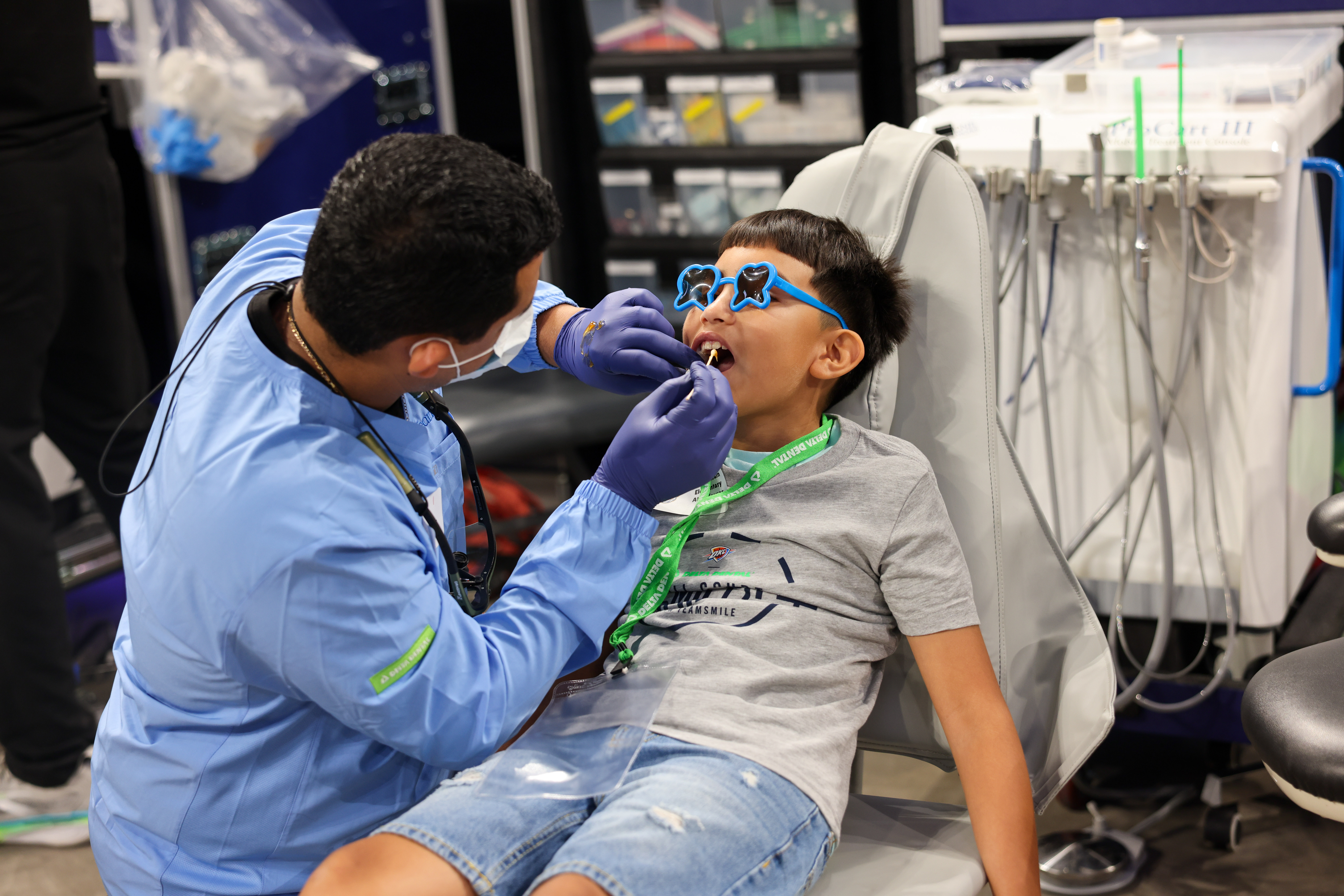
For 259 third- and fourth-graders from Oklahoma City Public Schools, a trip to the Paycom Center recently came with something more than a chance to see the home of the Oklahoma City Thunder. During the inaugural Full Court Smiles event, the students received $82,315 in free dental care from faculty, residents and students from the University of Oklahoma College of Dentistry and other dental professionals.