NEWS


OKLAHOMA CITY – The University of Oklahoma’s Fran and Earl Ziegler College of Nursing has received over $5 million in additional funding through a National Institutes of Health initiative to support four maternal health research projects over the next four years.
The Implementing a Maternal health and PRegnancy Outcomes Vision for Everyone (IMPROVE) Initiative supports research designed to reduce preventable causes of maternal death and improve health and outcomes for women before, during and after pregnancy.
The four projects bring together researchers from OU’s College of Nursing, Hudson College of Public Health, College of Medicine, and Dodge Family College of Arts and Sciences with national and community partners to address challenges ranging from access to maternal health care and the use of health data, to culturally responsive care and the role of nutrition and technology in maternal health.
Extending the reach of maternal health data
Leremy Colf, Ph.D., along with other College of Nursing faculty investigators and students, will lead the project “National Expansion of Translational Maternal-Infant Data (NEST).” The project is being conducted in partnership with the IMPROVE-funded Data Coordination and Innovation Hub at the University of Maryland, Baltimore.
The team will expand a national dataset they previously developed to provide a more detailed picture of maternal and infant health across the United States. The expanded data will examine maternal and infant health care utilization and health outcomes in relation to factors such as geographic location, travel time to health care, and community vulnerability.
In addition to developing new data resources, the project will build maternal health data science expertise by providing training opportunities for researchers interested in using large, linked datasets to better understand the factors contributing to severe maternal and infant health outcomes.
“This funding from NIH through the IMPROVE initiative will allow us to create a new large, linked dataset to help researchers across the country identify and address the causes of maternal and infant morbidity and mortality in clear, actionable and impactful ways,” Colf said.
“It is our hope that bringing together clinicians, researchers and data experts through this project will help save the lives and decrease the suffering of mothers and infants.”
The NEST project is funded for $1,540,534 over four years.
Expanding the work of CIRCLE
The other three projects are being funded through the IMPROVE initiative’s Maternal Health Research Center of Excellence located at the Center for Indigenous Resilience, Culture and Maternal Health (CIRCLE) on the Harold Hamm Health Campus at the University of Oklahoma.
CIRCLE was initially funded in 2023 with $10.5 million to advance research focused on improving Indigenous maternal health in the Southern Plains region.
The new projects will expand CIRCLE’s work through partnerships with tribal communities and health organizations in Alaska and through continued research on food, nutrition and maternal health in Oklahoma and Kansas.
Two of the new projects are partnerships with Southcentral Foundation, an Alaska Native health care organization serving more than 70,000 American Indian and Alaska Native people.
Alaska faces significant challenges in accessing maternity care, particularly in rural and remote communities. Many areas of the state are considered maternity care deserts, where people have limited access to hospitals and other maternity services. Tribal health organizations are often the only health care providers available in these communities.
The partnership with Southcentral Foundation will expand CIRCLE’s reach into Alaska and strengthen the center’s commitment to conducting research alongside tribal communities, patients and health care providers.
Exploring maternal health technology in Alaska
The first project, led by Vanessa Hiratsuka, Ph.D., of Southcentral Foundation, is titled “Exploring Maternal Innovative Technology Supports and Tools in the Alaska Tribal Health System.”
The project will bring together tribal health system leaders, health care providers and other community stakeholders to identify maternal health technologies that are practical, effective and culturally appropriate for use in Alaska.
Researchers will also examine what may help or prevent these technologies from being incorporated into electronic health records and routine health care. Findings will inform the implementation of emerging maternal health technologies and provide technology developers with a better understanding of the needs of American Indian and Alaska Native healthcare systems.
The project is funded for $1,242,126 over four years.
Understanding maternal health experiences in Alaska
The second Southcentral Foundation project, led by Julie Beans, MPH, is titled “Maternal Health Experiences in the Alaska Tribal Health System.”
The project will bring together tribal health leaders, clinicians, support staff and patients from across three Alaska hospitals to identify gaps in what is known about maternal health care for American Indian and Alaska Native communities.
The team will also engage American Indian and Alaska Native birthing women to better understand their experiences with maternal health care and work with health care providers to identify opportunities to improve care and address disparities in maternal health outcomes.
The goal is to develop recommendations to strengthen maternal health services across the Alaska Tribal Health System.
The project is funded for $1,258,349 over four years.
Building on FLOURISH research
The fourth project builds on the existing FLOURISH (Food for Lifecourse Resilience in Maternal Security and Health) Research Project within CIRCLE. Led by Emily Jones, Ph.D., and Marianna Wetherill, Ph.D., both with the Hudson College of Public Health, the project is titled “Integration of Tribal Food Systems and Novel Cardiometabolic Risk Biomarkers within Food is Medicine: FLOURISH Supplement.”
FLOURISH examines the role of food as a multi-dimensional source of resiliency and its connections with other protective factors that may protect against severe maternal morbidity and cardiometabolic health outcomes among American Indian and Alaska Native women during pregnancy and shortly after giving birth.
The new project will expand this work by incorporating community perspectives on tribal foodways and local food environments through discussions with community leaders and knowledge holders in Oklahoma and Kansas.
“Tribal communities are the experts on their own food systems, and this component of the research will help to ensure the FLOURISH Food is Medicine intervention aligns with tribal partners’ priorities and assets,” Wetherill said.
The research will also use emerging wearable technology to measure factors that can affect cardiometabolic health, including stress, physical activity, sedentary behavior, sleep and vascular health. The study will use devices including the Fitbit Charge 6 and Cardiex’s CONNEQT Pulse, a technology recognized through the NIH RADx program.
“Our team’s long-term goal is to generate knowledge that can inform practical, community-driven approaches to improving maternal health,” Jones said. “By examining both social and biological factors, we hope to identify opportunities to support healthier pregnancies and families across tribal communities.”
The project is funded for $1,054,311 over four years.
Together, the projects demonstrate the breadth of maternal health research being conducted through the College of Nursing and CIRCLE, while strengthening partnerships with communities and researchers across the country. The projects will generate new data, expand research capacity and explore innovative approaches to improving maternal health outcomes, with a particular focus on addressing the needs and experiences of Indigenous communities.
About the University of Oklahoma
Founded in 1890, the University of Oklahoma is a public research university located in Norman, Oklahoma. As the state’s flagship university, OU serves the educational, cultural, economic and healthcare needs of the state, region and nation. For more information about the university, visit www.ou.edu.
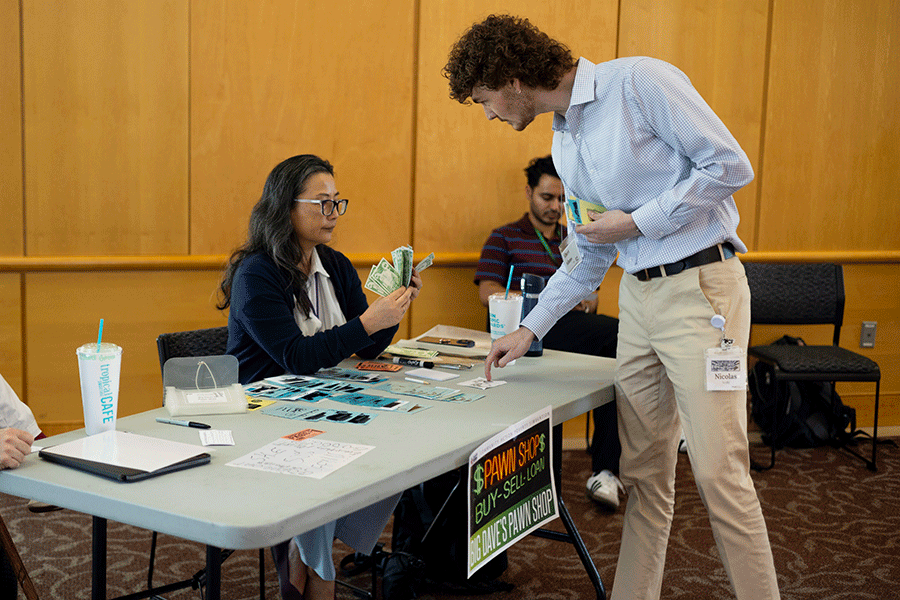
Do I buy groceries or pay the electric bill? Should I pawn some of my belongings to afford my prescription? My child is sick, so I will have to miss work to take care of him. Those are just a few of the difficult choices that OU-Tulsa health professional students confronted during the Community Access to Resources Experience. The role-playing activity challenged students to navigate the financial, family and other pressures that can affect a person’s health and ability to follow medical advice. Held annually during the SCM Institute orientation week, the experience is designed to generate understanding and build empathy.
Thanks to more than $5 million in funding through a National Institutes of Health initiative, the University of Oklahoma's College of Nursing will support four maternal health research projects over the next four years.
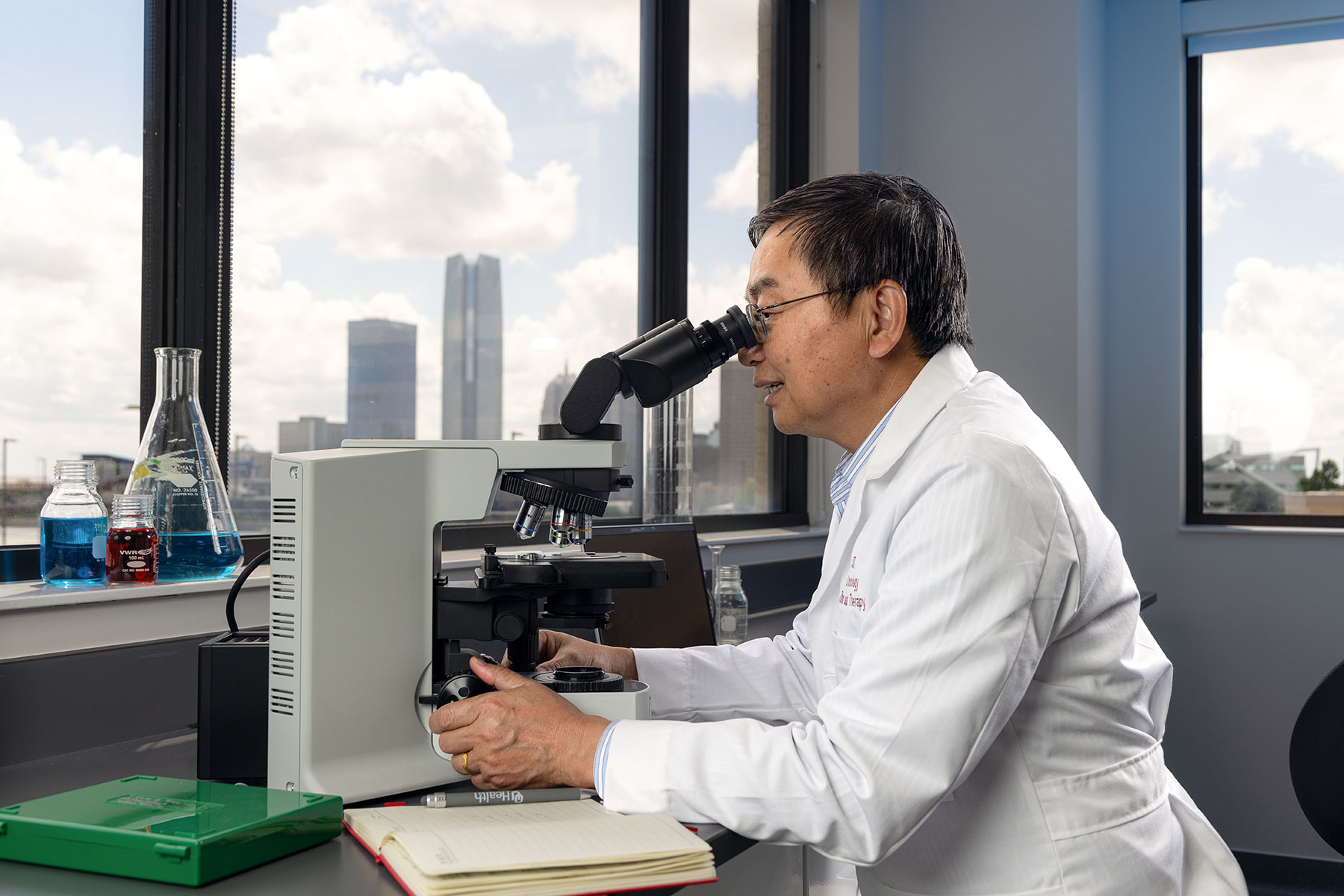
A University of Oklahoma physician-researcher recently received $2.9 million in funding from the National Cancer Institute to study whether RedHill Biopharma’s drug opaganib, given after CAR T-cell therapy, can help the immune cells fight cancer more effectively.