| DATE | SPEAKER | UNIVERSITY | SPEAKER INFO |
Wednesday, September 2 |
Dr. Alexandra Bentz |
University of Oklahoma |
|
Wednesday, September 9 |
Dr. Chongle Pan & Dr. Xiangming Xiao |
University of Oklahoma |
|
Wednesday, September 16 |
No Speaker (TBD) |
- | |
Wednesday, September 23 |
Dr. Chris Funk, Weese Speaker |
Colorado State University |
|
Wednesday, September 30 |
Dr. Gavin Woodruff |
University of Oklahoma |
|
Wednesday, October 7 |
Dr. Elizabeth Everman |
University of Oklahoma |
|
Wednesday, October 14 |
No Speaker (TBD) |
|
|
Wednesday, October 21 |
Dr. Brittany Counts |
University of Oklahoma |
|
Wednesday, October 28 |
Dr. Sarah Ross, DFCAS Distinguished Lecturer |
University of Pittsburgh |
|
Wednesday, November 4 |
Dr. Felipe Zapata, Cross Speaker |
UCLA |
|
Wednesday, November 11 |
Dr. Dana Hawley, Sutton Speaker |
Virginia Tech |
|
Wednesday, November 18 |
No Speaker (TBD) |
|
- |
Wednesday, November 25 |
HOLIDAY - NO SEMINAR |
||
Wednesday, December 2 |
Dr. Aalap Dixit |
Oklahoma State University |
|
Wednesday, December 9 |
No Speaker (TBD) |
|
- |
Wednesday, December 16 |
FINALS WEEK - NO SEMINAR |
||
DATE |
PRESENTER/TITLE |
Friday, September 11 |
Ari Berkowitz: A synaptic locus of song learning |
Friday, September 18 |
Robyn Mildren: Sensorimotor Prediction and Control in the Cerebellum: Translating into DBS Therapies |
Friday, September 25 |
Chris Brooks: TRPM8-mediated cool-induced analgesia in a mouse model of chemesthetic oro-trigeminal pain |
Friday, October 2 |
Brenna Arledge: Reliable but Wrong? Automated Detection of Heart Rate Artifacts as a Source of Bias in Pediatric EEG Data |
Friday, October 9 |
NO CLASS-OU/TEXAS |
Friday, October 16 |
Naim Bautista: Respiratory and cognitive complications of high-altitude hypoxia |
Friday, October 23 |
Shae Johnston: Sex differences in microglia morphology and function across the lifespan are mediated by the early hormone environment |
Friday, October 30 |
Elizabeth Everman |
Friday, November 6 |
Jinrong Li |
Friday, November 13 |
Eunsung Lee |
Friday, November 20 |
Farima Naghash |
Friday, November 27 |
NO CLASS-THANKSGIVING BREAK |
Friday, December 4 |
Yijie Huang |
Friday, December 11 |
Michael Wenger |
University of Oklahoma researcher Ashlee Rowe is advancing biotherapeutics by studying how certain species of mice are able to resist pain from venomous scorpions. Her discoveries aim to help provide a highly valuable solution for nonaddictive pain management.
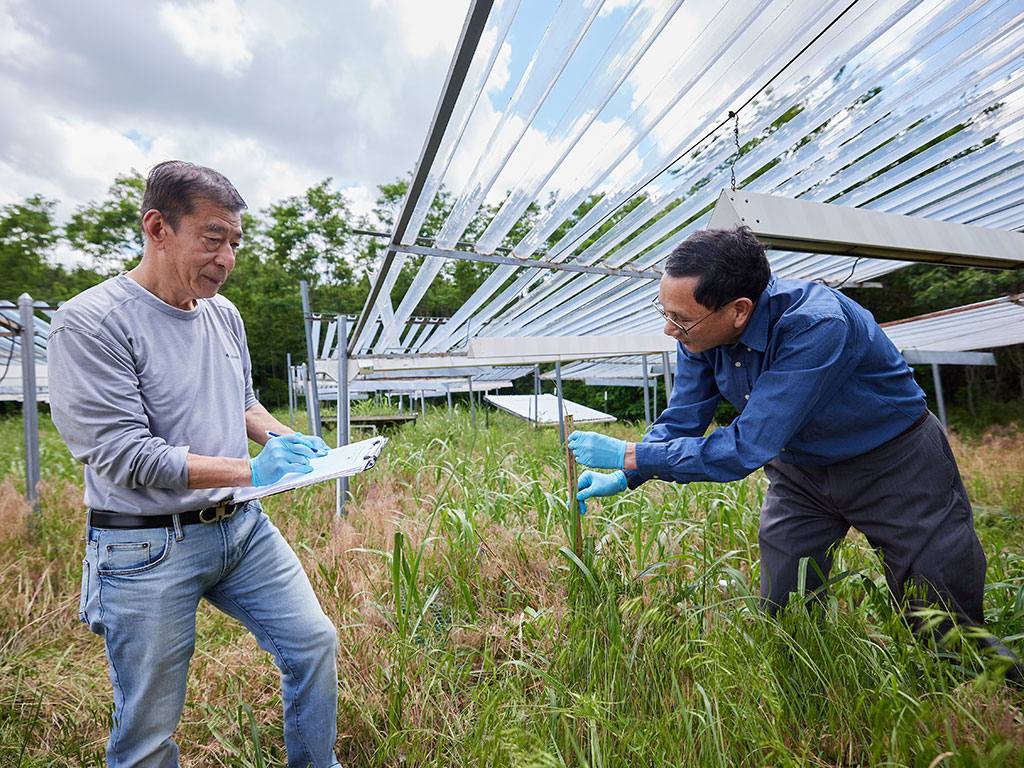
A team of researchers headquartered at the University of Oklahoma is taking an innovative approach toward advancing grassland conservation and management, with grant support from the the U.S. National Science Foundation. The project brings together experts and observatory sites from across the state.
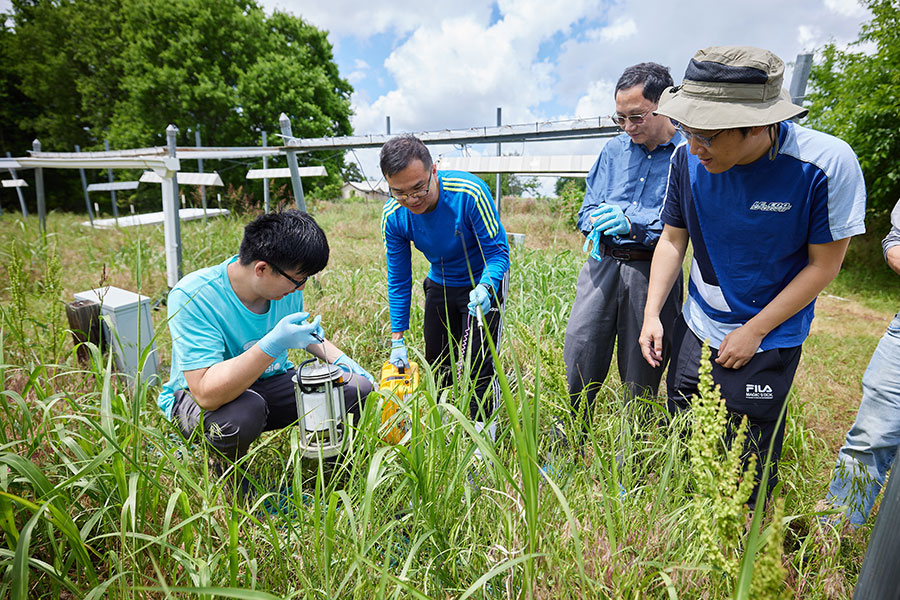
A new study tracking soil microbial communities across six years of experimental drought in a tallgrass prairie finds that prolonged water stress diminishes biodiversity, pushing communities toward less predictable, harder-to-reverse configurations.
University of Oklahoma professor Naim M. Bautista, Ph.D., is part of an international team working to uncover how Andean leaf-eared mice have adapted to survive extreme elements of low oxygen and freezing temperatures.
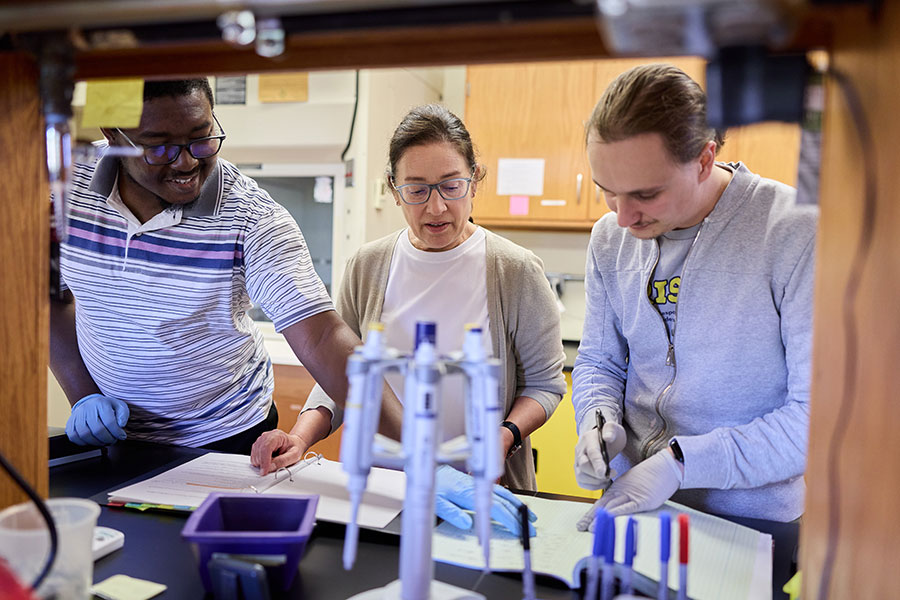
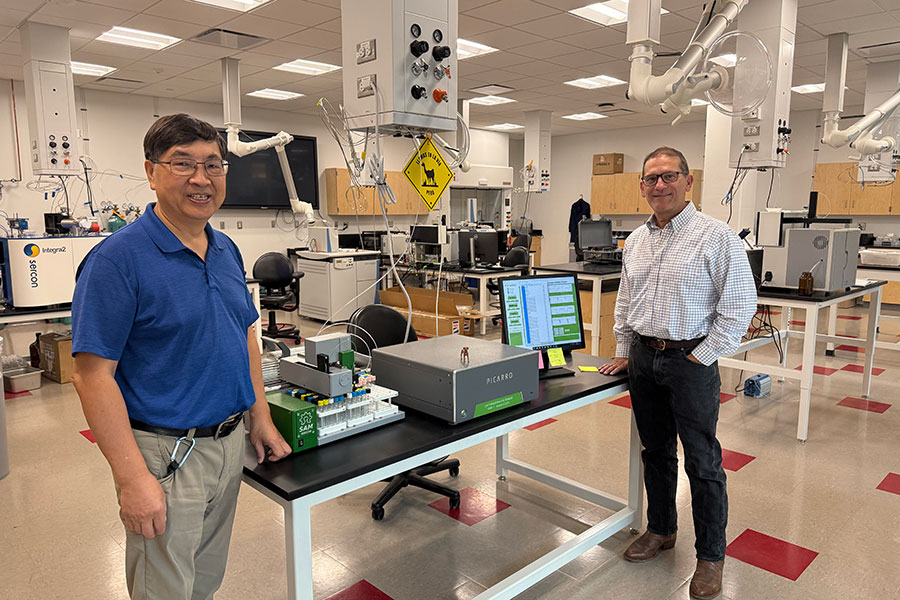
The University of Oklahoma has received an $11.5 million award from the National Institutes of Health to establish the Oklahoma Center of ImmunoEngineering, a new research center designed to accelerate the study and treatment of diseases rooted in the immune system, led by principal investigators Wei Chen, Ph.D., and Chongle Pan, Ph.D.
A new University of Oklahoma study — the first of its kind conducted in a real-world field setting over more than a decade — finds that sustained warming significantly increases the abundance, diversity and mobility of antibiotic resistance genes in soil.