Michael J. McInerney
George Lynn Cross Endowed and Research Professor
Applied Microbial Physiology
Anaerobic processes may offer economic and innovative solutions for the treatment of pollutants before their release into the environment and for the remediation of contaminated sites. Anaerobic metabolism is fundamentally different from aerobic metabolism in that the concerted action of many different microbial species is often required for the degradation of a particular compound.
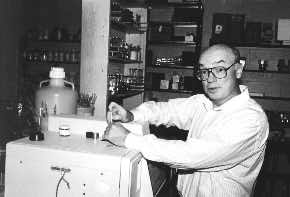 |
| Dr. Michael J. McInerney |
|---|
The interactions among anaerobic microorganisms are often tightly coupled and the organisms form a consortium that acts as a single catalytic unit. The goal of our work is to understand the biochemical basis of these interactions and to determine how these interactions control the flow of carbon and energy in anaerobic environments.
Metabolism of Fatty and Aromatic Acids
Our work is focused on the metabolism of fatty and aromatic acids which are key intermediates in anaerobic degradation. These compounds are degraded by a fermentative bacterium in syntrophic association with a hydrogen-using bacterium such as a methanogen or sulfate reducer. The degradation of fatty and aromatic acids is thermodynamically unfavorable unless the hydrogen concentration is kept very low by the hydrogen-using bacterium. We have recently shown that effective degradation of these compounds also requires interspecies acetate transfer. Our work is now focused on the biochemistry and molecular biology of benzoate metabolism by these syntrophic cultures. In particular, we are interested in whether these organisms use a novel pathway to reduce and cleave the aromatic ring. A major question is how these organisms can obtain sufficient energy for growth when the free energy change associated with the degradation of benzoate is less than that needed to make an ATP.
Novel Biosurfactants
We have just initiated a multidisciplinary project to develop new biosurfactants to improve oil recovery. The project goals are to identify, clone and sequence the genes involved in the production of a cyclic peptide biosurfactant in Bacillus licheniformis and to determine the molecular mechanisms that control biosurfactant production. In addition, recombinatorial mutagenesis will be used to develop biosurfactants with improved properties for oil recovery. We has pioneered methods to use microorganisms for enhanced oil recovery and have an interactive, multidisciplinary group that includes microbial physiologists, biochemists, and petroleum engineers. Our group also interacts with microbial ecologists, geochemists, and environmental scientists to understand the dynamics of microbial processes in the terrestrial subsurface.
Selected Recent Publications
- B. E. Jackson, V. K. Bhupathiraju, R. S. Tanner, C. R. Woese, and M. J. McInerney. 1999. Syntrophus aciditrophicus sp. nov., a new anaerobic bacterium that degrades fatty acids and benzoate in syntrophic association with hydrogen-using microorganisms. Arch. Microbiol. in press.
- V. K. Bhupathiraju, M. J. McInerney, C. R. Woese, and R. S. Tanner. 1999. Haloanaerobium kushneri sp. nov., an obligately halophilic, anaerobic bacterium from an oil brine. Int. J. System. Bacteriol. in press.
- L. M. Gieg, R. V. Kolhatkar, M. J. McInerney, R. S. Tanner, S. Harris, K. L. Sublette, and J. M. Suflita. 1999. Intrinsic bioremediation in a gas condensate-contaminated aquifer: multiple lines of evidence. Environ. Sci. Technol. submitted.
- M. J. McInerney. 1999. Anaerobic metabolism and its regulation. In: H. -J. Rehm, G. Reed, A. Pühler, and P. Stadler (ed.), Environmental processes-Wastewater and waste treatment. Vol. 11a. Biotechnology, 2nd Edition. VCH, Weinheim, Germany, in press.
- M. J. McInerney, A. F. M. Stams, and D. R. Boone. 1999. Genus Syntrophobacter. In: G. M. Garrity, S. T. Williams, J. T. Staley, D. J. Brenner, J. G. Holt, D. R. Boone, R. W. Castenholz, N. R. Krieg, and K.-H. Schleifer (ed.), Bergey's Manual of Systematic Bacteriology, Williams and Wilkins, Baltimore, MD, in press.
- V. Warikoo and M. J. McInerney. 1998. Kinetics of benzoate degradation under sulfate-reducing conditions, pp. 752-759. In: K. L Sublette, K. A. M. Gasen, and T. Ward (ed.), Proceedings of the 4th International Petroleum Environmental Conference. University of Tulsa, Tulsa, OK (CD version).
- Warikoo, V., M. J. McInerney, J. A. Robinson, and J. M. Suflita. 1996. Interspecies acetate transfer influences the extent of anaerobic benzoate degradation by syntrophic consortia. Appl. Environ. Microbiol. 62: 26-32.
- C. J. Hurst, G. R. Knudsen, M. J. McInerney, L. D. Stezenbach, and M. V. Walter (ed.). 1996. Manual for Environmental Microbiology. American Society for Microbiology, Washington, D. C.
For more information about this program, visit Dr. McInerney's Lab website or e-mail the Department or Dr. Mike McInerney.
Other related web pages: