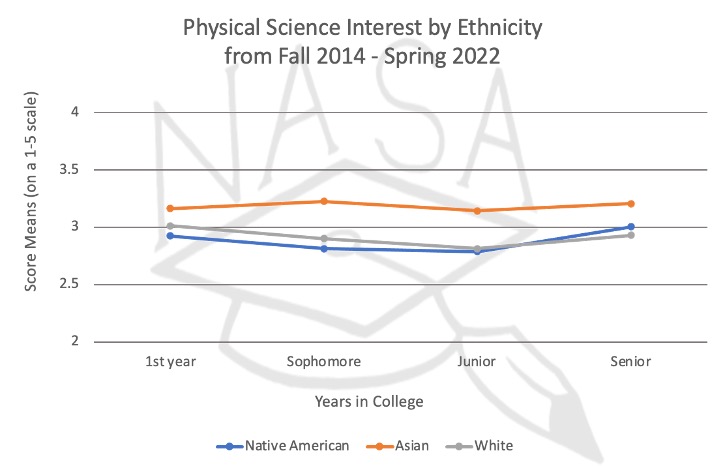
This is an on-going project and the amount of results that we can share is limited. The following are some basic data descriptive information based on data that we have collected as of Spring 2022.
The following graphs classify students as Native American if they indicated one of the following:
Please use the following when citing this website:
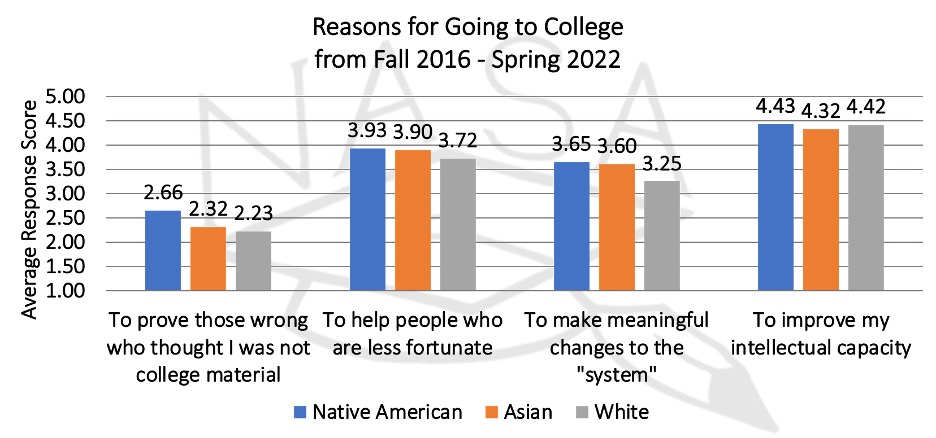
N: Native American = 1,025; Asian = 440; White = 293 participants
Reasons for attending college seem to be somewhat similar for Native American, Asian, and White students except in regard to wanting to prove others wrong who felt that they were not college material, where Native American students listed this response at a higher frequency than Asian and White Students.
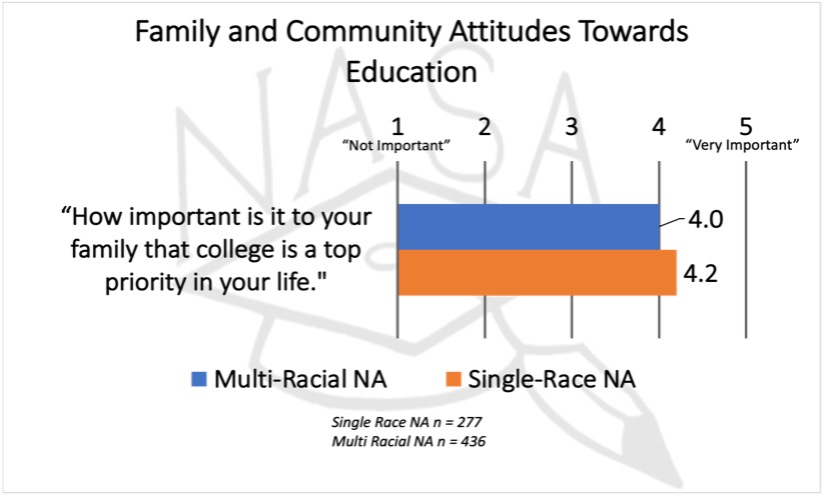
N: Native American = 1,014; Asian = 395; White = 561 participants
Students' parents care more about academic performance and making education a priority more than staying close to home with Asian parents having slightly stronger values toward education.
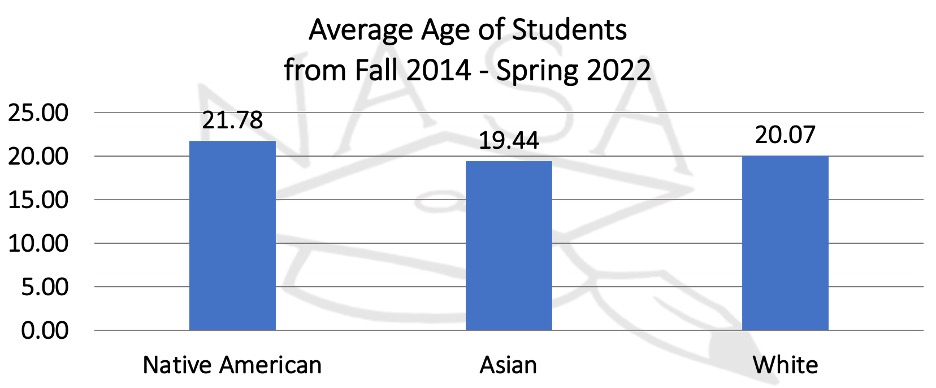
N: Native American = 1,861; Asian = 834; White = 847 participants
Native American students tend to be older than Asian and White students, possibly indicating barriers preventing them from attending college or finishing at a faster rate.
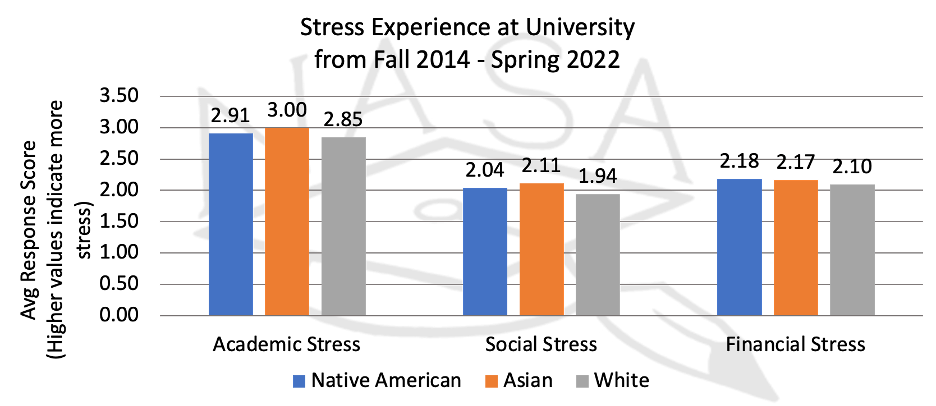
N:Native American = 1,864; Asian = 832; White = 845 participants
Academic– Addresses issues related to balancing academic and family responsibilities, taking exams, meeting family expectations, and handling the academic workload.
Social– Addresses issues related to meeting peers of one's own ethnicity, finding supportive relationships, and handling relationships.
Financial– Refers to issues involving paying academic fees, owing money, paying for rent and food, and having money for recreational activities.
Academic stress appears to be the most prolific form of stress for all participants.
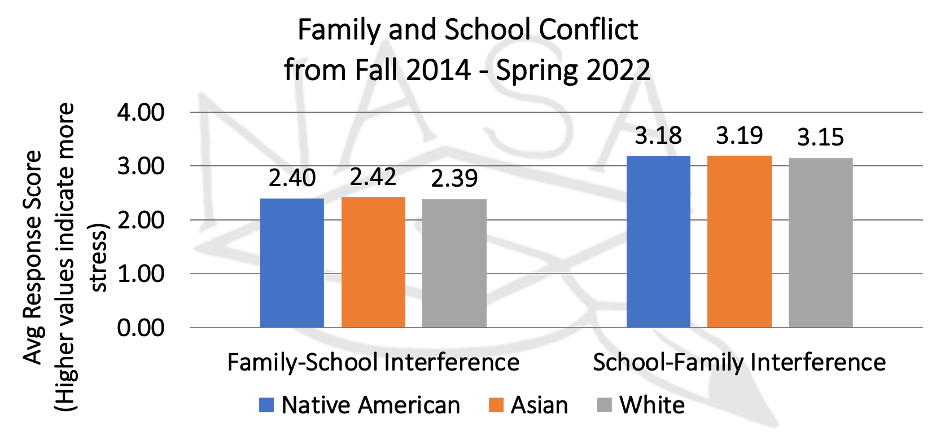
N: Native American = 1,868; Asian = 830; White = 847 participants
Family-school interference– Family obligations interfere with academic performance
School-family interference– Academic obligations interfere with familial relationships
All ethnicities appear to experience more school-family interference than family-school interference.
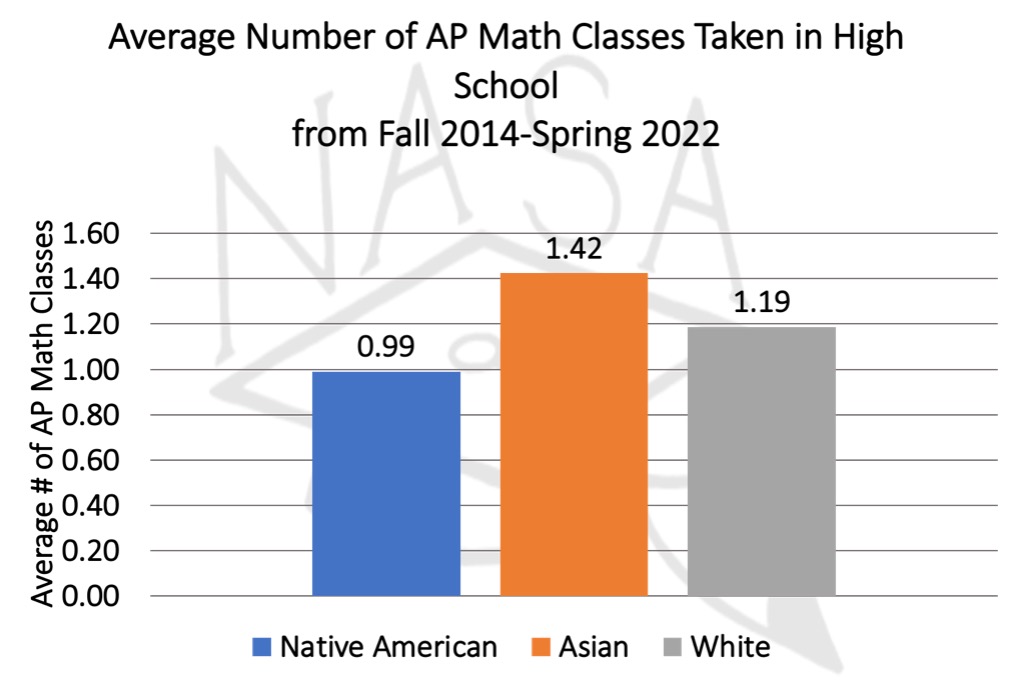
AP Math Classes N: Native American = 1,697; Asian = 705; White = 768 participants
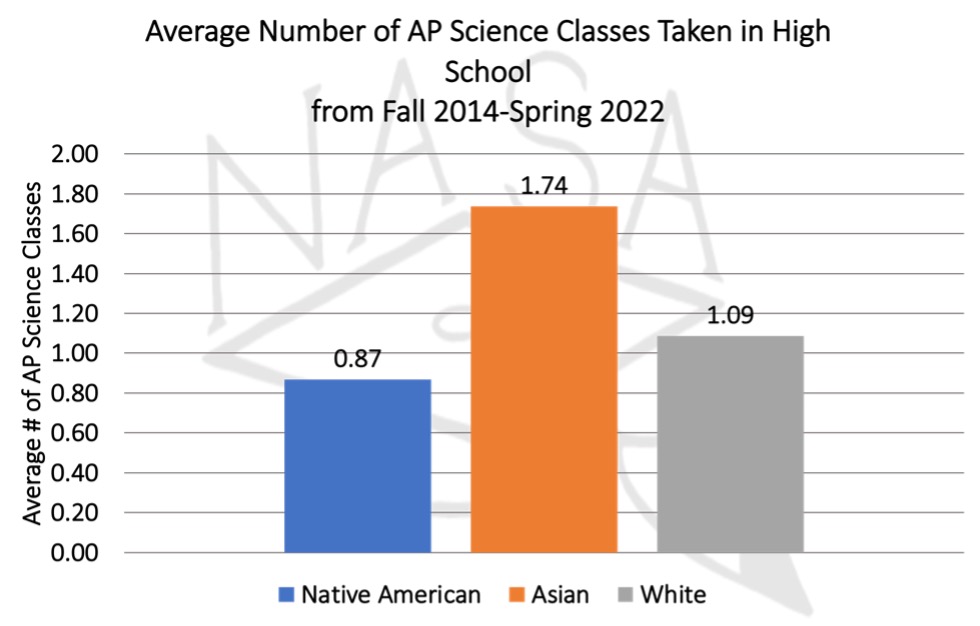
AP Science Classes N: Native American = 1,781; Asian = 800; White = 816 participants
Asian students appear to take more advanced placement math and science courses compared to Native American and White students.
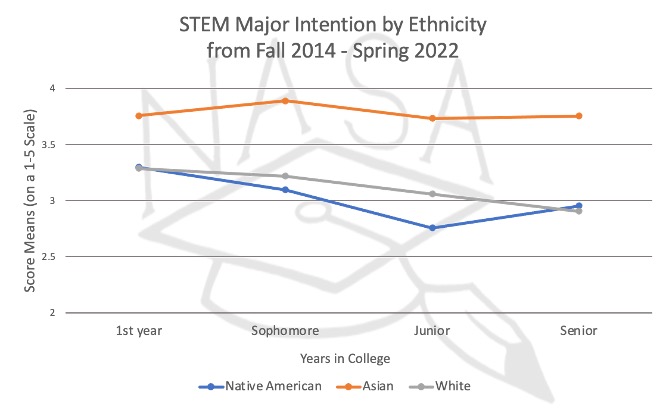
N: Native American = 1,834; Asian = 822; White = 834 participants
Asian students in each academic year have a higher STEM major intention than Native American and White students.
A greater percentage of Asian students appear to pursue more STEM majors than Native American or White students.
This data includes White, Asian, and Native American OU students from Fall 2014 to Spring 2022 who indicated in their second survey that they have used the following resources. These resources are sorted from the greatest to the least percentage of use.
University College Advising is used the most among all OU students surveyed.
| Percentage | Sample Size | Resources on Campus |
|---|---|---|
| 73.6 | 2648 | University College Advising |
| 31.4 | 2629 | Career Services |
| 30.6 | 2631 | Writing Center |
| 29.7 | 2629 | University College Tutoring |
| 23.9 | 2624 | Honors College Advising |
| 11.9 | 2624 | Campus Counseling Services |
| 10.7 | 2621 | Undergraduate Research Program |
| 10.0 | 2620 | Sooner Success |
| 7.7 | 2624 | Sooner Promise / Crimson Commitment |
This chart includes Native American OU students from Fall 2014 to Spring 2022 who indicated in their second survey that they have used the following resources. These resources are sorted from the greatest to the least percentage of use.
The American Indian Student Association is used the most among all OU students surveyed.
| Percentage | Sample Size | Native Amerivan Resources Accessed by Native American OU Students |
|---|---|---|
| 30.9 | 418 | American Indian Student Association |
| 22.7 | 418 | Native American Studies |
| 20.5 | 420 | Annual Fall and Spring Cultural Events |
| 19.9 | 422 | American Indian Student Life Programs |
| 14.6 | 212 | American Indian Student Fellowship |
| 12.9 | 418 | American Indian Visitation Day |
| 11.0 | 419 | American Indian Banquet & Awards Celebration |
| 10.5 | 334 | Other Organizaions/Activities |
| 10.0 | 421 | American Indian New Student Orientation |
| 9.7 | 421 | American Indian Heritage Month Opening Day Ceremonies |
| 8.0 | 414 | Gamma Delta Phi |
| 7.2 | 418 | American Indian Indian Alumni Association |
| 6.1 | 413 | Campus Ministry-Native American |
| 5.6 | 414 | OU American Indian Alumni Association |
| 4.6 | 413 | Sigma Nu Alpha Gamma |
| 1.5 | 412 | Council of Fire |
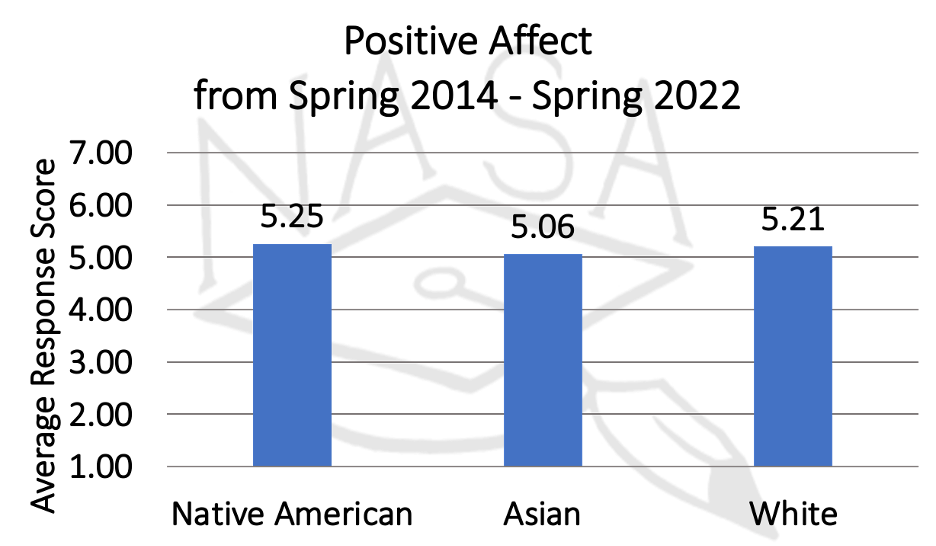
N:Native American = 1,813; Asian = 792; White = 815 participants
Positive affect = “the extent to which a person feels enthusiastic, active, and alert.”
A person with higher positive affect generally believes that if they want to learn something, they can be successful.
Watson, D., Clark, L. A., & Tellegen, A. (1988). Development and validation of brief measures of positive and negative affect: the PANAS scales. Journal of personality and social psychology, 54(6), 1063.
Positive affect doesn't appear to differ significantly between ethnicities.
One of the five areas of “Recommendations for Research” of Reyes and Shotton (2018), is examining the impact of complex Native American student identities.
“Indigenous students come to college with multiple identities (e.g., cultural, tribal, geographic, gender, and sexual) that intersect in various ways to shape their unique experiences. Research is needed that explores the intersections of identity for Indigenous students.”
The importance of exploring these complex identities is further emphasized by Page-Reeves, Marin, DeerInWater, and Medin (2017) saying:
“There is a propensity to present Native cultural identity as simple and one-dimensional, and therefore easily understood in counter-distinction to a similarly simplified caricature of non- Indigenous identity. The well-worn phrase, “walking in two worlds” that is commonplace in discussing the experience of Native Americans captures this abbreviated binary.”
“There is also a tendency to underappreciate the extent to which Native people are capable of having co-occurring identities or multiple and complex cultural affiliations in a manner that is healthy and happy.”
The following graphs classify students as Native American if they indicated one of the following:
Page-Reeves, J., Marin, A., DeerInWater, K., & Medin, D. (2017). Broadening conceptualization of native identity as foundational for success among Native Americans in STEM. Anthropology, 5(187), 2332.
Reyes, N. A. S., & Shotton, H. J. (2018). Bringing visibility to the needs and interests of Indigenous students: Implications for research, policy, and practice. National Institute for Transformation and Equity. Retrieved from https://cece. sitehost. iu. edu/wordpress/wp-content/uploads/2017/02/Bringing-Visibility-to-the-Needs-and-Interests-of-Indigenous-Students-FINAL-2. pdf.
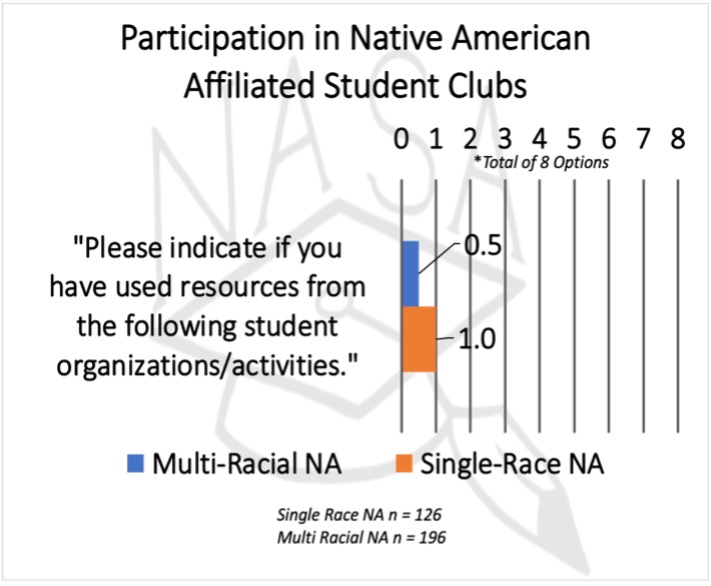
The Integrated Postsecondary Education Data System (IPEDS) has a significant effect who is included when we examine the experiences of Native American students. This system allows students to select multiple options when reporting their race. Often, Native American students will select Native American along with one or more other options. When Native American students are included in the Two or More Races category, the opportunity to understand their unique experiences is lost.
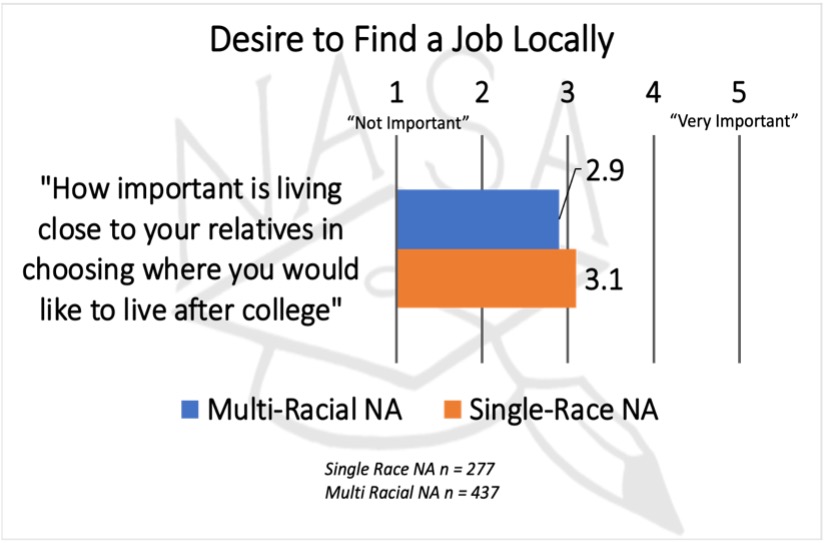
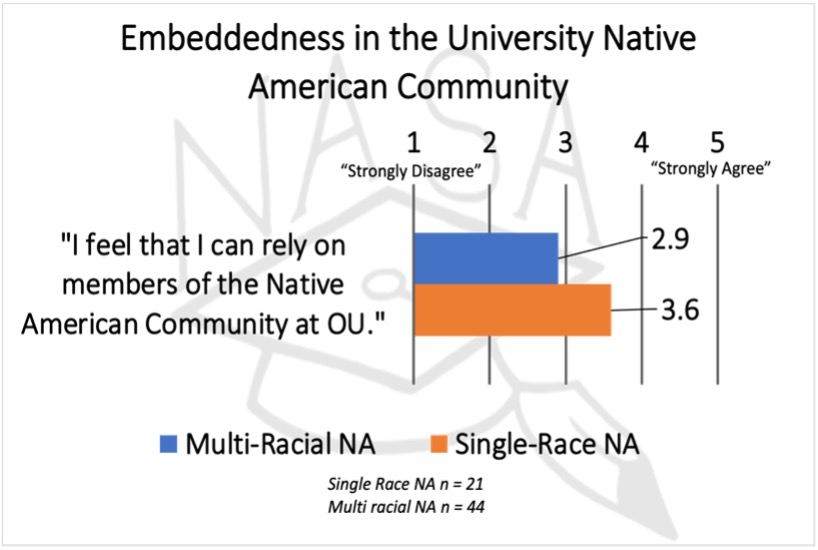
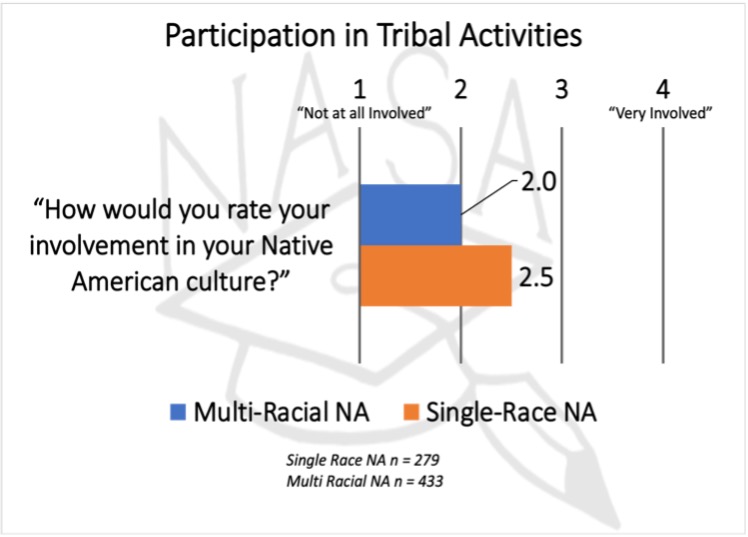
To investigate the potential for there being unique college experiences for Native American students who identify as solely Native American, versus those who identify as Native American plus another race/other races, we compared mean scores of participants in these two groups on several different dimensions related to college experiences. Some intriguing findings from these analyses are presented below.
Results suggest the following:
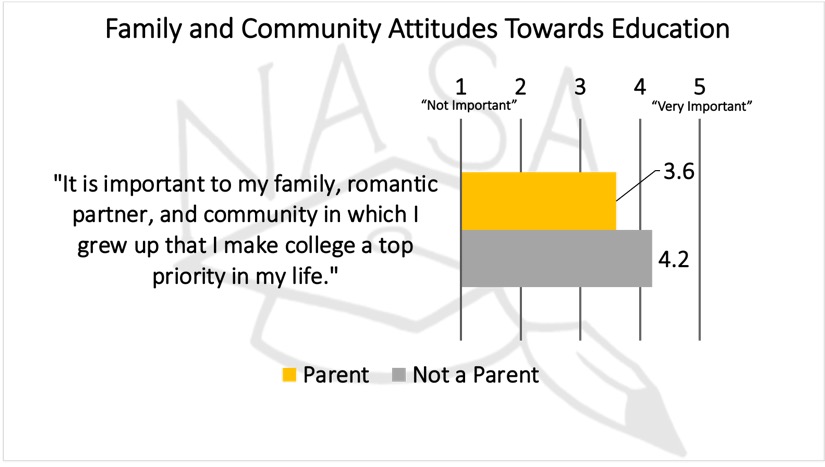
It is possible that students who identify as solely Native American feel that being Native American is more central to their identity and/or come from families and communities with a stronger Native American identity. As such, these students may feel more motivated by their family and community to focus on earning their degree as a way to both and increase representation of Native Americans in higher education and to be able to use their degree to promote the community in which they grew up. have a means of promoting their communities at home by using their degree/career
Additionally, individuals who identify as Native American in addition to other racial identities may feel less comfortable with participating in Native American activities and/or organizations or be less inclined to do if they identify more strongly as members of different racial or ethnic groups.
Page-Reeves, J., Marin, A., DeerInWater, K., & Medin, D. (2017). Broadening conceptualization of native identity as foundational for success among Native Americans in STEM. Anthropology, 5(187), 2332.
Family/Community Attitudes towards education
Embeddedness in University Native Community
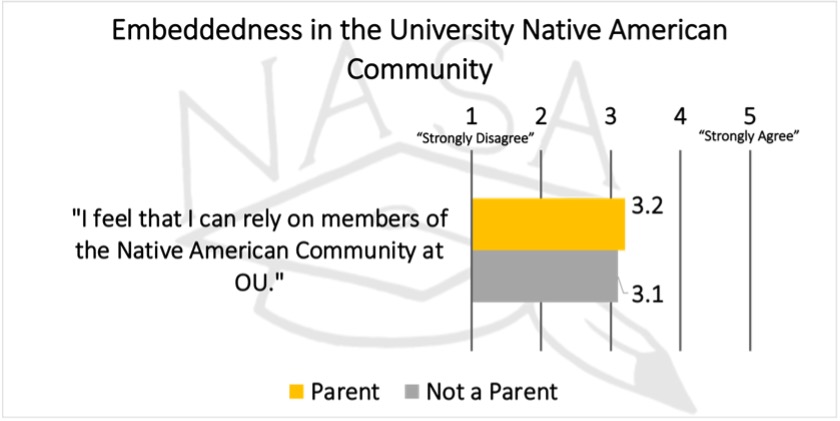
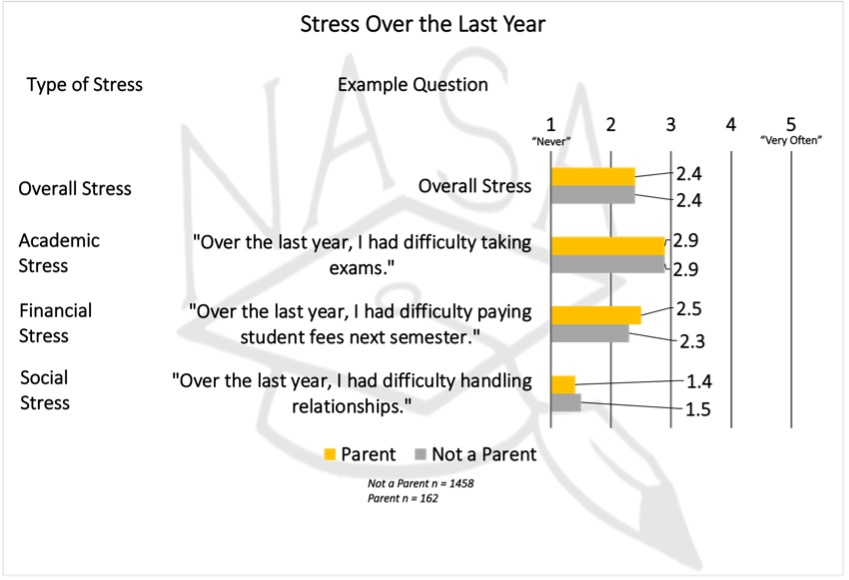
Native American undergraduate student populations have a much larger proportion of students who are parents (35%) than does the undergraduate population at large (27%; IHEP, 2007). This may contribute to difficulties experienced by Native American students in higher education (Hunt & Harrington, 2010). To better understand how having dependent children impacts Native American college students, we compared the experiences of Native American students with dependent children to those with no dependent children. The results may help understand the ways in which being a parent affects the experiences of Native American college students.
Results suggest the following:
These results may reflect a need for Native American students who are also parents to prioritize their family over their education at the end of the day, as well as a greater feeling of financial stress due to all of the expenses that go along with caring for dependent children as well as not being able to earn as much money during college as they might if they were working during that time. Additionally, Native American students with children may seek out more avenues of support for themselves and their family during their education and as a result feel more embedded in the Native American community at OU.
Hunt, B., & Harrington, C. F. (2010). The impending educational crisis for American Indians: Higher education at the crossroads. Indigenous Policy Journal, 21(3).
Institute for Higher Education Policy (IHEP). (2007, February). The Path of Many Journeys: The Benefits of Higher Education for Native Peoples and Communities. Retrieved October 6, 2022 from http://www.aihec.org/our-stories/docs/reports/ThePathOfManyJourneys.pdf
Research shows that Native American students engage in active, agentic efforts to develop, transform, and integrate their identity, navigating through the educational system in ways that “intersect meaningfully with culturally defined motivations, value, and purpose.” Individuals who identify with multiple identities that are often stigmatized by majority groups, such as being both Native American and LGBTQ+ may have unique experiences due to the intersectionality of these identities. Exploring intersectionality for Native American students includes consideration of how systems of oppression and privilege (e.g., sexism, classism, heterosexism, and ableism) influence Native American experiences (Brayboy, 2005).
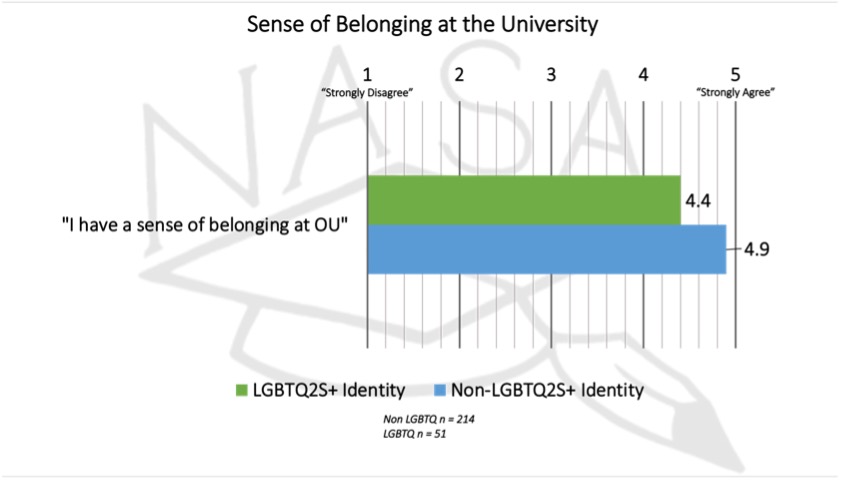
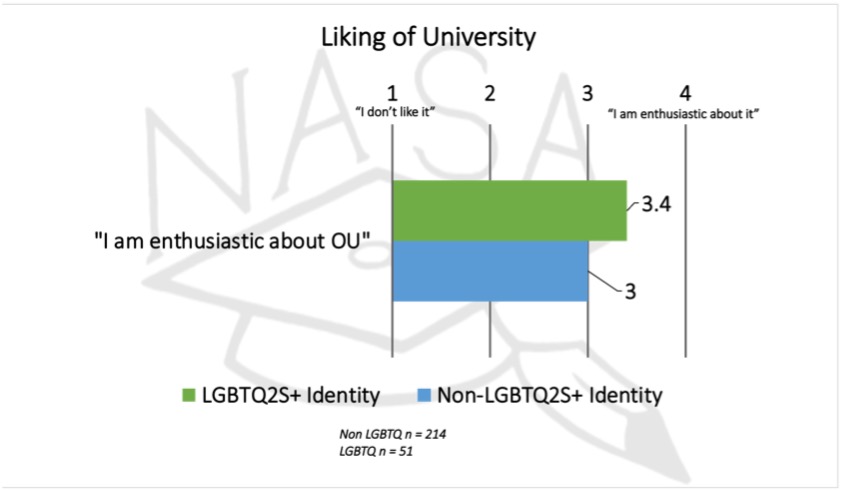
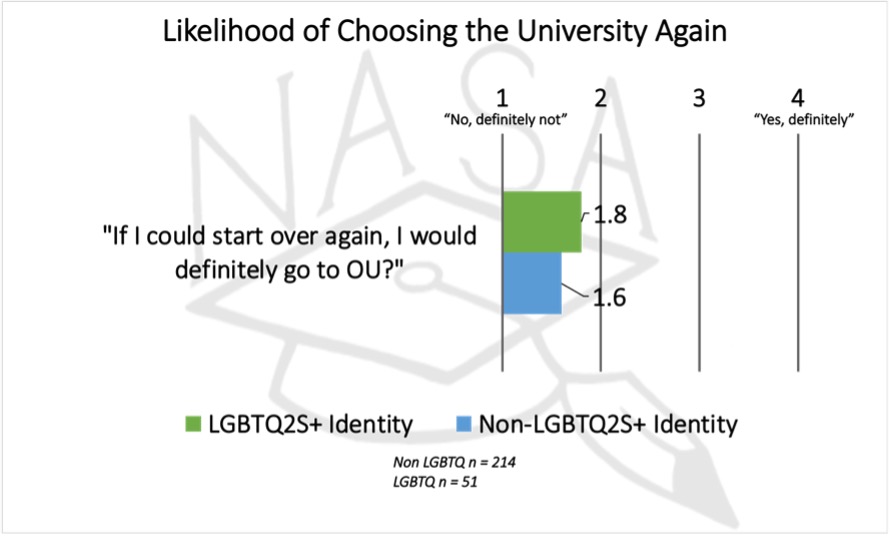
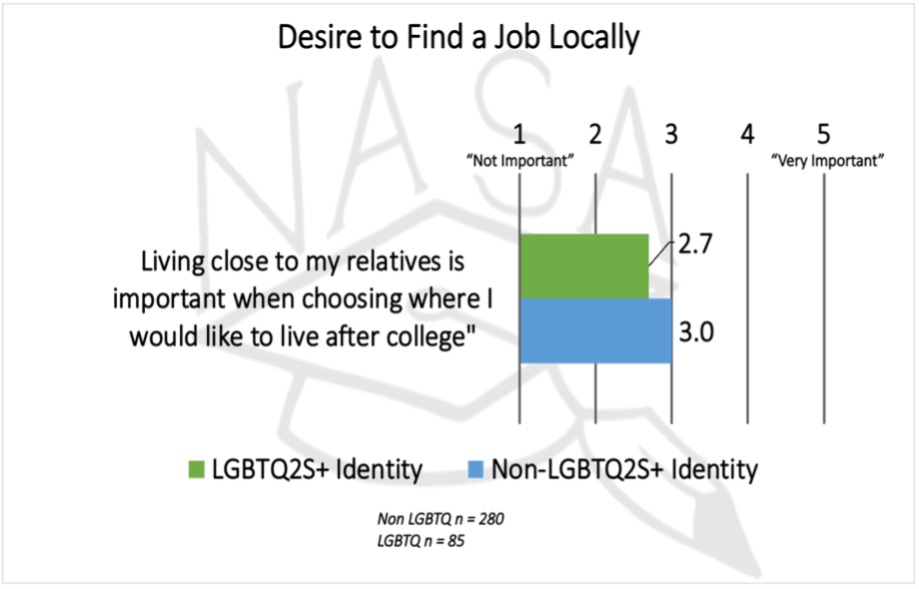
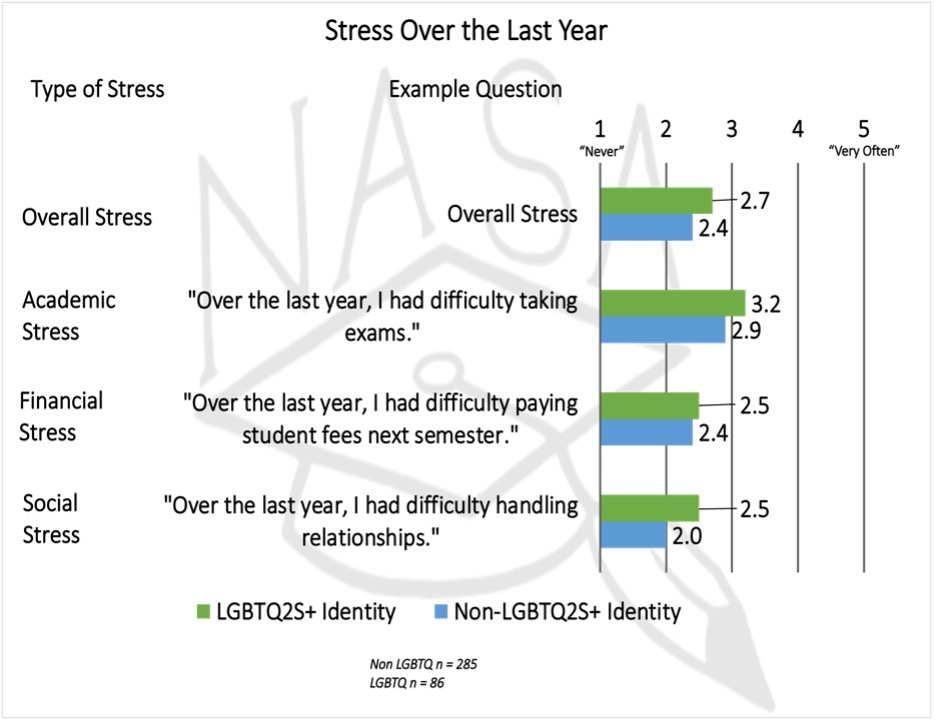
To investigate an aspect of this intersectionality, we compared the mean scores of Native American students who indicated they identified as one or more of a selection of minoritized sexual identities (e.g., gay or lesbian, bisexual, transgender or gender non-conforming) to Native American students who did not indicate identifying with any of these sexualities. The “2S” of LGBTQ2S+ refers to two-spirit identity, whereby individuals do not identify with any of the other identities listed but identify in such a way that they also do not align with cisgender/heterosexual identity (Wilson, 1996).
Results suggest the following:
Interestingly, while LGBTQ2S+ report a lower sense of belonging on campus, they report a greater liking of OU and greater likelihood of choosing OU again if they could. It may be that LGBTQ2S+ students perceive themselves as part of a group that is stigmatized by the campus at large but feel happier with the resources and community of LGBTQ2S+ student on campus than do non- LGBTQ2S+ Native American students. This could also reflect a greater presence of resources for LGBTQ2S+ students than for Native American students. LGBTQ2S+ Native American students may also feel motivated to move away from their communities after graduation in order to live in areas with a potentially more hospitable political climate for individuals of their identity than those of Oklahoma or the community in which they grew up.
Brayboy, B. M. J. (2005). Toward a tribal critical race theory in education. The urban review, 37(5), 425-446.
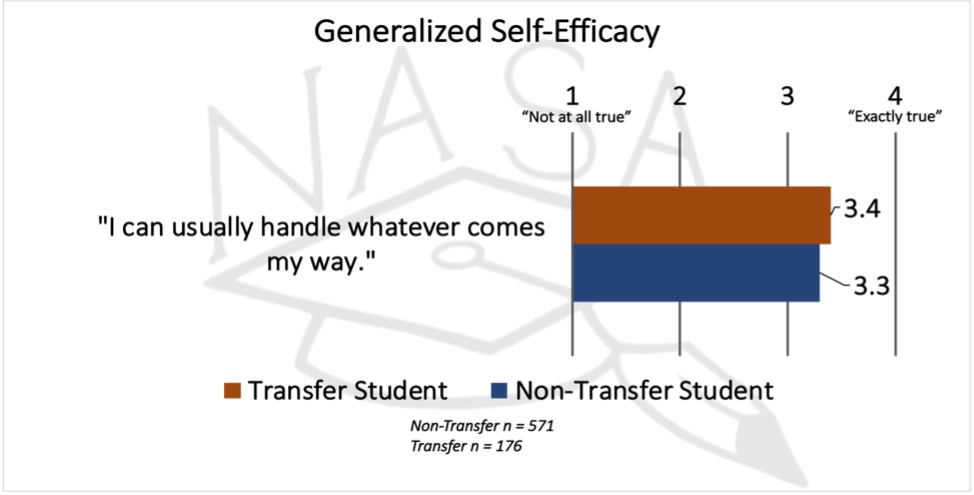
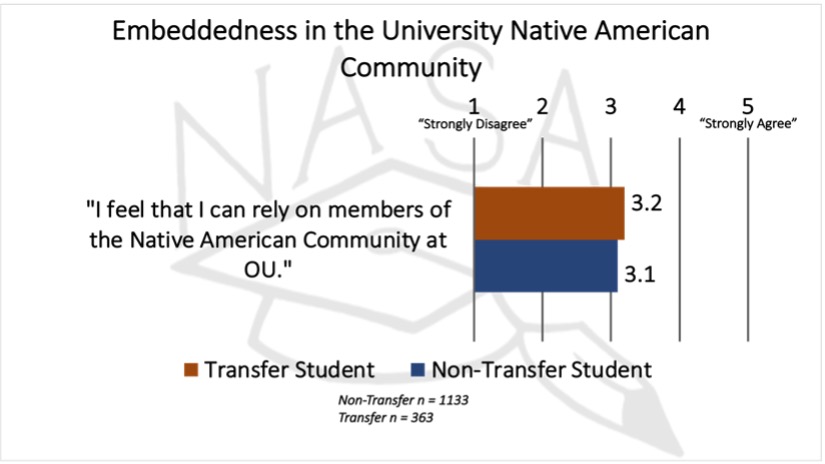
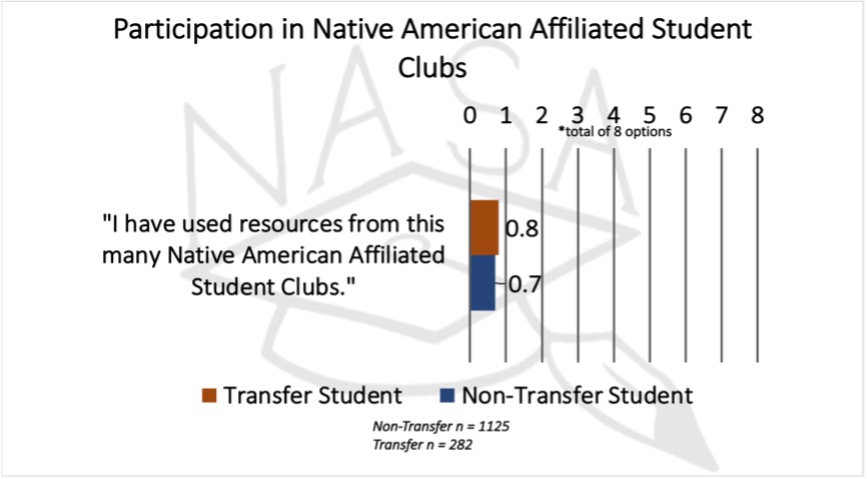
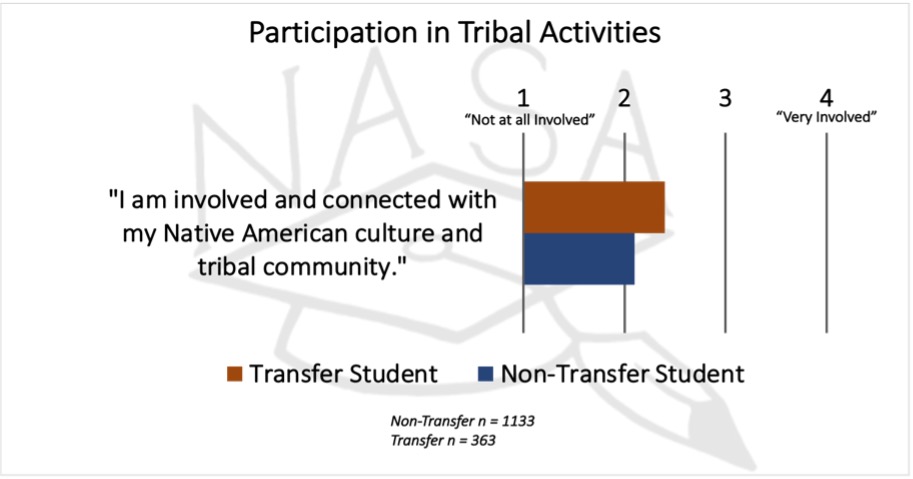
Many Native American undergraduate students begin their college education at Tribal Colleges or Universities then transfer to other universities, such as OU (Institute for Higher Education Policy, 2006). Students in general can transfer to OU for any number of reasons such as changing family circumstances/careers or strategic cost-saving, but the increasing transfer rates of Native American College students poses certain questions about how transfer status might impact the college experience of Native American students specifically.
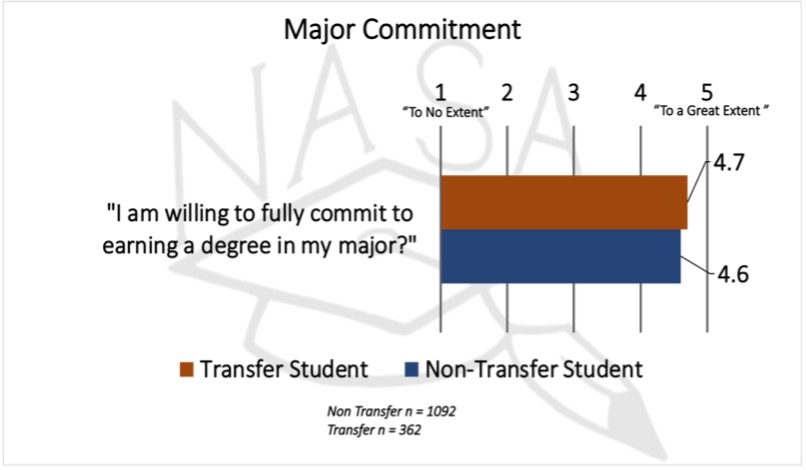
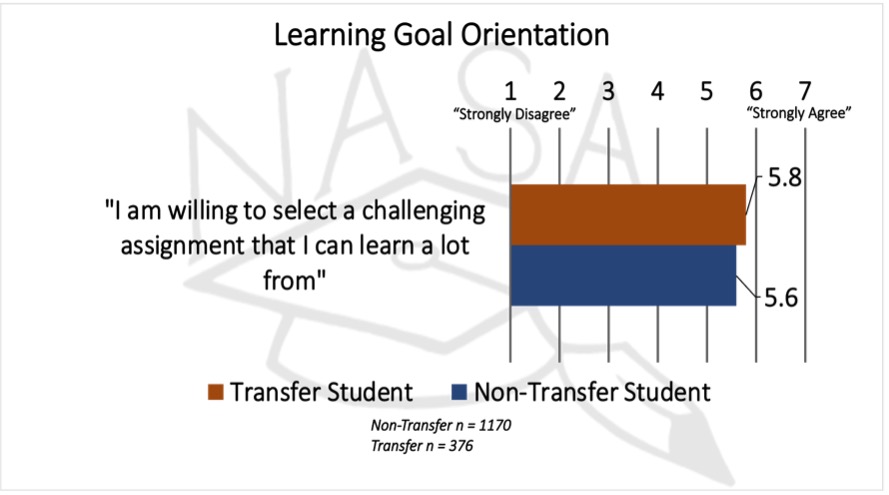
Mean scores of both transfer and non-transfer native american students on multiple measures of college experiences were compared to explore how transfer status might influence Native American students at OU.
Results suggest the following:
Transfer and Non-Transfer students had no difference in feelings of embeddedness in the university Native American community
Transfer Native American students are more involved in Native American student affiliated clubs and tribal activities in comparison to their non-transfer peers
These results may reflect the impact of transfer students’ time at their former universities wherein they may have had opportunities to clarify their educational/degree goals before choosing their major at OU, ensure they feel confident in their academic skills before coming to OU, and to recognize the importance of being involved with Native American groups and activities once getting to OU. These students may also have transferred from TCUs which could promote a greater interest in being involved with Native American activities and for achieving academically as a way to promote their Native American Communities.
Institute for Higher Education Policy. 2006. Championing success: A report on the progress of TCU and university alumni. http://www.ihep.org (accessed June 28, 2008).
Leo W. Anglin , John W. Davis & Paul W. Mooradian (1995) DO TRANSFER STUDENTS GRADUATE? A COMPARATIVE STUDY OF TRANSFER STUDENTS AND NATIVE UNIVERSITY STUDENTS, Community College Journal of Research and Practice, 19:4, 321-330.
The following section uses a measure asked only to Native American participants who were classified as students who indicated one of the following:
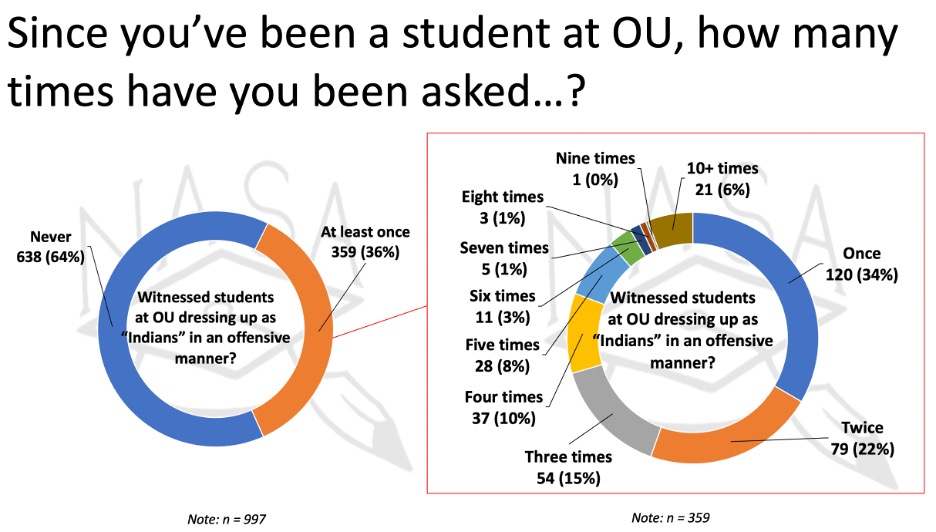
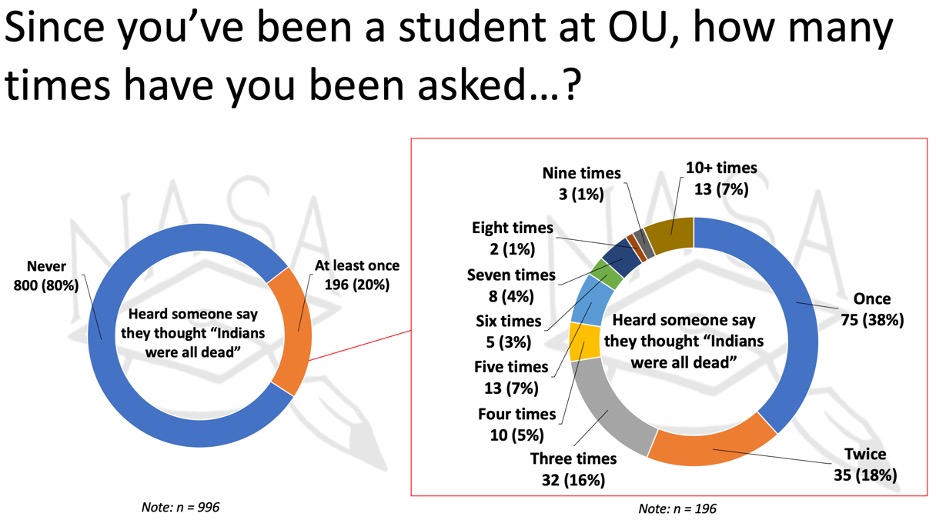
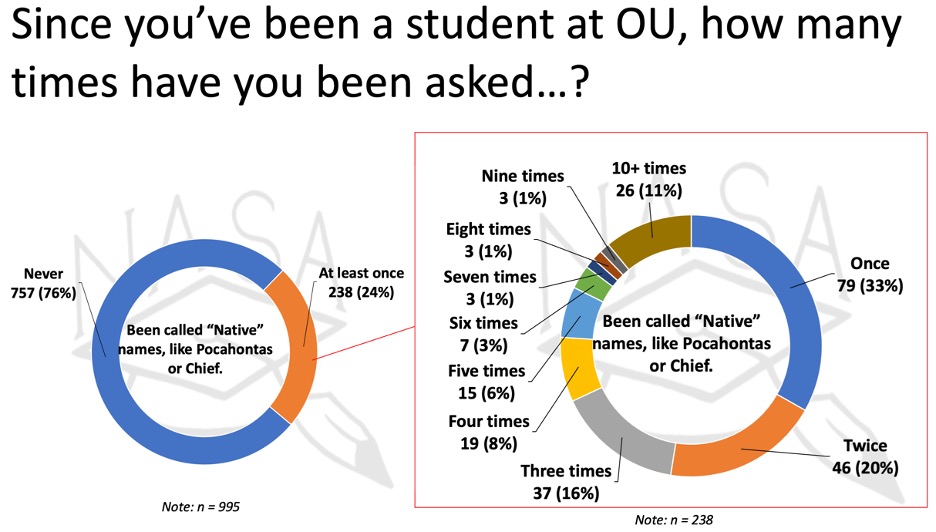
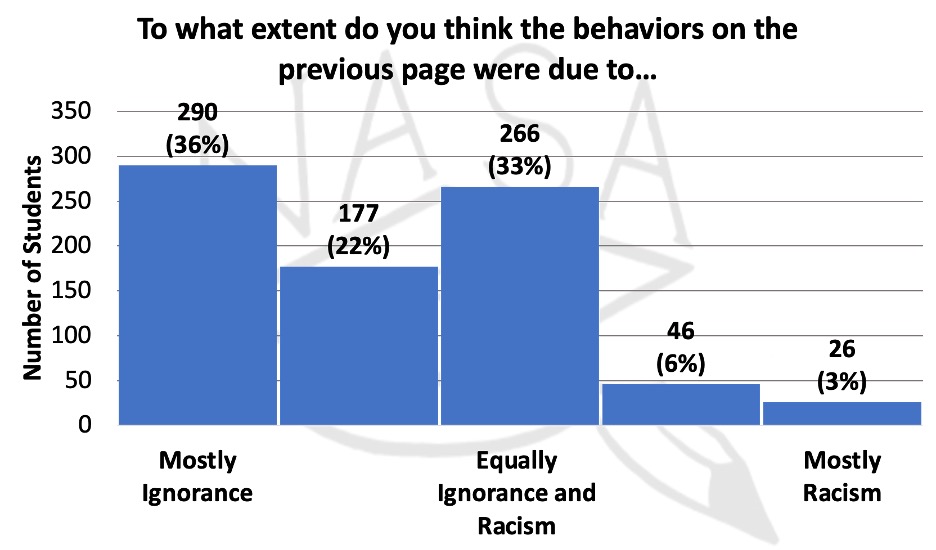
Students belonging to stigmatized identity groups are often the targets of prejudice and discrimination. We conducted focus groups with Native American students and asked about their experiences with discrimination towards Native Americans on campus. Several common experiences emerged from these focus groups. These were then combined into a set of questions in our survey so that the larger population of Native American students in our survey could indicate their experiences with those discriminatory behaviors.
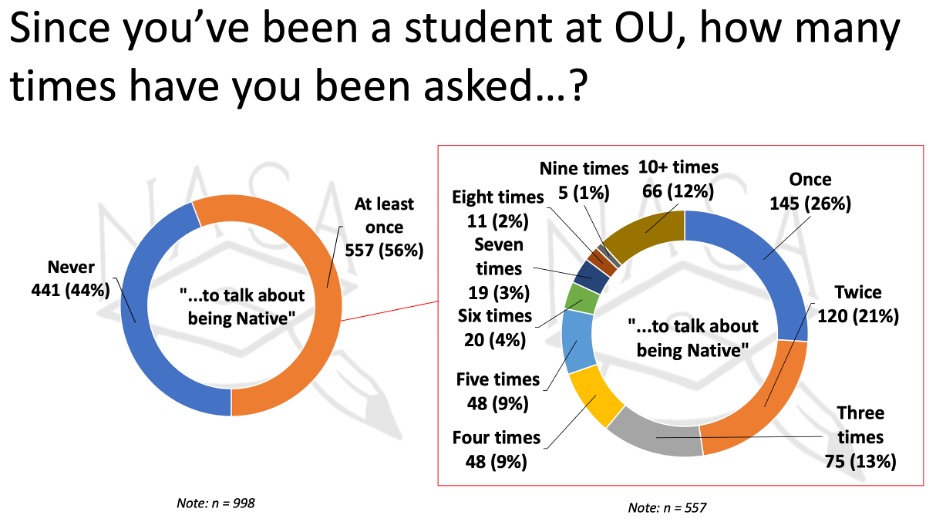
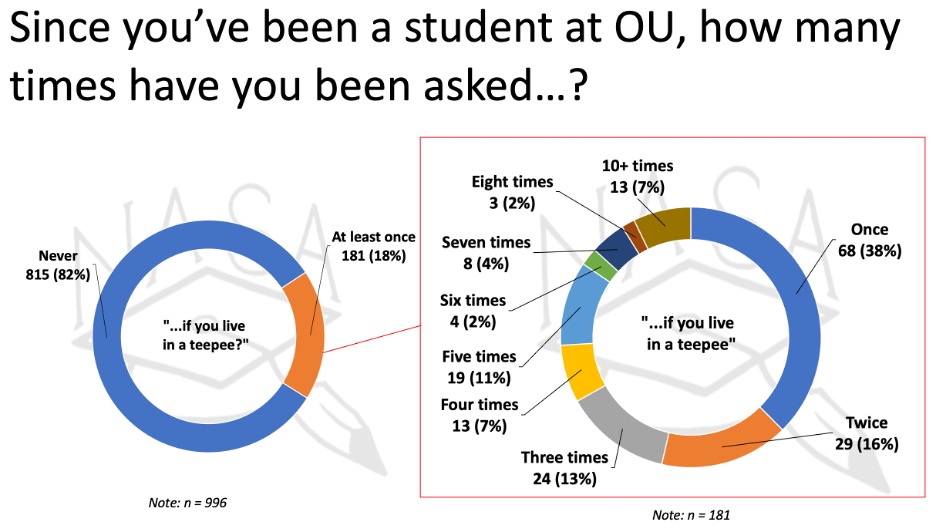
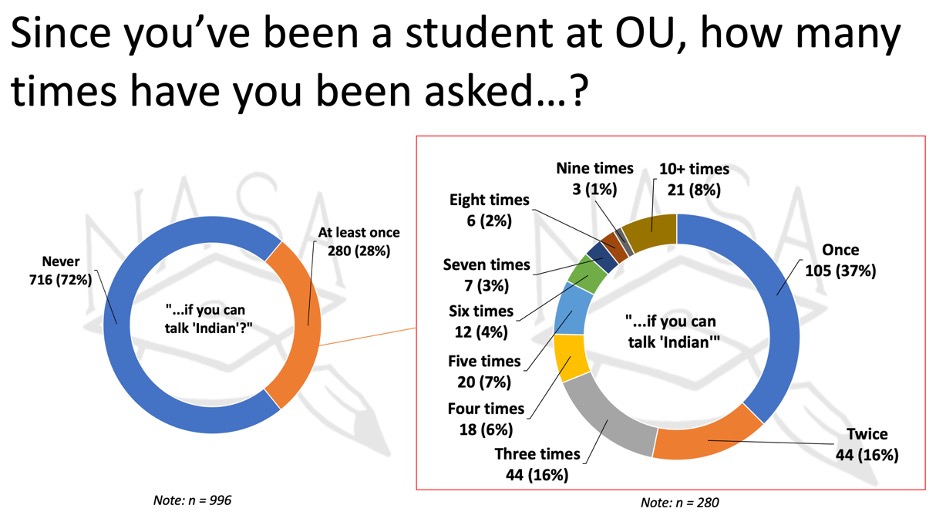
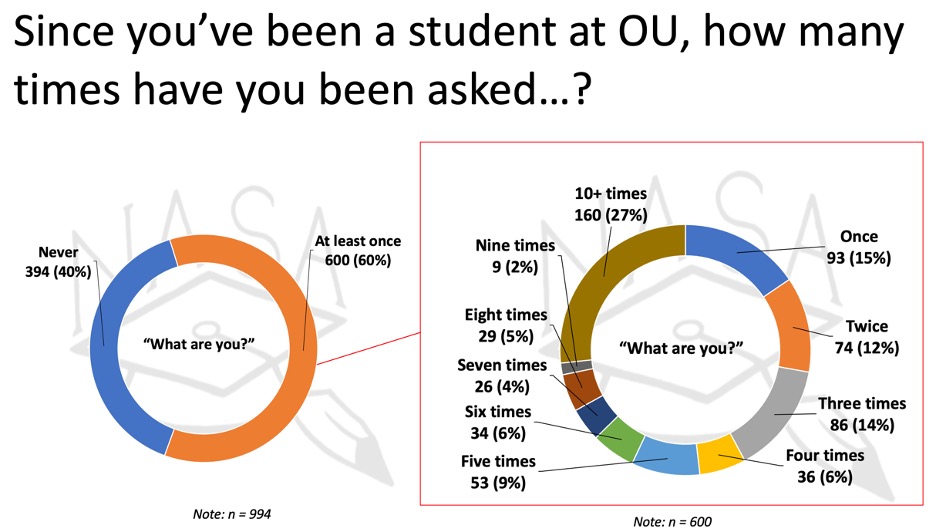
Results suggest that most of the students who responded to this measure had experienced being asked to talk about being Native American and/or “what are you?” since being a student at OU. Additionally, the largest “10+ times” proportions were seen for the “What are you?” item followed by the item asking if the participant had been “called ‘Native’ names” and if they had heard or seen racial slurs towards Native Americans.
These results may suggest that Native American students are often subjected to questions about their racial/ethnic identity in insensitive ways, as well as being singled out by others on account of their Native American identity. Moreover, the behavior with the lowest proportion of respondents who experienced it at least once (“asked if you live in a teepee”) still consists of 181 individuals. This is a large number of individual experiences that suggests there is a concerning amount of even the potentially least prevalent forms of explicit discrimination.
The following graphs include Native American students who indicated one of the following:
SInce you have been at OU, how many times have you been asked:
Since at OU, how many times have you:
To what extent do you think the behaviors above are due to:
The following section classifies students as Native American if they responded “Native American” when asked “In terms of ethnic group I consider myself to be…”
Despite the benefits of obtaining a STEM degree, both for individual stability and national competitiveness, there has been consistent underrepresentation of women and racial/ethnic minority groups in obtaining STEM degrees and pursuing STEM occupations (Chen, 2013; NSF, 2019).
While women have made strides in recent years, with half of all S&E bachelor’s degrees awarded to women in 2016 (though proportions vary by specific field), they are still underrepresented in S&E graduate degrees and occupations (NSF).
Individuals who identify as Black, Hispanic, and Native American are also consistently underrepresented in number of S&E degrees obtained, as well as in STEM occupations (NSF)
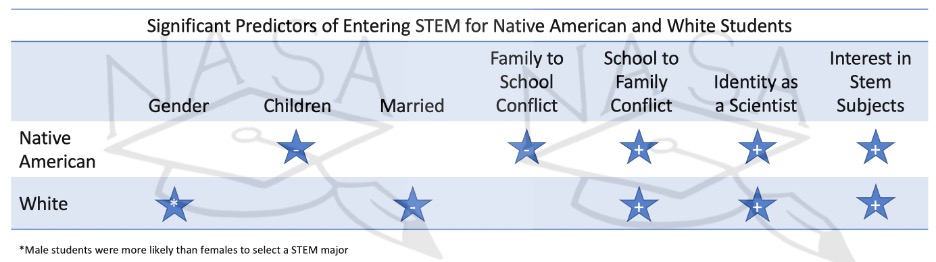
To understand race/ethnicity and gender differences in choices students make in pursuing higher education, we examined personal and contextual factors that influence STEM major enrollment
Above is a summary of findings related to socioeconomic background. The stars indicate if there is a significant relationship between the two variables. The positive or negative symbol indicates if the relationship between the two variables is positive or negative.
N: Native American = 830; White = 1,056; Male = 768 (40.7%); Female = 1,118 (59.3%) For Native American students, having a child and experiencing family to school conflict was negatively related to enrolling in a STEM major
The time and commitment it takes to be a parent may result in lower likelihood of STEM major choice due to potential role conflict
For White students, being married was negatively related to enrolling in a STEM major & male White students were more likely than female White students to select a STEM major.
For BOTH Native American and White students:
This likely reflects the higher time commitment and demands required by STEM major curricula
Students enrolled in STEM majors face higher significantly levels of school-family interference as well as higher levels of academic stress and lower quality of sleep
Chen, X. (2013). STEM Attrition: College Students’ Paths Into and Out of STEM Fields (p. 104). National Center for Education Statistics, Institute of Education Sciences, U.S. Department of Education.
National Science Foundation. (2013). Women, minorities and persons with disabilities in science and engineering. National Science Foundation.
The following section classifies students as Native American if they checked the box “Native American” when asked “what is your race?”
In a dissertation by Johnston-Fisher (2021), several variables related to entering STEM were examined.
N: Native American = 542; Asian = 401; White = 371; Female = 747 (56%); Male = 552 (42%)
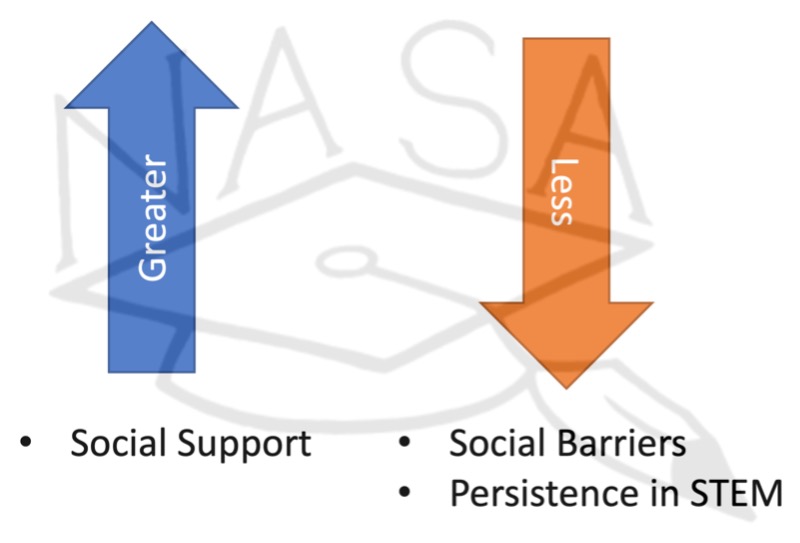
In comparison to Asian and White students, Native American students experience:
This indicates that while Native American students do not perceive the same level of social barriers—and may even perceive greater supports for doing so—other factors are hindering their progress in STEM, such as a lack of interest in research or intentions to pursue a degree outside of STEM even for those in a STEM major.
This may also point to institutional and environmental factors that hinder Native American students’ progress in STEM, which have been found to be key barriers for Native American students both in pursuit of higher education more generally and STEM-specific fields (Brayboy et al., 2014; Guillory & Wolverton, 2008; Shotton, 2017; Smith et al., 2014; Tachine et al., 2017; Windchief & Brown, 2017).
Social Support/Social Barriers
Brayboy, B. M. J., Solyom, J. A., & Castagno, A. E. (2014). Looking into the hearts of Native peoples: Nation building as an institutional orientation for graduate education. American Journal of Education, 120, 575-596. https://doi.org/10.1086/676908
Guillory, R. M., & Wolverton, M. (2008). It's about family: Native American student persistence in higher education. The Journal of Higher Education, 79, 58-87. https://doi.org/10.1080/00221546.2008.11772086
Shotton, H. J. (2017). “I thought you'd call her White Feather”: Native women and racial microaggressions in doctoral education. Journal of American Indian Education, 56(1), 32-54. https://doi.org/10.5749/jamerindieduc.56.1.0032
Smith, J. L., Cech, E., Metz, A., Huntoon, M., & Moyer, C. (2014). Giving back or giving up: Native American student experiences in science and engineering. Cultural Diversity and Ethnic Minority Psychology, 20, 413-429. https://psycnet.apa.org/doi/10.1037/a0036945
Tachine, A. R., Cabrera, N. L., & Yellow Bird, E. (2016). Home away from home: Native American students’ sense of belonging during their first year in college. Journal of Higher Education, 88, 785-807. https://doi.org/10.1080/00221546.2016.1257322
Windchief, S., & Brown, B. (2017). Conceptualizing a mentoring program for American Indian/Alaska Native students in the STEM fields: A review of the literature. Mentoring and Tutoring: Partnership in Learning, 25, 329-345. https://doi.org/10.1080/13611267.2017.1364815
The following section classifies students as Native American if they indicated one of the following:
Past research indicates that first-generation students are more likely to come from low-income backgrounds, receive less family support related to attaining a college degree, and spend less time with family (Terenzini et al., 1996).
They are more likely to work full-time in college, have more loans, and maintain a lower GPA (Martinez et al., 2009).
Additionally, first-generation undergraduate students are likely to have less access to and less knowledge of information relevant to college success (Pascarella et al., 2004).
Martinez, J. A., Sher, K. J., Krull, J. L., & Wood, P. K. (2009). Blue-Collar Scholars?: Mediators and Moderators of University Attrition in First-Generation College Students. Journal of College Student Development, 50(1), 87–103. https://doi.org/10.1353/csd.0.0053
Terenzini, P. T., Springer, L., Yaeger, P. M., Pascarella, E. T., & Nora, A. (1996). First-generation college students: Characteristics, experiences, and cognitive development. Research in Higher Education, 37(1), 1–22. https://doi.org/10.1007/BF01680039
Pascarella, E. T., Pierson, C. T., Wolniak, G. C., & Terenzini, P. T. (2004). First-Generation College Students: Additional Evidence on College Experiences and Outcomes. The Journal of Higher Education, 75(3), 249–284. https://doi.org/10.1353/jhe.2004.0016
Our Research
To further understand the experiences of First-Generation students, we examined First-Generation and non-First Generation First-Year Students at OU (Holloway, 2020)
N: Native American = 236; White = 195; Asian American = 107; Female = 494 (61%); Male = 302 (37%)
We found that there are few initial differences between the two groups
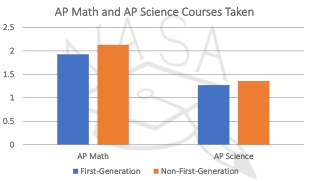
For example, we found no differences between first-generation students and non-first-generation students in their ACT math score and number of AP Math and Science courses taken
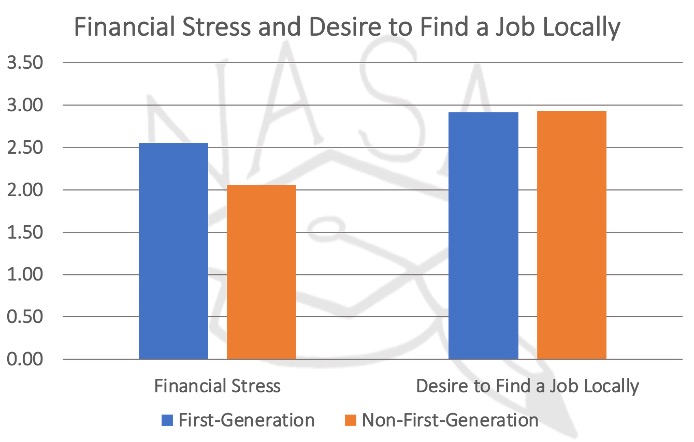
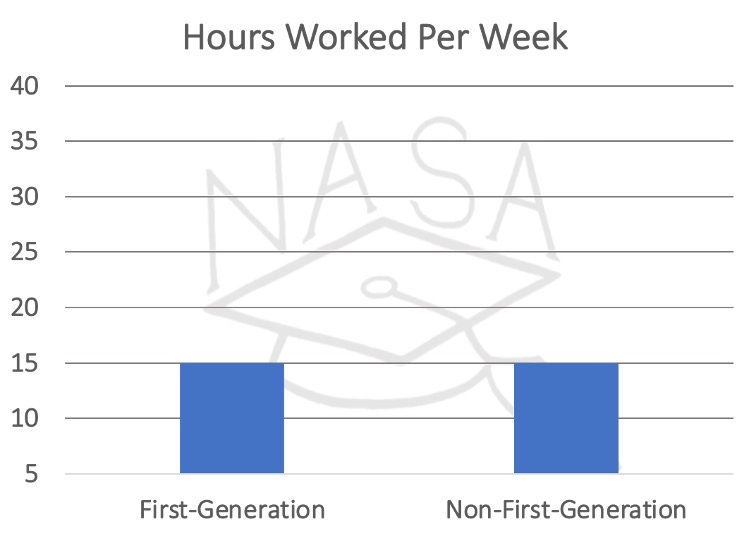
We also found that first-generation and non-first-generation students are similarly stressed about their financials, work similar hours per week, and have equal concerns with finding a job within their local community
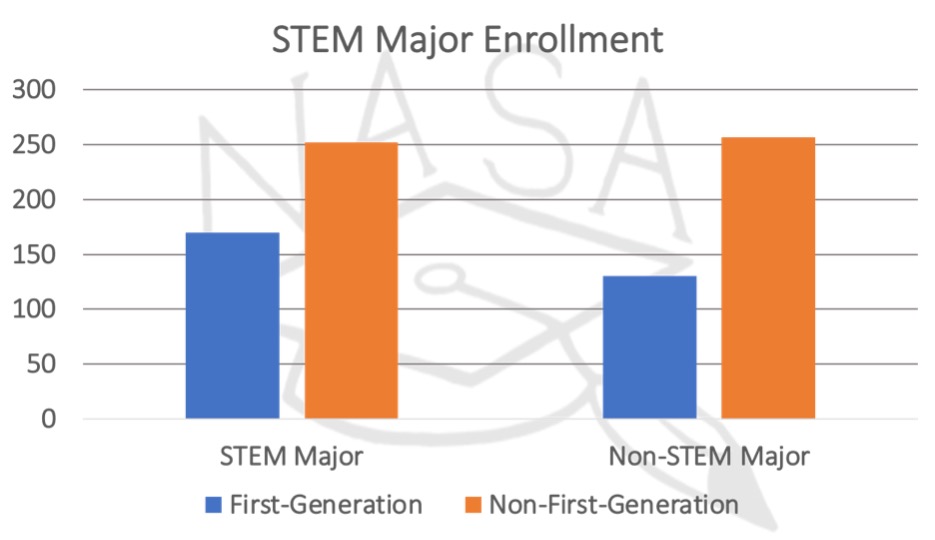
Despite past research that has found that first-generation status students are underrepresented in undergraduate STEM majors (Chen, 2005), this study found no differences in rate of enrollment based upon first-generation status
It may be that despite potential lack of parental knowledge on STEM careers and higher education, first-generation status students are as equally motivated to enter STEM as their non-first-generation status counterparts.
There is some indication to suggest that these students may recognize the advantage of future job prospects in STEM and feel driven to enter STEM in order to gain access to social mobility opportunities (Conrad et al., 2009). These results reflect the same findings from Ma (2009), in which lower family income increased the likelihood of an individual’s enrollment in a STEM major.
Chen, X. (2005). First-generation students in postsecondary education: A look at their college transcripts.
Conrad, S., Canetto, S. S., MacPhee, D., & Farro, S. (2009). What attracts high-achieving socioeconomically disadvantaged students to the physical sciences and engineering? College Student Journal, 43(4), 1359.
Ma, Y. (2009). Family Socioeconomic Status, Parental Involvement, and College Major Choices—Gender, Race/Ethnic, and Nativity Patterns. Sociological Perspectives, 52(2), 211–234.https://doi.org/10.1525/sop.2009.52.2.211
First-Generation Student Future Research
First-Generation Students and non-First-Generation Students appear to equally enroll in STEM majors
National data indicates that First-Generation Status students are more likely to drop out of their STEM major and/or leave the university
More research is underway to better understand what factors contribute to why First-Generation Status students may be leaving STEM/the university after their First-Year
The following section classifies students as Native American if they indicated one of the following:
Students who come from a low socioeconomic background face unique challenges in their post-secondary schooling experiences, such as having fewer opportunities and more disadvantages in attaining higher education.
These students are more likely to be older, receive less financial support from parents, and work full-time.
In turn, these multiple obligations affect their ability to be fully involved in college integration opportunities, such as study groups, interactions with faculty, or participation in extracurricular activities (Engle & Tinto, 2008).
Additionally, students from low socioeconomic backgrounds have an increased likelihood of leaving the institution after their first year, even after controlling for academic and financial factors (Engle & Tinto, 2008; Fenske et al., 2000; Stinebrickner & Stinebrickner, 2003).
Engle, J., & Tinto, V. (2008). College Success for Low-Income, First-Generation Students. The Pell Institute.
Fenske, R., Porter, J., & DuBrock, C. (2000). Tracking Financial Aid and Persistence of Women, Minority, and Needy Students in Science, Engineering, and Mathematics. 29.
Stinebrickner, R., & Stinebrickner, T. R. (2003). Understanding Educational Outcomes of Students from Low-Income Families. 27.
Our Research
To further understand the experiences of students from varying socioeconomic backgrounds, we examined Family SES and School SES (Holloway, 2020)
N: Native American = 236; White = 195; Asian American = 107; Female = 494 (61%); Male = 302 (37%)
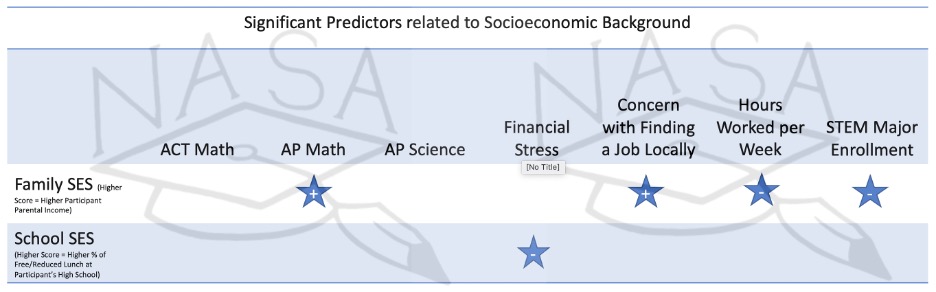
Below is a summary of findings related to socioeconomic background. The stars indicate if there is a significant relationship between the two variables. The positive or negative symbol indicates if the relationship between the two variables is positive or negative.
School SES was not predictive of enrollment in a STEM major. In other words, students from high schools that reported all ranges of students qualifying for free or reduced lunch equally enter into STEM majors.
This finding helps clarify that while STEM enrollment rates among students from high schools that vary in SES may be similar among initial first year enrollment at a university, it may be after students begin their college education when the representation issues occur.
For example, as students engage in introductory mathematics and science “gateway” courses in college, they may be discouraged if they were not prepared by their high school education and subsequently leave their STEM major.
Higher Family SES was predictive of lower enrollment in a STEM major.
It may be that students’ from higher socioeconomic backgrounds are less pressured to enroll in lucrative careers, such as STEM careers.
We also found that this relationship is partially explained by Financial Stress. Students who are financially stressed are less likely to enroll in a STEM major.
This may be explained by a concern that STEM degrees take longer to complete than non-STEM. If students are concerned about their ability to finance their education. This may deter them from enrolling in a STEM major if it will be even more costly than a non-STEM major.
Student Socioeconomic Background Future Research
The relationship between a student’s socioeconomic background and enrollment in a STEM major is complicated.
More research is underway to better understand what factors contribute to why someone’s socioeconomic background may influence their decision to leave STEM major/the university after their First-Year.
In addition, research is needed to further examine how someone’s parental income influences their decision to enroll in STEM because past research has indicated mixed findings.