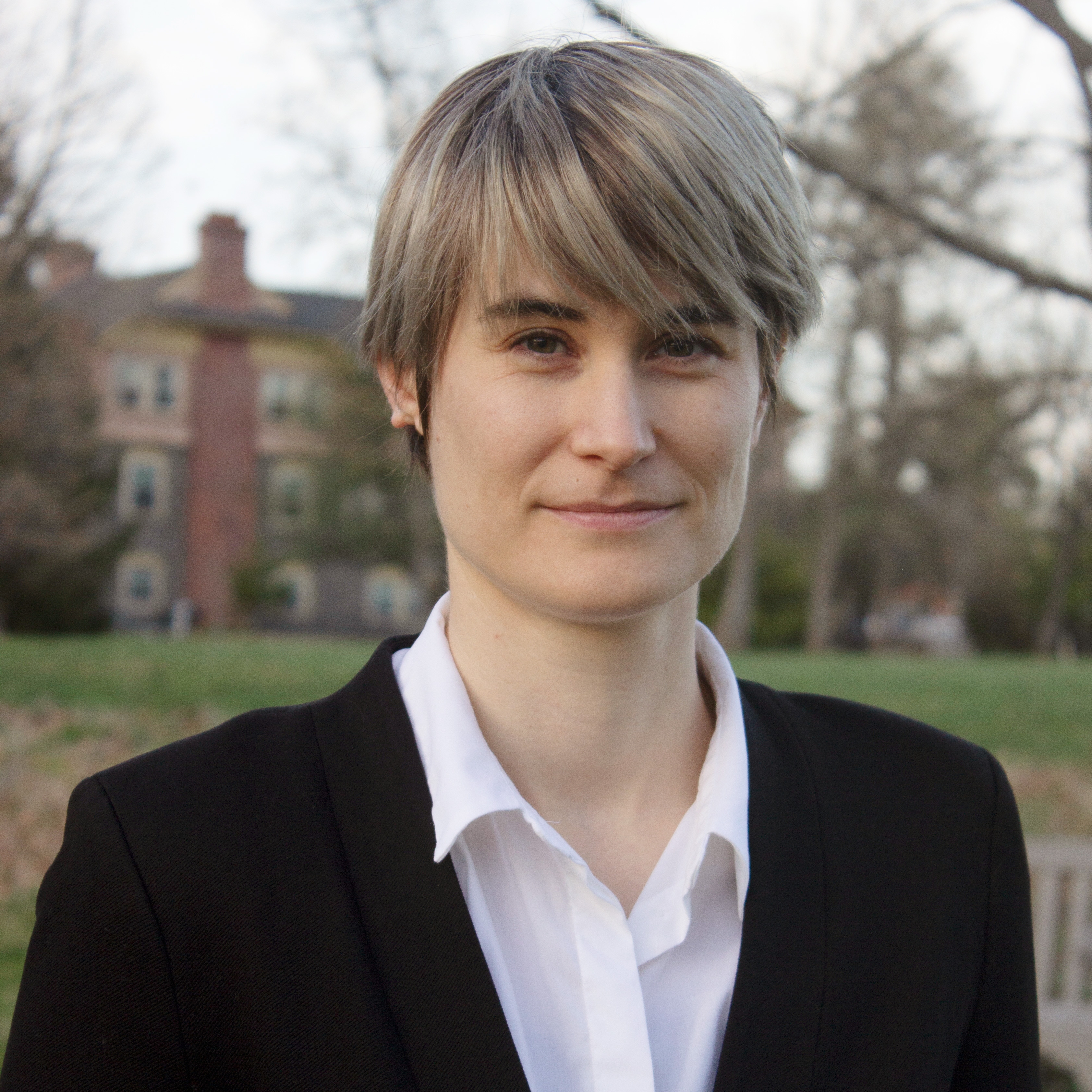
Paule holds a Ph.D. in French and Francophone Literature from the University of Pennsylvania and joined the Department of Modern Languages, Literatures, and Linguistics at the University of Oklahoma in Fall 2025 as a Lecturer. Previously, she was a Visiting Assistant Professor at Haverford College.
Paule’s research is situated at a crossroads of literature, science, and history of science, examining how early science fiction engaged with eschatological discourses to envision the planet’s environmental future. She explores how literary and scientific authors have conceptualized the “end of the world,” and investigates how their imaginings can illuminate contemporary approaches
to our global environmental crisis.
Her dissertation focused on the intersection of eschatology and environmental concerns in nineteenth-century science fiction, centering on works by Jules Verne and J.-H. Rosny Aîné while encompassing transnational authors including Edgar Allan Poe and H.G. Wells. She argues that science fiction emerged as the pioneering genre to confront the material vulnerability of the Earth and grapple with matters now categorized under the Anthropocene. By examining how three
crucial scientific developments of the nineteenth century—thermodynamics, geology, evolutionary theory—reshaped the perception of “limits,” her work investigates how literature started to articulate theories about the end of the Earth as we know it.
Surely as a consequence of studying so many geographical, ecological, and temporal ends of the earth, Paule ended up in the Arctic—79° latitude, courtesy of her scientist sister. She hopes to return one day to reach the Ultima Thule.