As part of our mission, OU Sociology has a long tradition of fostering state-of-the art, theoretically innovative, and empirical rigorous research. We have cultivated a collaborative research environment, and our intellectual networks are both cross-disciplinary and international in scope.
Below we outline both the areas and methods of study, as well as some of our innovative research hubs, labs, and workshops
Faculty interests include income and wealth inequality, educational disparities, health disparities, residential segregation, social inequality in political participation, stratified health outcomes, and environmental sociology.
Faculty interests focus on gender ideology, sexuality, gender differences in the transition to adulthood, and gender differences in juvenile delinquency, income, crime, values, and in educational plans.
Faculty interests include health disparities, residential segregation, the interaction of culture and power in processes of domination, educational attainment, life outcomes, and collective identity.
Faculty interests include juvenile delinquency, LGBT youth and sexualities, deviant identities, control theory, family and crime, gender differences in the causes of crime, crime and the life course, child maltreatment, gangs, drugs/crime nexus, deception detection, and criminal justice program evaluation.
Faculty interests include globalization, immigration, integration of immigrant populations, international development, cross-national inequality, the world economy, the diffusion of world culture and political and economic models, education and HIV/AIDS in South Africa, and comparative/historical institutions.
Faculty interests include culture and the environment, environmentally-related illness and health, environmental social movements, structural human ecology, and social and demographic drivers of environmental pollution, deforestation and greenhouse gas emissions.
Faculty interests include residential segregation, rural-to-urban migration, immigrant adaptation, household demography and children's health and well-being, sexuality and health risks, contraception, and marriage and fertility.
Faculty interests include family-related attitudes, family formation behaviors, religion's relationship to family formation and functioning, co-parenting and fathers’ parenting of their non-resident children, family and crime, work-family conflict, the division labor in the home, health and aging with an emphasis on long-term care, transition to adulthood, and the life course.
Faculty interests include religious demographics, inequality in religious organizations, religions in their comparative and historical contexts, religion and Family, religion and politics, and the links between religion and education, gender, sexuality, and social inequality.

Faculty interests focus on the techniques, strategies, and processes of using mathematically, statistical, and computational based models to explain social phenomena with an emphasis on study design, sampling, and statistical analysis.
Faculty interests focus on collecting and analyzing non-numerical data to understand concepts, opinions, and experiences to explain social phenomena, with emphasis on grounded theory, ethnography, action research, phenomenological research, and narrative research.
Faculty combine elements of both quantitative research and qualitative research in the same study, collecting and/or analyzing both quantitative and qualitative data, and “mixing” them to explain social phenomena and answer research questions.
Faculty use evaluation methods to determine the impact of a social intervention or a particular program with emphasis on assessing the design, implementation, improvement or outcomes of a program.

OU Sociology is dedicated to understanding the social world both globally and locally. Several of our faculty work on a variety of projects exploring social process in and around Oklahoma. This is part of our ongoing mission to understand the State of Social Life in Oklahoma. Through community outreach and the development of strategic partnerships, we seek to collect, analyze, and disseminate sociological data and findings from urban and rural Oklahoma.
Several of our faculty are pursuing or have published projects about social life in Oklahoma.
We have partnered with several state offices and community partners including (but not limited to):
Since coming to OU, I have been so honored to partner with state agencies to help them meet their evaluation needs. The need is great, and our research skills and perspectives are in high demand. Making those connections and sustaining them is mutually beneficial. These partnerships are the most rewarding aspect of my work, as I know that research can have direct implications for policy and practice. Oklahoma has some talented and innovative leadership doing their best to improve the well-being of children and families in our state. I'm honored to work with them.


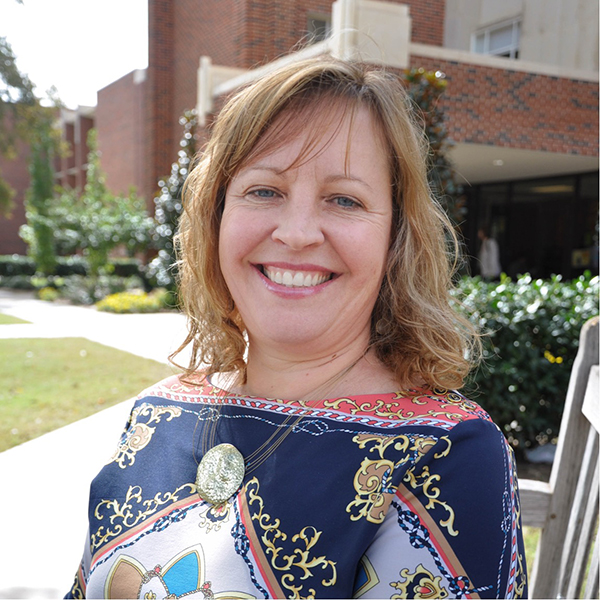
In January, 2020, Dr. Trina Hope and Dr. Connie Chapple (pictured) launched an innovative, ethnographic study of high-impact learning experiences inside an Oklahoma Prison. We partnered with Dr. John Carl and his Inside/Out course at OU, which is designed to connect incarcerated and traditional students inside a correctional facility. We traveled weekly to collect data at Mabel Bassett Correctional Center in McLeod, Oklahoma, which is the largest women's prison in the state of Oklahoma. We observed class interactions and focused on how the process of transformational learning occurs within a correctional environment presents challenges to high-impact learning, but the overall positive experience outweighs the challenges faced. Our work is ongoing and will inform academic research and local educational practices.

Dr. Meredith G. F. Worthen has conducted extensive research in the state of Oklahoma clustering around the areas of LGBTQ studies and gender and crime. Through her survey research focused on college students' LGBT attitudes in the state of Oklahoma, she has demonstrated the importance of understanding variations in LGBT stigma as well as the particular complexities that come about in Bible Belt and Southern U.S. regions that relate to LGBT attitudes. In addition, Worthen collected data about sexual assault education in the state of Oklahoma and found that intersectionality (especially gender, sexuality, and race/ethnicity) is integral to continued conversation about campus sexual assault. In an ongoing series of co-authored projects with Emeritus Faculty Member, Susan Sharp, and OU Sociology PhD graduate Melissa Jones, Worthen has focused on Oklahoma women prisoners and their adverse childhood experiences. Together, this body of research works toward uncovering the significance of multiple dynamics in the social life in the state of Oklahoma.

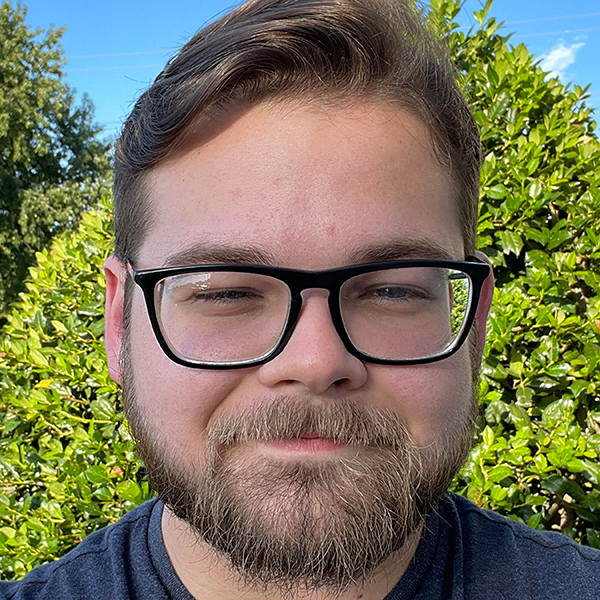
Dr. Mitchell Peck (pictured) has conducted several research projects with a specific focus on the state of Oklahoma. Partnering with Dr. Paul Ketchum (University of Oklahoma, College of Professional and Continuing Studies), he has examined various components of the juvenile justice system in Oklahoma. One study focused on the effectiveness of the two largest juvenile treatment strategies (group home and early intervention programs) aimed at reducing recidivism of juvenile offenders. The study results helped officials at the Oklahoma Office of Juvenile Affairs better target juvenile offenders to reduce recidivism rates. Another study examined the extent of disproportionate minority contact in the juvenile justice system in Oklahoma. The results from the study helped juvenile justice officials develop strategies for the reduction of disproportionate minority contact that are both feasible and cost effective.

Dr. Loretta Bass is a social demographer investigating inequality that affects children and youth as part of her Oklahoma research agenda. She worked with the Cleveland County Health Department and Norman Public Schools to examine what household and neighborhood factors are related to child well-being indicators, such as obesity and being on-track academically, and she found the highest obesity rates for 5th graders who lived in neighborhoods without full-service grocery stores and coming from families where parents were not active in physical activities with their children. Also, Dr. Bass directed a survey in partnership with the tribal government and OU Poll to assess the health and community needs of the Cheyenne and Arapaho Tribes population in nine Oklahoma counties in and outside tribal service areas.
Sociology is an exciting, diverse, and collaborative field of research and our cutting-edge faculty have active and nationally recognized research programs. Our faculty regularly collaborate with both graduate and undergraduate research mentees and have produced research that has been published in important sociological and criminological outlets.
To Facilitate this work, several of our faculty have created research labs, hubs, and workshops to encourage research collaboration.
OU Sociology has established the Social Sciences Research Labs (SoSci Labs) to encourage students to join ongoing research in the Department of Sociology by being a Research Assistant to a faculty member. Course credit is arranged through SOC 4990 Independent Study (undergraduates) and SOC 5960 Directed Readings (graduate) for one to three credit hours per semester. The experience may be repeated for a maximum credit of six hours. Research assistants will be involved in numerous phases of lab research projects that are overseen by world class scholars. Student outcomes can include: joining a collaborative team interested in hands-on learning more about all phases of the sociological research process, gaining experience for graduate school and/or careers in social sciences, and, ultimately, co-authoring high-end sociological/criminological research in prominent outlets. Students may be invited by a professor to join their lab/team or they may seek out a particular professor based on their research interests (see below for a description of our labs).

Being an RA is an invaluable opportunity for students to actively participate in social science research. If you are interested in becoming a Research Assistant, please contact the Principle Investiagtors (PIs) of one of the research labs/teams listed below to make an appointment with a professor whose research is most relevant to your interests and career goals.


Principle Investigator:
Dr. Meredith G.F. Worthen
Contact: mgfworthen@ou.edu
Our lab investigates sociological questions that challenge existing status quos and promote social justice activism. We are interested in interdisciplinary and collaborative scholarship across a wide variety of fields in the social sciences that focus on social inequalities. Students and scholars from any discipline are welcome. We use a variety of methods, both quantitative (e.g., surveys) and qualitative (e.g., interviews, focus groups). In our lab, students will participate in all aspects of the research process from data gathering, analyses, writing, and presenting. Contact Dr. Worthen for information about current projects and expectations/qualifications for RA positions.


Faculty Organizer:
Dr. Cyrus Schleifer
Contact: cyrus.schleifer@ou.edu
A cabal is a small, collaborative group working toward a shared goal. The Social Statistics Cabal brings together like-minded quantitative researchers to develop, impliment, and translate complex statistical models for the wider social science community. We pursue this mission through intensive mentorship and the production of rigorous, quantitatively sophisticated research.
Our work has spanned topics including gender, criminology, income & racial inequality, and work and occupations, and we are open to quantitative research across sociology and criminology more broadly. Students in the Cabal receive will mentorship in conducting literature reviews, statistical analysis, and writing quantitative journal articles, with advanced members gaining opportunities to mentor some of our junior scholars.
The Cabal is committed to publishing research in leading outlets and is guided by the belief that the best way to learn quantitative methods is by doing research. Contact Dr. Schleifer for information about current and upcoming projects.
Ferraro, A.C. and Cyrus Schleifer. Forth. “Is it the Work or the Worker: Individual and Occupational Effects of Teleworking on Income Inequality.” Sociological Focus. Accepted.
Elizabeth McElroy, S. Abby Young, and Schleifer, Cyrus. 2025. ”The Stalled Revolution versus Secularization: The Dynamic Relationship between Gender Attitudes and Religiosity.” Socius 11.
Ferraro, A.C., S. Abby Young, Briceira Bernal, Tiffanie Vo, and Cyrus Schleifer. 2025. “Hispanic intersectional pay in the United States: Measuring the intra- and inter- ethnoracial and gender income differences by Hispanic groups.” Sociological Forum 40:319-341.
Vo, Tiffanie, Cyrus Schleifer, and Peyman Hetmatpour. 2025. “Asian Americans and IncomeInequality: Disparities Between and Within Racial, Ethnic, and Gender Groups.” Sociological Perspectives, 66(6), 1103-1124.
Luo, Xiaoshuang and Cyrus Schleifer. 2023 “Unions, Occupational Career Change, and Gender Inequality: Using Current Population Survey Panel Data to Assess Police Wage Change.” Police Quarterly, 26(4), 573-604.
Patel, Visha, S. Abby Young, Cyrus Schleifer, and Simon Brauer. 2023. “Exploring Different Patterns of Gender Ideology across College Majors.” Sociological Focus. 56(1):20-55.
Luo, Xiaoshuang Iris and Cyrus Schleifer. 2020. “Is There a Marriage or Parenthood Effect on Police Income?” Policing: An International Journal. 43(4): 559-574.
Luo, Xiaoshuang Iris, Cyrus Schleifer, and Christopher Hill. 2019. “Police Income and Occupational Gender Inequality.” Police Quarterly. 22(4):481-510.


Principle Investigator:
Dr. Connie Chapple
Contact: cchapple@ou.edu
These are the various projects that I have either underway or anticipate asking for student assistance and/or co-authors. Could also be mentored research like MA theses or Ph.D. dissertations.
Sociologists and criminologists have recognized that social adversities including child maltreatment, crime, substance abuse and criminal justice involvement have differential effects across rural and urban locations. The scarcity of social services, overstretched educational systems and limited economic resources in some rural communities creates what Eason et al (2025) call “rural ghettos”. Using existing data and new primary data collected in Oklahoma, the rural crime, criminal justice and social adversity research hub (OKRural Crime Hub) will explore research related to social adversity, substance use, crime and criminal justice contact in Oklahoma while connecting with other researchers across disciplines. Future projects will include:
Work on existing data related to ACEs, substance abuse, mental health and physical health outcomes across Oklahoma with an oversample of rural Oklahomans
Work on primary comparative research on the causes and correlates of rural violence in Oklahoma (rural, urban and micropolitan comparisons)
Propose work to be co-directed with Dr. Chapple on disproportionality in local and state criminal justice outcomes in rural Oklahoma: LFOs, incarceration rates, recidivism, coercive mobility and demographic correlates– gender, race, SES and LGBTQA.
Propose work to be sponsored/co-sponsored on rural environmental crime hotspots in Oklahoma. Align with research ongoing/published in projects 1-3 described above.


Faculty Organizer:
Dr. Martin Piotrowski (Pictured)
Dr Loretta Bass
Contact:
piotrow@ou.edu
Lbass@ou.edu
The Migration Hub focuses on migration, immigration, and social integration as central forces shaping social change, inequality, and population dynamics. Our research examines migrant experiences — including health, family processes, political participation, and social integration — as well as host-society responses to immigration, such as public sentiment and policy assessment.
Faculty and student researchers in the lab examine topics including immigrant integration and assimilation, immigrant civic and political engagement, migration and health, return migration and remittances, and attitudes toward migrants across social and national contexts. This work connects migration to broader sociological questions about group boundaries, social cohesion, and institutional inclusion and exclusion.
The SoMIG Lab employs primarily quantitative and mixed-methods approaches, drawing on survey, census, and administrative data, often in comparative and longitudinal designs. Students in the lab gain hands-on experience in migration research through literature review, data analysis, and scholarly writing, with opportunities to present research at conferences and to collaborate on peer-reviewed publications.
Undergraduate and graduate students interested in immigration, migration, public opinion, and social inequality are encouraged to contact either faculty lead to learn more about current projects and research opportunities


Principle Investigator:
Dr. Dan Wang
Contact: dan.wang@ou.edu
The Soil, Roots, & Leaves (SRL) Family Research Group is dedicated to promoting child and family health and well-being within various contexts. We seek to explore how families—the “roots”—shape the growth of children—the “leaves,” and how supportive environments—the “soil”—provide nutrition for strong roots and healthy leaves. We engage in interdisciplinary research that uses quantitative, qualitative, and mixed-methods approaches and that involves researchers and practitioners. We envision a society in which every child and family thrives.
Our goals include conducting rigorous research, fostering interdisciplinary collaboration, applying for funding, and providing mutual support. Our current members include Dr. Dan Wang (assistant professor of sociology at OU), Dr. Erin Maher (professor of sociology at OU), Dr. Ami Frost (Assistant professor of Sociology at BYU), Dr. Yuanyuan Yang (assistant professor of social work at OU), Dr. Rin Ferraro (assistant professor of sociology at Sam Houston State University), and Qingyu Jiang (assistant professor of psychology at University of Idaho).
We invite you to visit our website (https://scholardanwang.com/srl/) to explore current and completed projects. To discuss potential collaboration or contribution opportunities, please contact Dr. Dan Wang or the project lead listed on the website. We look forward to working with you.

The faculty in our department are regularly seeking to develop strategic partnership to understand social life both within Oklahoma and across the world. If you are interested in developing such a partnership, please reach out to our faculty directly, or view our faculty's research interests.
The Department of Sociology at the University of Oklahoma has a number of groups and workshops to facilitate our interdisciplinary research, create networking opportunities for undergraduate majors, and encourage graduate student training and collaboration.
The ADQUANT lecture series is a collaborative forum for the discussion, dissemination, and appreciation of the methodological diversity across sociology, criminology, and the social sciences. While historically this working group focused on quantitative and statistical methodologies (as our name implies), we have evolved and transformed into a general methods group that celebrates the multiple approaches to knowledge production within sociology and criminology. We seek to advance and facilitate methodological rigor, engage in interdisciplinary approaches to addressing sociological/criminological concerns, and encourage conversation between and across methodologies in our research. Each semester we invite faculty and students to present their ongoing research projects to our methods forum and we hope you will join us for an exciting semester that will showcase many fascinating presentations.

The Dialogues of Contemporary Sociology (DOCS) workshop is a student-run, collaborative forum for reading and discussing major contemporary work within sociology. We focus on exploring recent publications in the major journals of our field – American Sociological Review, American Journal of Sociology, Social Forces, and Social Problems – in order to stay abreast of contemporary trends within sociology and better position ourselves to contribute to the ongoing concerns that motivate sociologists. In addition, each semester we invite several faculty members and advanced graduate students to present their research to our group to facilitate collaboration and to deeply engage both our students and faculty into the research that is happening at OU sociology. If you are interested in being added to our mailing list and joining us at our meeting, please contact the current president, Jared Griffith.
DOCS is organized by several of the graduate students from OU’s Sociology department. The following is a list of Past Presidents of DOCS:
DOCS's Faculty Advisors: Dr. Cyrus Schleifer (co-founder) and Dr. Dan Wang

Other Facilitators:
Past Facilitators:
The sociology writing group allows space and time to work on the various projects we have as academics. It is co-led by faculty and graduate students. In previous writing groups, members have worked on their research projects, dissertations, or job market materials. They had publications, manuscripts, conference presentations, jobs, group accountability, a sense of community, and more!
You do not have to attend every session, but regular participation is definitely more beneficial!
If you are interested in joining the writing group, please contact the co-facilitators at any time.
Fall 2026 Co-facilitators: Dan Wang, Ann Beutel, and Jared Griffith
Fall 2026 Meeting Time & Form: 3:30-4:30pm, Mondays & Fridays; Virtual on Zoom

Past Presidents of QML:
QML's Faculty Advisors: Dr. Ian Carrillo and Dr. Annabel Ipsen
The Qualitative Methods Lab (QML) is a graduate student-led student group bringing together scholars working across the qualitative research tradition to learn from one another and strengthen their craft. QML offers a collaborative, peer-driven environment where students can workshop prospective or ongoing projects, refine their methodological approaches, and think through the challenges of qualitative inquiry. Alongside this peer-to-peer work, QML hosts speakers or speaker panels exploring topics such as emerging methods and analytic strategies for doing qualitative research. QML aims to be a supportive space where qualitative scholars at every stage of academia can connect and exchange ideas.

The purpose of the Sociology/Criminology Club (SCC) is to provide a forum for undergraduate students who are interested in criminology and sociology. The mission of the SCC is to inform its members about careers, internships, graduate study, and other opportunities available in criminology and sociology and to provide a setting in which they can meet and socialize with other students who share similar interests. Meeting dates and times as well as topics are published via OrgSync.

Alpha Kappa Delta (AKD) is an international sociology honor society first established in 1920. The purpose of Alpha Kappa Delta is to seek to acknowledge and promote excellence in the scholarship of sociology, the research of social problems, and other social and intellectual activities that will lead to improvement in the human condition. The University of Oklahoma's AKD chapter was established in 1958 as the Beta of Oklahoma chapter of AKD and is the longest existing AKD chapter in the state of Oklahoma.
AKD membership is open to undergraduate students, graduate students, and faculty members. Currently, there are more than 101,000 members in Alpha Kappa Delta and over 630 chapters.
If you meet these requirements and are interested in joining AKD, complete the application form and return it with your $50 membership fee (required of all new initiates) to Dr. Christopher R.H. Garneau (the faculty advisor of AKD) in his mailbox in 331 Kaufman Hall. Applications and fees are due by October 30 for fall memberships and March 10 for spring memberships.

As the primary organization for Sociologists and complementary disciplines in the state, the Oklahoma Sociological Association, provides a network for exchanging ideas with other researchers, students, teachers, practitioners and public citizens. Working primarily at the state and local level, the Association seeks to articulate with other state, local, national and international organizations in the hopes of fostering discourse in an atmosphere of mutual respect, support and openness to otherness.
OSA also reaches out to allied disciplines and welcomes a wide array of people and ideas. In past recent conventions, for example, in addition to our core group of Sociologists we have been enriched and enlivened by the work of scholars from Criminology, Social Work, African & African-American Studies, Women’s & Gender Studies, Religious Studies, Environmental Studies, Biology, Human Ecology, Geography, Psychology, Political Science, Film & Media Studies, Rhetoric, Communication and Cultural Studies.
This is a time of renaissance for the organization. In November of 2017, the Oklahoma Sociological Association had its conference on the beautiful flagship campus of the University of Oklahoma in Norman, OK. By all measures, it was lively, successful, educational, and one of the most well-attended conferences in recent memory.
After several years of having gone dark, OSA’s journal, Free Inquiry in Creative Sociology, is open once again, and is planning on soon publishing an issue. Under the capable Editorship of Dr. Christopher Hill, the journal is housed in the Sociology Department of the University of Oklahoma.