Cellular and Behavioral Neurobiology at the University of Oklahoma
Cellular and Behavioral Neurobiology at the University of Oklahoma |
 |
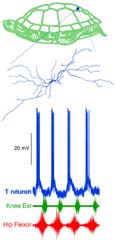
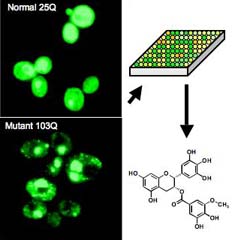
Cellular and Behavioral Neurobiology Faculty: Peter J. Attar, Assistant Professor of Aerospace & Mechanical Engineering (Ph.D., Duke University, 2003); e-mail: peter.attar<<at>>ou.edu. Computational Biomechanics, Uncertainty Quantification in Computational Biomechanics. He is currently pursuing the quantification and reduction of computational modeling uncertainty for two health related issues: fluid-structure interaction in Abdominal Aortic Aneurysms and the mechanics of Glaucomatous Optic Neuropathy. Ari Berkowitz, Associate Professor of Zoology (Ph.D., Washington University, 1993); e-mail: ari<<at>>ou.edu. Neural mechanisms of sensorimotor integration, behavioral choice, motor pattern generation. He conducts electrophysiological, neuroanatomical, and pharmacological experiments on the turtle spinal cord control of swimming and scratching, to address how the nervous system selects and generates an appropriate behavior for each circumstance an animal faces. Robert H. Cichewicz, Assistant Professor of Chemistry and Biochemistry (Ph.D., Michigan State University, 2002); e-mail: rhcichewicz<<at>>ou.edu. Natural product drug discovery of small molecule protectants against toxicity attributable to misfolded and aggregation prone neurotoxic proteins associated with Huntington’s and Parkinson’s diseases. Application of NMR-based metabolomics methods to identify novel disease targets associated with neurodegenerative disorders. Utilization of metabolomics as a primary assay tool for the detection of new natural product neuroprotectants. David S. Durica, Professor of Zoology (Ph.D., University of Connecticut, 1977); e-mail: ddurica<<at>>ou.edu. Endocrine modulation of gene expression; nuclear receptor gene structure and function; paracrine signaling in developmental regulation; evolution of multigene families. His research addresses the physical mechanisms through which hormones coordinate varied genetic and physiological responses. Efforts are currently focused on characterizing the transcription factors involved in genomic responses to steroid and retinoid signaling, and cascades of gene expression triggered by an endocrine signal. Douglas D. Gaffin, Associate Professor of Zoology and Dean, University College Rong Z. Gan, Professor of Biomedical and Mechanical Engineering and Adjunct Professor of Physiology, Health Sciences Center (Ph.D., University of Memphis, 1992); e-mail: rgan<<at>>ou.edu. Cell, tissue and organ biomechanics, implants and implantable hearing devices, theoretical modeling of physiological systems. Her research focuses on relationships between morphological structure, mechanical properties, and function of middle ear and inner ear in normal, pathological and implanted conditions. She conducts acoustic-mechanical coupled measurements and computer modeling of auditory systems in human temporal bones and animals to analyze sound transmission mechanism. Biomechanical properties of soft and hard tissues are measured through the micro-tensile material testing system, imaging analysis, and nanoindentation test. Randall S. Hewes, Associate Professor of Zoology and Adjunct Associate Professor of Cell Biology, Health Sciences Center (Ph.D., University of Washington, 1993); e-mail: hewes<<at>>ou.edu. Neuropeptides, Development, Molecular Genetics, Genomics, Behavior. Neuropeptides are chemical signals that are secreted by nerve cells to control key functions of the brain and many other tissues. Disruptions in neuropeptide signaling are associated with human diseases, such as obesity, diabetes and cancer. The Hewes laboratory focuses on the mechanisms by which cells acquire, maintain and regulate neuropeptides, and how changes in neuropeptide signaling control animal behavior. This research exploits the powerful molecular, genetic, and genomic techniques available in a model organism, the fruit fly, Drosophila melanogaster. Rosemary Knapp, Associate Professor of Zoology (Ph.D., Arizona State University, 1996); e-mail: rknapp<<at>>ou.edu. Behavioral neuroendocrinology, evolutionary endocrinology, comparative physiology. Her research aims to understand various factors influencing behavioral variation, particularly behaviors related to reproduction. She combines the approaches of behavioral endocrinology, neuroendocrinology and physiological ecology to study the physiological bases of behavior both in the field and in the laboratory in a variety of vertebrate species. The ultimate goal of this research is to understand the neuroendocrine changes that have occurred as new patterns of reproductive behavior have evolved. David McCauley, Assistant Professor of Zoology (Ph.D., University of Texas, 1997); email: dwmccauley<<at>>ou.edu. Neural crest, Development, Evolutionary Developmental Biology. Neural crest cells give rise to many vertebrate-specific characters, including the viscerocranial skeleton, most of the vertebrate peripheral nervous system, and numerous others. The McCauley Lab is currently focused on evolution of the skeletogenic neural crest, as a model for understanding the role of the neural crest in the evolution of vertebrate traits. His lab uses the sea lamprey (Petromyzon marinus), a basal vertebrate, to understand how neural crest developmental mechanisms in the ancestral vertebrate have evolved in model system vertebrates such as the zebrafish (Danio rerio). Thomas S. Ray, Professor, Department of Zoology (Ph.D., Harvard University, 1981); e-mail: tray<<at>>ou.edu. Neuropsychopharmacology. In his current research, the architecture of the human mind is being understood largely on the basis of interpretation of published reports of subjective experience, synthesized together with an exclusive data set provided by the National Institute of Mental Health Psychoactive Drug Screening Program. Mental illnesses are understood through the writings of individuals who have suffered the illness (e.g. Carol North on schizophrenia, Donna Williams on autism, Kay Redfield Jamison on manic depression), and psychoactive drugs are understood through the writings of those who have experienced them (e.g. Aldous Huxley on mescaline). The synthesis of the subjective data together with the molecular data has made it possible to determine the mental effects mediated by twenty-one receptors in eleven groups. He is now in the process of understanding how variation in the proportioning of these various elements in individual minds contributes to the peculiarities of the personality, and in extreme variations or interactions, to a variety of mental disorders: schizophrenia, autism, depression, disorders of rage, post traumatic stress disorder, and addiction. Robert L. Rennaker, Assistant Professor of Aerospace & Mechanical Engineering (Ph.D., Arizona State University, 2002); e-mail: renn<<at>>ou.edu. Neural Engineering and Prosthetics. His research aims 1) to develop the tools and methods necessary to directly communicate with the central nervous system for the purpose of understanding neural processing and for the development of neural prosthetic devices; 2) to study multi-unit processing of sensory information at the cortical level to guide prosthetic development. Ingo Schlupp, Assistant Professor of Zoology (Dr. rer.nat University of Hamburg, 1995); e-mail: schlupp<<at>>ou.edu. Ecology and evolution of sex. His group is interested in mainly two questions: 1) What is the short term benefit of sexual recombination and how can closely related sexual and asexual organisms co-exist? The model they use is a unisexual fish, the Amazon molly (Poecilia formosa). 2) Can extreme environmental conditions lead to speciation? To address this they study fishes in a toxic cave in Mexico. His research tries to integrate proximate and ultimate approaches. Regina M. Sullivan, Professor of Zoology (Ph.D., City University of New York, 1983); e-mail: rsullivan<<at>>ou.edu. Development of the neural mechanisms of learning, amygdala and fear conditioning, norepinephrine and locus coeruleus, olfaction. Her lab works on both newborn humans and rats within the context of mother-infant interactions highlighting unique circuitry of learning in infancy. Recent work includes an animal model of child abuse. James N. Thompson, jr., David Ross Boyd Professor of Zoology (Ph.D., University of Cambridge, 1973); e-mail: jthompson<<at>>ou.edu. Mutation rate under stress, genotype x environment interaction, experimental quantitative genetics, aging. His lab is interested in factors that influence mutation rate, especially those occurring premeiotically that yield clusters of identical mutations at the same time. This is related to his work in the larger area of the genetics of adaptation and developmental stability under stress, genotype x environment interactions, and genetic influences on homeostasis and aging. The lab uses Drosophila as a model organism, with special attention to patterning of wing veins and peripheral sensory structures on the cuticle. Han Wang, Assistant Professor of Zoology (Ph.D., Wayne State University, 1996); e-mail: hwang<<at>>ou.edu. He studies molecular genetics and genomics of zebrafish (Danio rerio) circadian rhythmicity, retinal, pineal and hematopoietic development. He is also interested in evolution of development as well as evolution of vertebrate genomes. Ann H. West, Professor of Biochemistry (Ph.D. Yale University, 1991); e-mail: awest<<at>>ou.edu. Signal transduction mechanisms, protein phosphorylation, protein structure determination by X-ray crystallography. In general, her laboratory is interested in the biochemical and structural basis of phosphorylation-dependent signal transduction systems. In particular, her laboratory is studying a His-Asp phosphorelay signaling pathway in yeast that is involved in cellular responses to environmental stress. Donald A. Wilson, Professor of Zoology (Ph.D., McMaster University, 1983); e-mail: dwilson<<at>>ou.edu. Neural mechanisms of sensory processing, neurobiology of memory, neurobehavioral development. His lab is interested in how sensory information (primarily olfaction) is encoded in the mammalian brain, and how experience shapes both information processing, functional neurocircuitry and behavior. Bing Zhang, Assistant Professor of Zoology (Ph.D., Cornell University, 1995); e-mail: bing<<at>>ou.edu. Molecular genetics of synaptic function and plasticity. His lab uses the fruit fly (Drosophila melanogaster) as a model organism to dissect the cellular and molecular mechanisms of structural and functional plasticity of the synapse. Current research projects are focused on understanding 1) the role of SNAREs and clathrin-related molecules in the synaptic vesicle cycle and 2) the signaling pathways underlying neurodegeneration (such as ALS, Parkinson’s and Alzheimer’s disease). |
|
|||||
|
|
|
|
|
|
|
|
||||||
|
|
|||
|
|||
|
|
|
|
|
|
|
