The School of Civil Engineering and Environmental Science at OU is one of seven schools within the Gallogly College of Engineering. The undergraduate programs of the school offer Bachelor of Science degrees in architectural, civil, environmental engineering and environmental science.

Architectural engineers design buildings and other structures and understand the design of a building involves more than its appearance. Buildings also must be functional, safe and economical and meet the needs of the people who use them. These engineers design a variety of structures, including office and apartment buildings, schools, churches, factories, hospitals, houses and airport terminals. They also design such complexes as urban centers, college campuses, industrial parks and communities. In addition, they may advise on the selection of building sites, prepare cost analysis and land-use studies and do long-range planning for land development.

Civil engineers are responsible for the design and construction of society’s infrastructure, such as buildings, highways, bridges, mass transit systems, dams and locks, and municipal water and sewage treatment systems. They often are responsible for planning, managing, operating and maintaining these facilities. Consequently, civil engineering is frequently referred to as the “the people-serving profession". Spurred by general population growth and an expanding economy, more civil engineers will be needed to design and construct higher-capacity transportation, water supply systems and pollution control systems as well as large buildings and building complexes. They also will be needed to repair or replace existing roads, bridges and other public structures.
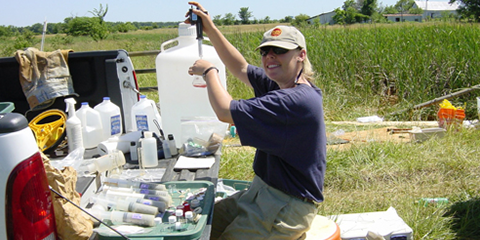
Using the principles of physics, biology and chemistry, environmental engineers develop methods to meet such environmental challenges as water and air pollution control, recycling, waste disposal, hydrology, river management and control, and public health issues. They conduct hazardous waste management studies in which they evaluate the significance of the hazard, offer analysis on treatment and containment and develop regulations to prevent mishaps. They also design municipal sewage and industrial wastewater systems, analyze scientific data, conduct research projects and perform quality control checks.
Past graduates have been employed by state and federal environmental agencies, such as the Oklahoma Department of Environmental Quality, the U.S. Environmental Protection Agency and the U.S. Geological Survey as well as various private industries and consulting firms.

Environmental scientists have a variety of job responsibilities, including collecting and analyzing air, water and soil samples, monitoring compliance with environmental laws and regulations, assisting industrial companies in complying with environmental regulations, and addressing public meetings on local environmental challenges.
Our environmental science graduates work for the U.S. Environmental Protection Agency, Oklahoma Department of Environmental Quality, Oklahoma Department of Health and numerous private industrial and consulting firms.