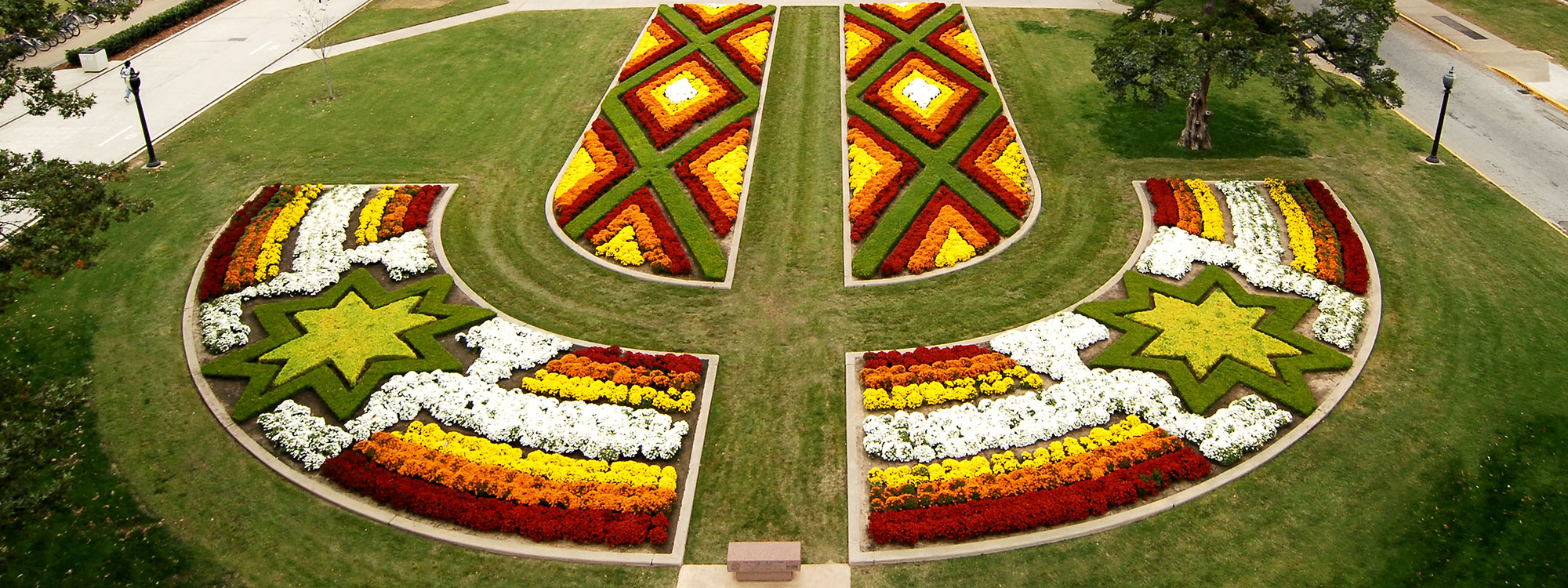
The Department of Landscape and Grounds has started to move towards more environmentally friendly landscaping practices in a number of ways. First, Oklahoma proven plants have been given preference during recent projects (e.g., Sarkeys rooftop project, planting perennials in outlying beds, etc.) over plants that require more resources and/or more frequent replacement.
Second, there has been an increased focus on mulching to help protect plants and to reduce the amount of water necessary to encourage plant vigor.
Third, integrated pest management (IPM) principles are used while also following rules and regulations outlined by the Oklahoma Department of Agriculture, Food and Forestry to pursue pest management by the most economical means with the least possible hazard level (pests include but are not limited to insects, weeds, and plant diseases).
Lastly, for approximately the last 10 years there has been a movement towards water conservation by decreasing water runoff through the initiation of a strategic approach towards irrigation watering cycles, increasing the use of drip irrigation, and focusing on problem areas to identify and address chronic over-watering. By concentrating on these areas of water usage, only the water needed for plants to survive and flourish in their intended environments is applied. In doing this, the University has been able to meet and exceed the specifications outlined in the water program for the City of Norman. In addition to the steps already taken outlined in this section, the recommendations made in this plan will help to expand current efforts into a more cohesive and comprehensive approach towards landscape sustainability at the University of Oklahoma. This will provide a highly visible, tangible opportunity to help strengthen the ongoing culture shift towards sustainability on campus.