

They called it the “Indian problem.” The white settlers wanted more land, and the tribes held rich acreages. Removing tribes from the Southeast was more than just an idea by the time Andrew Jackson was elected president in 1828. The Indian Removal Act was among his defining pieces of legislation. Jackson argued that moving tribes west of the Mississippi River would guarantee their survival. Instead it launched an era of genocide. Thousands died during the forced marches to land designated as Indian Territory. For members of the 39 tribes in Oklahoma, the removal stories have not been forgotten. Neither has the Dawes Severalty Act of 1887, intended to assimilate Native Americans into white society by stripping them of their cultural and social traditions. The ramifications persist today.
These maps visualize the forced diaspora of the 39 recognized tribes of Oklahoma across centuries. It is intended to indicate locations or areas in or around which a tribe has lived, presently lives, and/or has at some point been significant to that tribe’s history.
Click on any one coordinate to see other coordinates that indicate places associated with a given tribe or select any tribe on the sidebar to see the same effect. Navigate to the other pages in the dashboard to see combinations of present-day tribal land belonging to all U.S. tribes, an approximation of the Trail of Tears, and the coordinates that indicate places tribes have been in the past few centuries.

By Addison Kliewer, Miranda Mahmud and Sarah Beth Guevara
Gaylord News
The Trail of Tears, the forced removal of the Cherokee Nation to Oklahoma, was one of the most inhumane policy implementations in American history––but it was not an isolated incident.
By Addison Kliewer, Miranda Mahmud and Brooklyn Wayland
Gaylord News
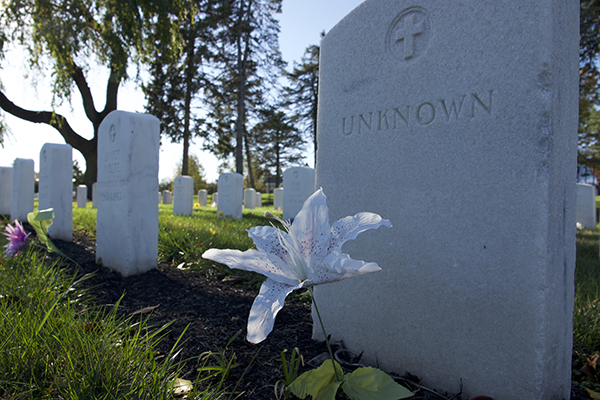
Six rows of white tombstones––each belonging to a child who died while attending the Carlisle Indian Industrial School––stood firmly in the dewy Pennsylvania grass, bearing the names of children who lost their lives while being forced to assimilate to a new world.
Read the Full Story of the
Carlisle Indian Industrial School


