Welcome to Carceral Studies Conversations, the University of Oklahoma Carceral Studies Consortium‘s podcast series. The Carceral Studies Consortium strives to build a community for intellectual exploration that includes faculty, staff, graduate students, community members, practitioners, and organizers. Carceral Studies is concerned with the independent function and nexus of the political and social systems that organize, shape, sustain, and entrench practices of punishment, surveillance, incarceration, and harm.
This podcast series seeks to understand and illuminate the Carceral State and its manifestations. This project allows us to deconstruct these complex systems and build a more just society. The series offers multiple perspectives into the Carceral State and its impact.
We encourage feedback, suggestions, and article suggestions. Please reach out to carceralstudies@ou.edu with any ideas, thoughts, recommendations, or if you would like to join the conversation.
In this conversation, Deveraux discusses the connection between race, incarceration, and capitalism. He explains how his experience in prison taught him to understand how racism cannot be eradicated without ending mass imprisonment. In the discussion of private prisons and spending time in a facility located in Texas (under contract with Idaho), he discusses the impact of being separated from his community and family.
In this episode, Dr. Sarantakos discusses social care work, how social work can support communities, the ethics of academia, and movement lawyering as an actionable framework for social work. Sarantakos explores how communities are mobilized and organizing, offering social workers an opportunity to listen to, respect, and support this ongoing work in preparation for moments of crisis.
On this episode, Dr. Dylan Rodríguez discusses the persistence and logics of anti-Black chattel slavery as a mode of sociality, the U.S. as a self-narrated reformist nation, freedom movements, knowledge production, and the role of academics and the university in radical liberation projects.
On this episode, Dr. Jessica Ordaz discusses the detention and deportation regime, the violence in the detention process, and the transnational migrant politics that formed in opposition to this violent regime.
On this episode, Dr. Keramet Reiter discusses the new architecture of incarceration that expanded dramatically in the late 20th century premised on isolation and repression as well as the organizing against this form of state violence.
On this episode, Dr. Subini Annamma discusses the way youth in schools are targeted, labeled, and criminalized, how this systemic process perpetuates ableism, sexism and racism, the effects of this targeting.
On this episode, Dr. Matthew Guariglia discusses carceral logics, the international and imperial connections of surveillance and policing, and the ways that surveillance makes people less safe.
On this episode, Dr. Constance Chapple discusses how trauma from contacts with the criminal justice system manifest in families, the gender deviance gap, and what a research project conducted at a correctional facility at the onset of COVID-19 reveals about systemic inequalities.
On this episode, Dr. Reuben Miller discusses how people are invisibility and what effect that has on them and society. Miller also delves into the issues of legal and cultural citizenship, the afterlife of incarceration as a system of control, and the racism that inhibits progress on the carceral state.
On this episode, Dr. Scott Gronlund discusses the malleability of memory in relation to eyewitness evidence in criminal legal proceedings, as well as the key lessons from an analysis of cases where DNA exonerated people in which eyewitness testimony was key in the conviction.
On this episode, Dr. Guy Emerson Mount explores the meaning of emancipation as it changed over time, the demands of reparations relative to repair and justice, and how the legacies of slavery and the lack of reparations has contributed to the Carceral State.
On this episode, Dr. Dan Berger defines the Carceral State and explores its roots and impact. Berger argues that protest against the Carceral State is one of its key features, and he discusses the modern history of radicalism.
On this episode, Dr. Jae James discusses trauma, the global and historical development of mass incarceration, and the creation of brave spaces for awareness and liberation.
On this episode, Dr. Liza Black talks about carcerality, Indian Country, and the crisis of murdered and missing Indigenous women and girls.
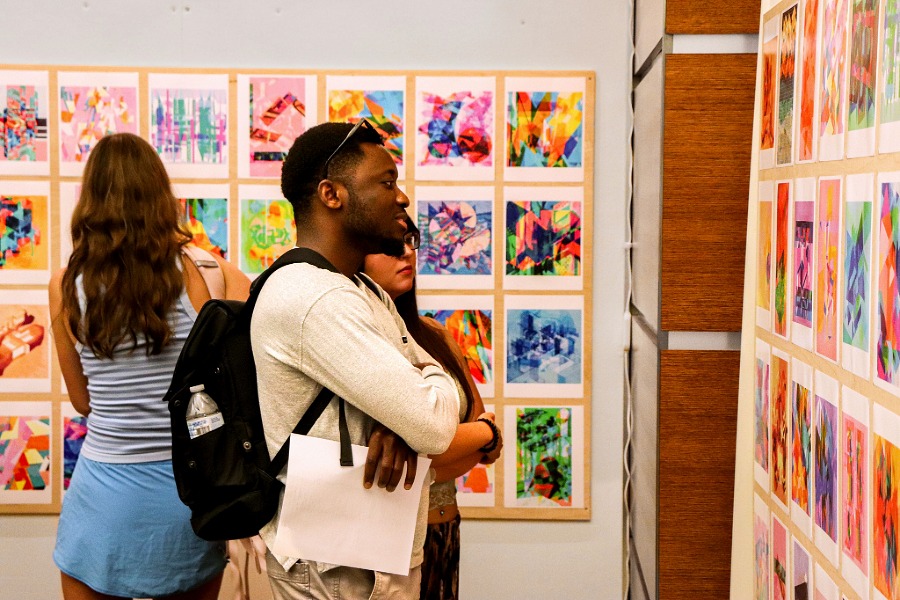
Gibbs College is pleased to present the exhibition 200 Digital Drawings by Professor Tiziana Proietti, currently on display in the Gould Hall Living Room.
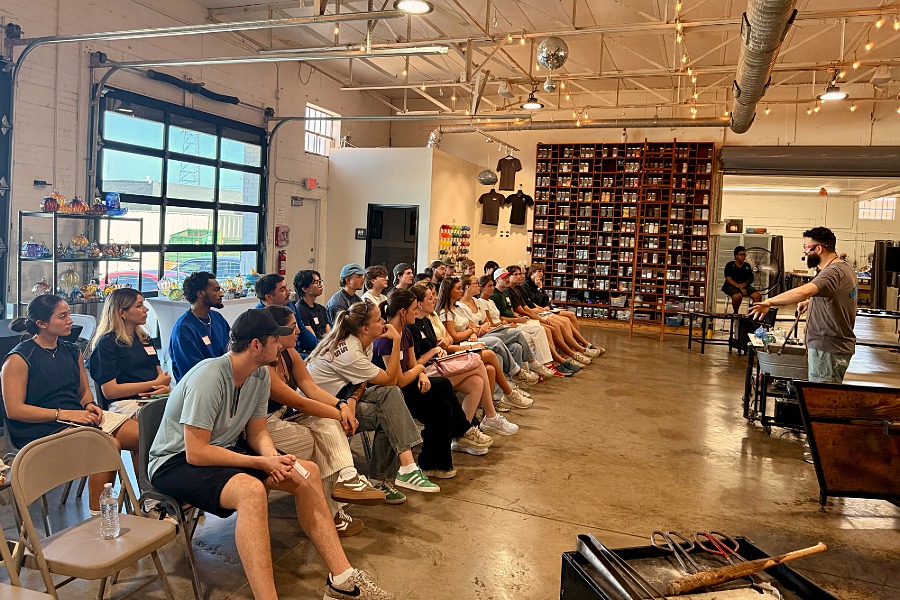
Gibbs College of Architecture Professors Amber Brown and Amy Leveno led 29 students to Dallas, Texas, in September for a learning experience as part of their Design 7 Studio course.
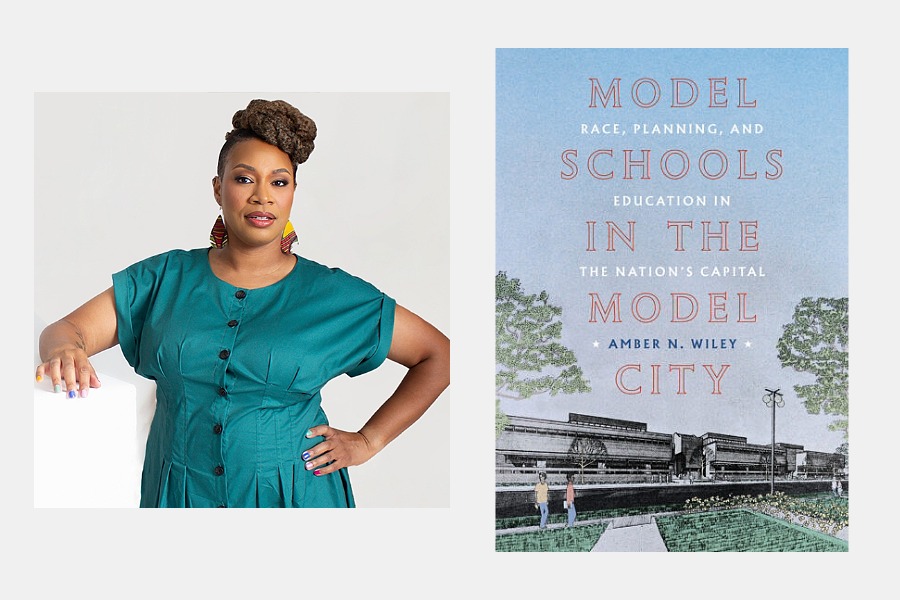
Christopher C. Gibbs College of Architecture professor and Institute for Quality Communities Director Dr. Amber N. Wiley’s book, Model Schools in the Model City: Race, Planning, and Education in the Nation’s Capital, has received two major honors from the Urban History Association.