Dr. Sarah Little, a faculty member in the Division of Landscape Architecture, recently published an article entitled “Considering Autonomous Exploration in Healthy Environments: Reflections from an Urban Wildscape” in the International Journal of Environmental Research and Public Health.
In the article, Dr. Little documents the influence of autonomy on a group of boys’ experience growing up in Raleigh, North Carolina and advocates for the protection of wildscapes in the built environment. She writes, “Autonomous exploration should be considered in the creation of healthy environments since autonomy is an important developmental experience for children.”
The article found that because this group of boys was able to explore independently, they were able to develop long-term, intimate friendships as well as confidence in their decision-making ability. Because of these findings, Dr. Little urges cities to preserve wildscapes, such as the creek or abandoned warehouses that the boys explored. Read the article’s abstract and find a link to the full article below.
Congratulations to Dr. Little on her publication!
Abstract:
Autonomous exploration should be considered in the creation of healthy environments since autonomy is an important developmental experience for children. For a group of boys in Raleigh, N.C., U.S. during the period 2002–2006, autonomous exploration was a meaningful experience. Results of a qualitative research project (n = 5) which highlight the importance of autonomous exploration are organized within a proposed framework for thick description. The framework creates verisimilitude by reporting on the context, social action and cultural context, and behavior and intentionality. The context of Raleigh and urban wildscapes furnished areas ripe for exploration. The social action and cultural context of attachment supported the autonomous exploration through scaffolded experiences of autonomy. The intentionality of the behavior was a desire to distinct themselves through a focus on individual development and the pursuit of extraordinary experiences. The ultimate outcomes of autonomous exploration for the boys were the development of long-term, intimate friendships and confidence in their decision-making ability. As cities become more health-focused, attention should be paid to preserve the rough edges of a city for children to explore.
To read Dr. Little’s full article, click the link below.
Considering Autonomous Exploration in Healthy Environments: Reflections from an Urban Wildscape
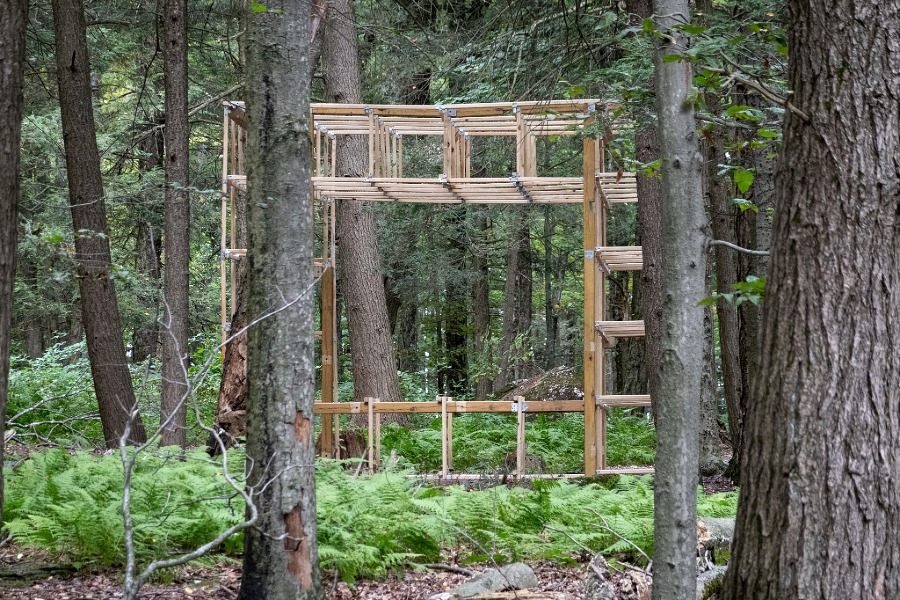
A project designed by Gibbs College of Architecture faculty member Austin Lightle has been selected for BuildFest 2026, a national art and architecture festival held at the Bethel Woods Center for the Arts in New York, on the historic grounds of the 1969 Woodstock Music Festival.
Two Christopher C. Gibbs College of Architecture alumni are helping shape recommendations that could influence affordable housing design and construction across Oklahoma.
The University of Oklahoma Libraries recently welcomed Carl Siegel as an Architecture Librarian and Archivist and Assistant Professor. In his role, Siegel supports students, faculty and staff across the Gibbs College of Architecture while also serving as archivist for the American School of Architecture Archives.