GCA Communications intern Kali Curtis (K) spoke with Vireak They (T), an environmental design alumnus here at Gibbs! We spoke with Vireak They to learn more about Osmosis Architects, his architecture firm in Phnom Penh, Cambodia.
K: Hello, everyone. Welcome to the Gibbs spotlight. My name is Kali Curtis and I’m a communications intern at the Gibbs College of Architecture. Today we are talking to Vireak They, an environmental design alumnus at Gibbs College. He graduated with his Bachelor of Environmental Design in 2018 and he is currently the founder and design director at Osmosis Architects.
Thank you so much for meeting with me today. So, can you tell me a bit about yourself?
T: My name is Vireak They. I’m the founder of Osmosis Architects, based in Phnom Penh, Cambodia. I’m also the alumni of the College of Architecture in Oklahoma.
K: So, what is your typical day like?
T: Basically, as an architect, we do a lot of meetings every day to make design decision site visits. I stay a half-day in the office and a half-day visiting different construction sites to oversee the construction process.
K: Can you tell me a bit about your company Osmosis Architects, and what led you to start it?
T: Osmosis Architects started in early 2020. Actually, a few months before COVID hit. We started with a team of three actually. And now we grew to eight in our team. We have a small office in the capital city of Cambodia called Phnom Penh. We started with the idea that we could make a difference in the construction world in Cambodia to build a better architecture for our people to live in to work in and play in, that is our passion in making a difference in a community.
K: Thank you, that is so great that you’re making a difference. So, what are you most proud of about Osmosis Architects?
T: What I’m really, really proud of is that most of our projects are school projects. We started with a school project in 2020. And then for the following project was another school project, and then another library in a school campus. So, three of our eight projects was educational. I believe that we change the idea of architecture, the idea and perception of architecture in Cambodia, and make a lot of difference to those students’ life because they got the new school in a new space that they never seen before. Because we had a lot of freedom to design those schools. So, we did really great job. And I’m really proud of that opportunity.

Vireak They works with a client on Osmosis Architects’ new educational campus.
K: That is amazing. I’m so glad to hear that, that you’ve built these school projects, libraries and campuses, in Cambodia, that is really great. I’m proud.
T: Thank you.
K: So, what brought you to the Gibbs College of Architecture?
T: The story is that I got a scholarship from Singapore to America for my university through the foundation we call Davis Foundation. So, I have a full four year funded, life changing experience scholarship to the University of Oklahoma, and I’m really proud of the education, the high education. I’m proud to get to know America as well. So, it’s amazing, amazing country, and then bring back a lot of new things from America and install it in Cambodia, and try to make a difference through the example of America.
K: Thank you so much. I’m so glad to hear that. So, what aspects of your education in the environmental design program at Gibbs do you think has helped you the most?
T: The ones that helped me the most, and that I really appreciate is the capstone project and the environmental design practicum. Those classes are amazing. They are amazingly designed so that students can put the hand on activity to solve the world problems in real life situation. And I was proud to get involved in the design of parks, the design of different buildings in Oklahoma. I remember as a team, we designed a park in a small town not far away from from Norman, and I loved the project.
K: Thank you. So, do you think that the community engagement that you experienced at Gibbs College has kind of helped you with this community engagement you’re doing now in Cambodia?
T: Yes, of course. Those classes are great because it helps us to learn and to communicate in real life, to solve problems in real life, and to understand situations in real life. So just like architects in real life situation, we go and go places, to design buildings, talk to community, to engage with different people in different aspects of cultures, of ministries, that’s what it all is about. Those classes were amazing. I really appreciate.
K: Thank you. So, can you tell me about one of your favorite projects?
T: To be honest, I love them all. I could not say which one is the most favorite, because we did a great job on most of them, and especially I treat my project just like my sons and daughters. So we really cannot differentiate them. We love them all. What I really, really proud of is that we managed to design different buildings in different styles in different locations that’s what’s special about it. The building look different in different contexts.
K: Thank you. So, you lead the design team to build the new educational campus in northern Cambodia. Can you tell me more about your role as the design director at osmosis architects?
T: For most projects, I lead those projects. I begin the conceptual design, I teach the team from the start to finish, we have our design process to follow through in order to produce those good projects. And we have different timelines, different inputs, from our clients, from the community, from us to produce a good result. I believe that in trying to listen to different aspects around the discourse of architecture, listening to cultures, listening to the needs of the community, listening to everybody, listening to in the discourse of our field, is something to be noted in order to produce a better architecture, a good architecture in the community. And I’m proud to get involved in the architectural world and in the construction world in Cambodia at this time at this moment.
K: Thank you so much. So, do you have anything else that you’d like to talk about today?
T: I have a few comments for architecture students or designer. I think they should learn business, finance and marketing before they run their own architectural office firm. Because at first, I was struggling with running the firm that we study architecture or environmental design or other design course and never get a touch in business class management class or a financial education class. When we come to run an architecture business, an architecture company is a business, so finance, marketing, management businesses follow is really important. So, make sure they go and learn those courses before they start their own architecture firm or design firm.
K: Thank you so much. It was really great to meet you.
T: Thank you so much. I really appreciate the time and what you did for Architecture Department.
K: You have a great day. It was so nice talking to you.
T: You too. Take care and study hard.
K: Thanks again for listening to Gibbs Spotlight. Tune in next time to hear more stories from the Gibbs College of Architecture.
Gibbs College is pleased to present the exhibition 200 Digital Drawings by Professor Tiziana Proietti, currently on display in the Gould Hall Living Room.
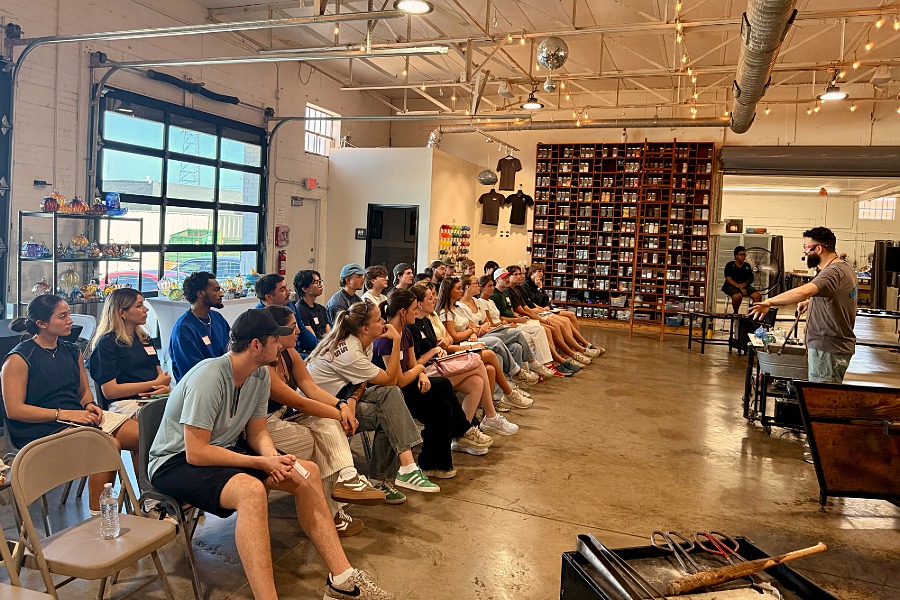
Gibbs College of Architecture Professors Amber Brown and Amy Leveno led 29 students to Dallas, Texas, in September for a learning experience as part of their Design 7 Studio course.
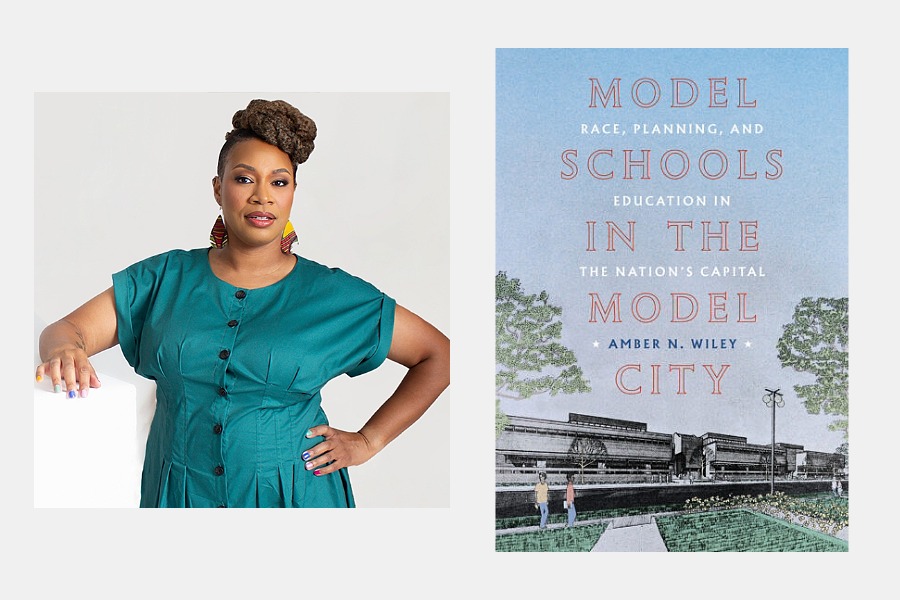
Christopher C. Gibbs College of Architecture professor and Institute for Quality Communities Director Dr. Amber N. Wiley’s book, Model Schools in the Model City: Race, Planning, and Education in the Nation’s Capital, has received two major honors from the Urban History Association.