It’s a rare thing to have the focus and sense of purpose that Gibbs College alumna Breah Page has displayed from a young age. Explaining that she has always known she wanted to be an architect, Page said she’s propelled by the idea that architecture can change how people interact with one another – and she is passionate about creating better communities.
Page graduated from OU in 2010 with a Bachelor of Arts degree in architecture. She now is senior project architect at LBBA in Chicago. She was recently awarded the Dubin Family Young Architect Award from the American Institute of Architects.
We sat down with her to learn more about her experience at Gibbs College and in the professional architecture industry. Read on for more.
My mom keeps everything, and recently I found one of those funny little books you make as a kid about your favorite things and what you want to do when you grow up. This one was from age 5 or 6, and I had written, “I want to be an architect!”
I loved building with Legos and felt compelled to create, design and build things. I was also fortunate that my high school had a drafting class and I was able to participate in an internship program at an engineering firm my senior year.
I’ve been at LBBA since 2020. We do a lot of affordable housing and community-based design, with 60% of projects focusing on multifamily or community centers in Chicago and the rest spread throughout the Mid-West.
All my projects are like children; each one has shaped me in a different way.

The rennovated Wrigley field. Image courtesy of Stantec.
I worked on the Wrigley Field renovation for five years. It was very community focused, even though not affordable housing. We participated in neighborhood meetings, and meetings with city, state and the national landmarks community. We also had to be considerate of the Major League Baseball standards and national security. Since it hadn’t been updated since the 1980’s and was in the middle of an existing neighborhood, we got to help create things and provide an amount of space for the city to host markets, do movie nights and other community events.

The Park at Gallagher Way. Image courtesy of Stantec.
I’m currently working on the Foglia Residences at the Chicago Lighthouse. They serve the blind and visually impaired, providing services and also employing people. It is very cool building, and it’s been interesting to learn how visually impaired people navigate through buildings and how that can be incorporated into architecture.
OU did a fantastic job letting us explore our critical thinking. We learned about the principles of architecture, materials and how to use all the tools and softwares, but also how to communicate in the moment with a hand sketch. This was a great foundation, but we also got to explore on our own. At Gibbs I was taught to think critically and independently about my design – what interests me doesn’t have to be the same for everyone, and there was a freedom to explore those things.
During my time at Gibbs, the building was being renovated so they moved us to an old Hobby Lobby building. At first we thought, “Oh no, I’m going to spend my last year as an architecture student in this ugly box,” but we learned so much from that space and terrible building. Since everyone had to walk down the same corridor, the fifth years got to hang out with first years, interior design students mixed with architecture students, and we were all mixed up as a “happy little accident” (quoting Bob Ross).

Page and students from the ACE Mentorship program for architecture, construction, and engineering.
I feel really lucky that I was in a graduating class that was very competitive with one another but had people with different design approaches and aesthetics; we pushed one another in a helpful way.
Being able to study abroad is fantastic. During one trip, I remember a lecture with Iver Wahl where he talked about the concept of architecture as a set of ideas realized. These ideas when used appropriately can be good or bad and change how we interact with one another. I realized how powerful the ideas of architecture can be, and it’s propelled me to design and build things that are hopefully good for everyone.

Page and students from the ACE Mentorship program for architecture, construction, and engineering.
Take advantage of every opportunity! Remain idealistic. Don’t settle. Not everyone has the privilege to wait for the perfect job, but always strive for more and be ready for the next opportunity. Even if something in the moment isn’t all your hopes and dreams, use it as a steppingstone!
Know your worth and do research about how much you should be paid. Fight for what you think you’re worth. It’s scary but necessary. Understand the importance of benefits.
Take your lunch break. Don’t wear yourself down to nothing. Be passionate about the work and be glad to be there, but you have to take care of yourself to take care of other people.
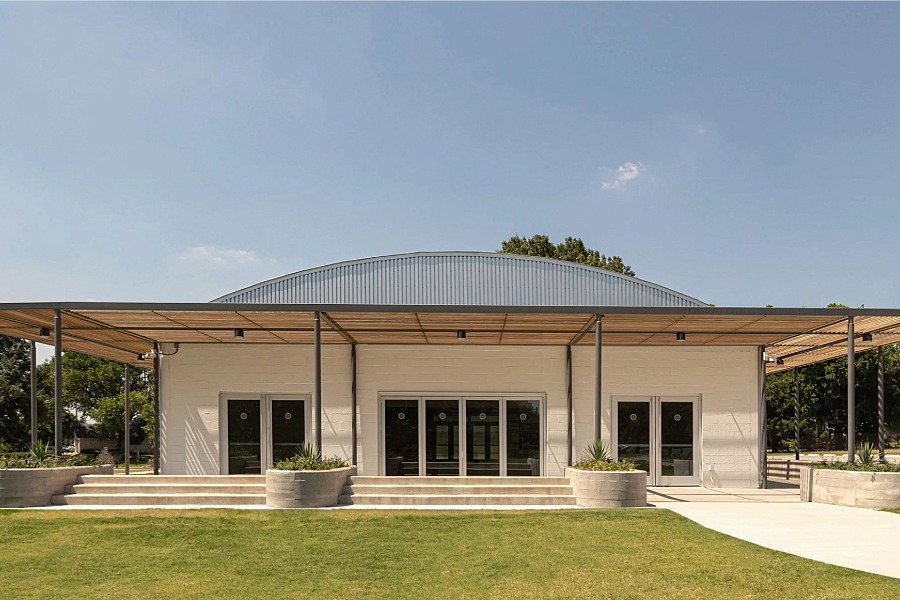
Christopher C. Gibbs College of Architecture assistant professor Amy Leveno and Mark Leveno, co-founders of OFFICIAL Design, have received a 2026 AIA Central States Region Design Award for the firm’s Granger Annex Community Center project in Garland, Texas.
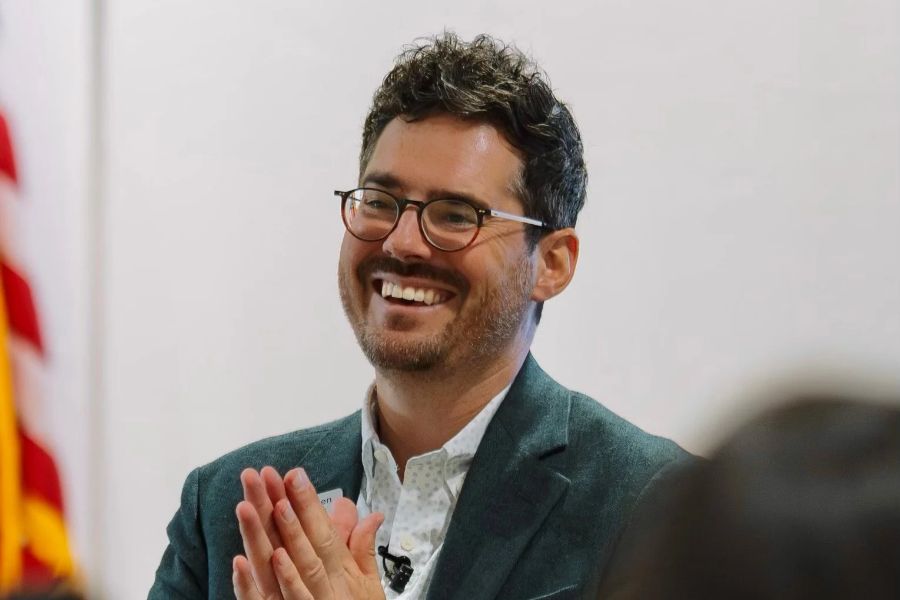
Construction Industry Speaker Series welcomed Stephen Evans from the Oklahoma City National Memorial & Museum to give a lecture on better conversations and relationship building.
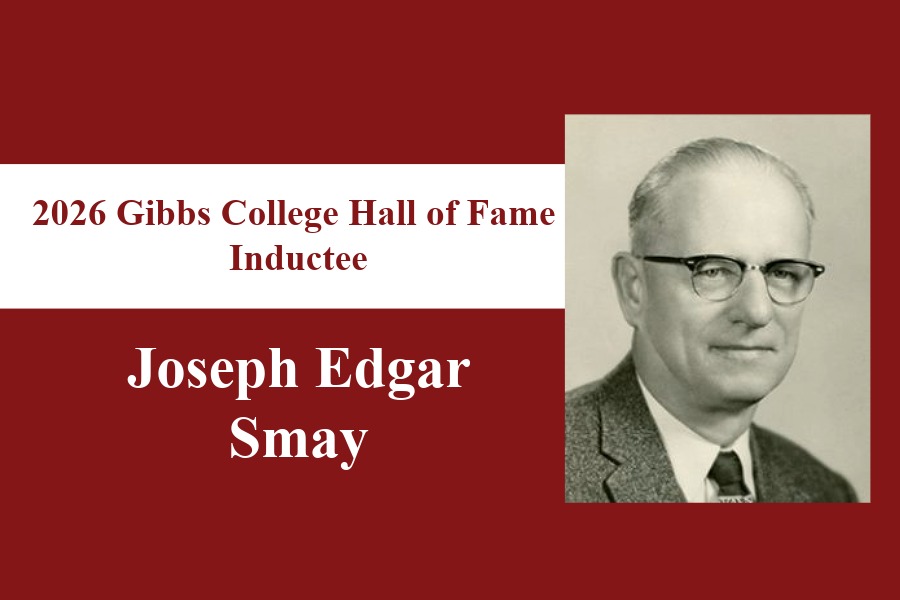
The University of Oklahoma Christopher C. Gibbs College of Architecture Hall of Fame recognizes a select number of high-character individuals who have made a significant and lasting positive impact on Gibbs College, its students, staff, faculty, alumni and/or to communities across the globe. The impact may have been, or continues to be, in the form of service and mentorship, sustained professional excellence, and/or advancement and financial support. Joseph Edgar Smay is part of the 2025 Hall of Fame class.